
Exploring the Flavors of Quanzhou's Markets | Delving into Two Old Markets on East and West Streets, and Discovering 10 Local Delicacies: How Regulars Choose Their Food
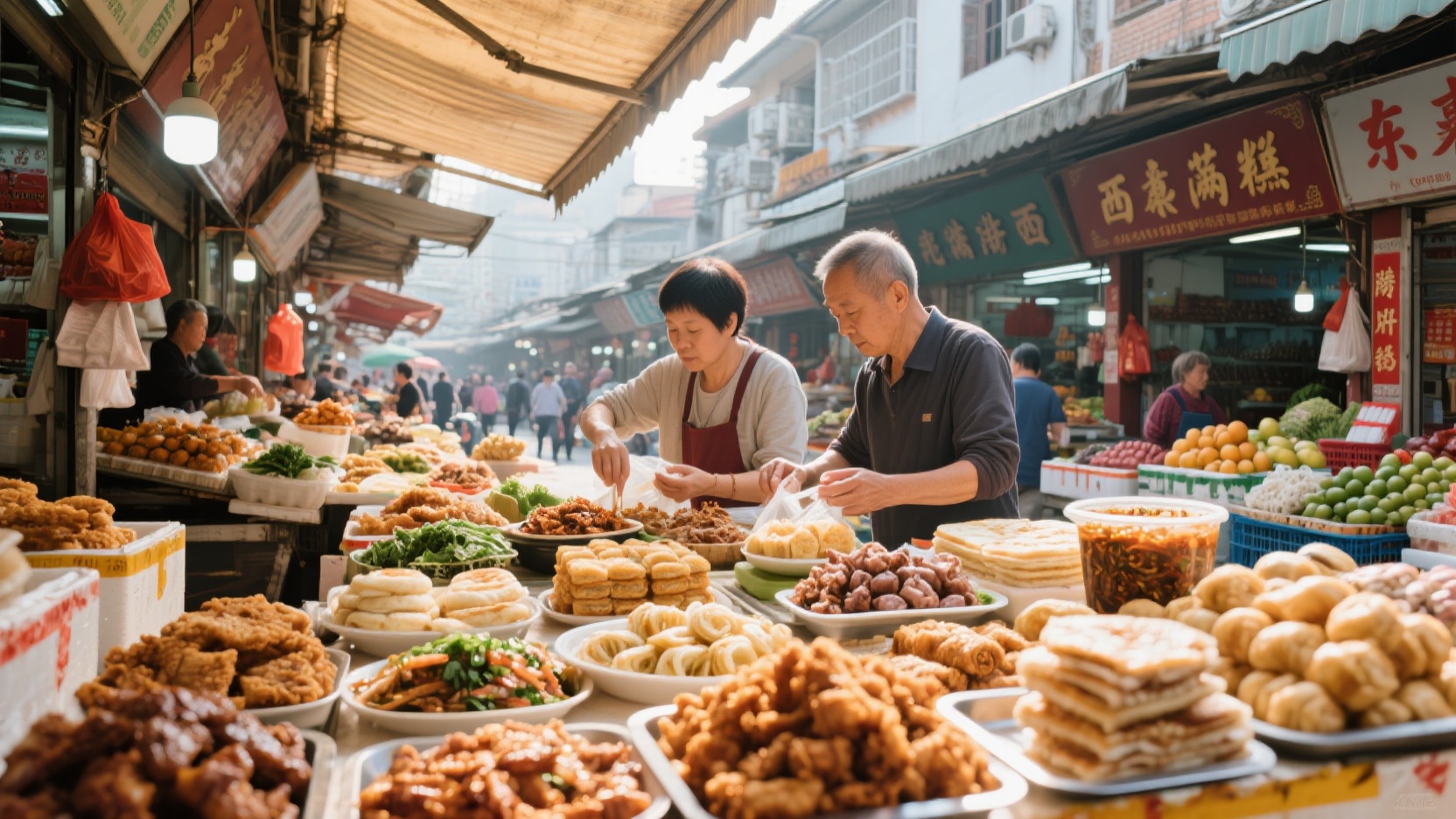
Half the answer to Quanzhou residents' daily meals lies in the two old markets on East Street and West Street. The East Market is the main place for old Quanzhou residents to buy cooked vegetables and pickles; fryers and pickle jars are set up as early as 5 a.m. The West Street Market, adjacent to Kaiyuan Temple, offers a more concentrated selection of handmade pastries and cut seasonal fruits. The following 10 items are presented in order of savory to sweet, with selection and eating suggestions.
Dongcai Market: The logic behind the cooked food stalls and pickle jars that make your food more palatable.
Fried pork with vinegar is one of the first cooked food stalls at the Dongcai Market to sell out. When choosing pork strips, look for thin, even outer layers; the color should be a deep amber, and it should smell of garlic rather than rancid oil. Even better are strips that are uniformly thick and have no excess dry powder on the surface. Locally, the pork is marinated in sweet potato starch and Yongchun vinegar, resulting in a crispy exterior and tender interior after frying. Once home, do not fry it again; simply dip it in Yongchun vinegar or break it into pieces and spread it on a thin noodle batter. The vinegar flavor will balance the greasiness of the fried pork. If you buy a large quantity, you can freeze it and briefly reheat it in an oven or air fryer before eating for an even crispier crust.
For spiced rolls, choose rolls where the bean curd skin is tightly attached to the filling, and the cross-section shows whole pieces of lean meat and diced water chestnuts. Freshly fried rolls are even better. After cooling, dry-frying them in a pan will restore their crispness better than microwaving. "Fist-sized" meatballs are the "biggest" meatballs in Quanzhou, named for their fist-like shape. They are made from pork, fish paste, and mushrooms, among other ingredients. When choosing, press them with your finger; they should spring back. A non-sticky surface and fine air pockets when cut open indicate proper mixing. Slice them and stir-fry with celery stalks, or dip them directly in sweet chili sauce.
Sea worm jelly, often made fresh daily at market stalls, should have a clear, non-cloudy gelatinous texture and distinct, intact worm outlines; avoid buying those that are whitish in color or have excessive water content. When buying, ask the vendor for plenty of minced garlic, soy sauce, and a little vinegar, and it's best to consume it within half an hour. Pickled cucumbers and fermented black beans are staples for old Quanzhou locals: the best pickled cucumbers are naturally colored and don't have a pungent sour smell; they can be diced and stir-fried with minced meat or served with porridge. Fermented black beans should have intact grains, a salty but not overly cloying flavor, and no white mold spots; adding a small spoonful when steaming ribs or braising pomfret instantly enhances the umami flavor.
West Street Market: Sweet and Savory Ends of Handmade Pastries and Seasonal Fruits
Manjian Gao (满煎糕) is one of the most worthwhile handmade snacks to buy from the West Street Market. It's made from fermented rice batter and filled with brown or white sugar. When choosing, look for caramel-colored edges and evenly distributed holes in the center. Eat it while it's hot; if it cools, steam it for three minutes to restore its softness and chewiness. Wan Gao (碗糕) is also made from fermented rice batter and steamed. Good quality Wan Gao has a naturally blooming top that doesn't collapse. It's perfect for breakfast with a cup of tea.
Choose thin, translucent wrappers with no cracked edges; they should be elastic when gently stretched. It's a Quanzhou custom to wrap them around cabbage, shredded carrots, crushed peanuts, and seaweed around the time of Qingming Festival, but they can also be eaten as everyday rolls. Buy several wrappers and freeze them in portions, thawing before use. Garlic twists are "Quanzhou twists" coated with sugar and minced garlic. When buying them, squeeze them; they should be crisp, not damp, and the sugar coating should be even and not lumpy. They are especially refreshing when paired with Tieguanyin tea.
Seasonal green mangoes and amla (Tiger mangoes) are refreshing choices in the market. When buying cut green mangoes, check the freshness of the flesh; avoid those that are too white or juicy. Choose those with pale yellow flesh and fine fibers. They can be dipped in plum powder or soy sauce, the latter being a local preference in Quanzhou. For amla, choose those with a yellow-green, glossy peel that is firm to the touch. They have a slightly astringent taste followed by a sweet aftertaste, and eating two or three after a meal is more refreshing than chewing gum.
Visiting the local market is the best way to experience a city.
A stroll through the East and West Street markets reveals the aroma of fried pork with vinegar, the saltiness of pickled vegetables, the sweetness of fried rice cakes, and the lingering sweetness of Yu Gan (a type of sweet potato), directly corresponding to the daily taste preferences of Quanzhou locals. The markets have no fixed menus, yet they lay bare the city's produce, climate, and culinary tastes. Next time you visit Quanzhou, make your first stop a morning at the market, follow the locals to pick out some cooked dishes and snacks, and eat as you walk—it's closer to the authentic flavors of the ancient city than any trendy restaurant.