
Avoid these fake tourist traps in Ningbo | Local's firsthand experience: 3-day, 2-night trip to avoid these pitfalls (revised version)
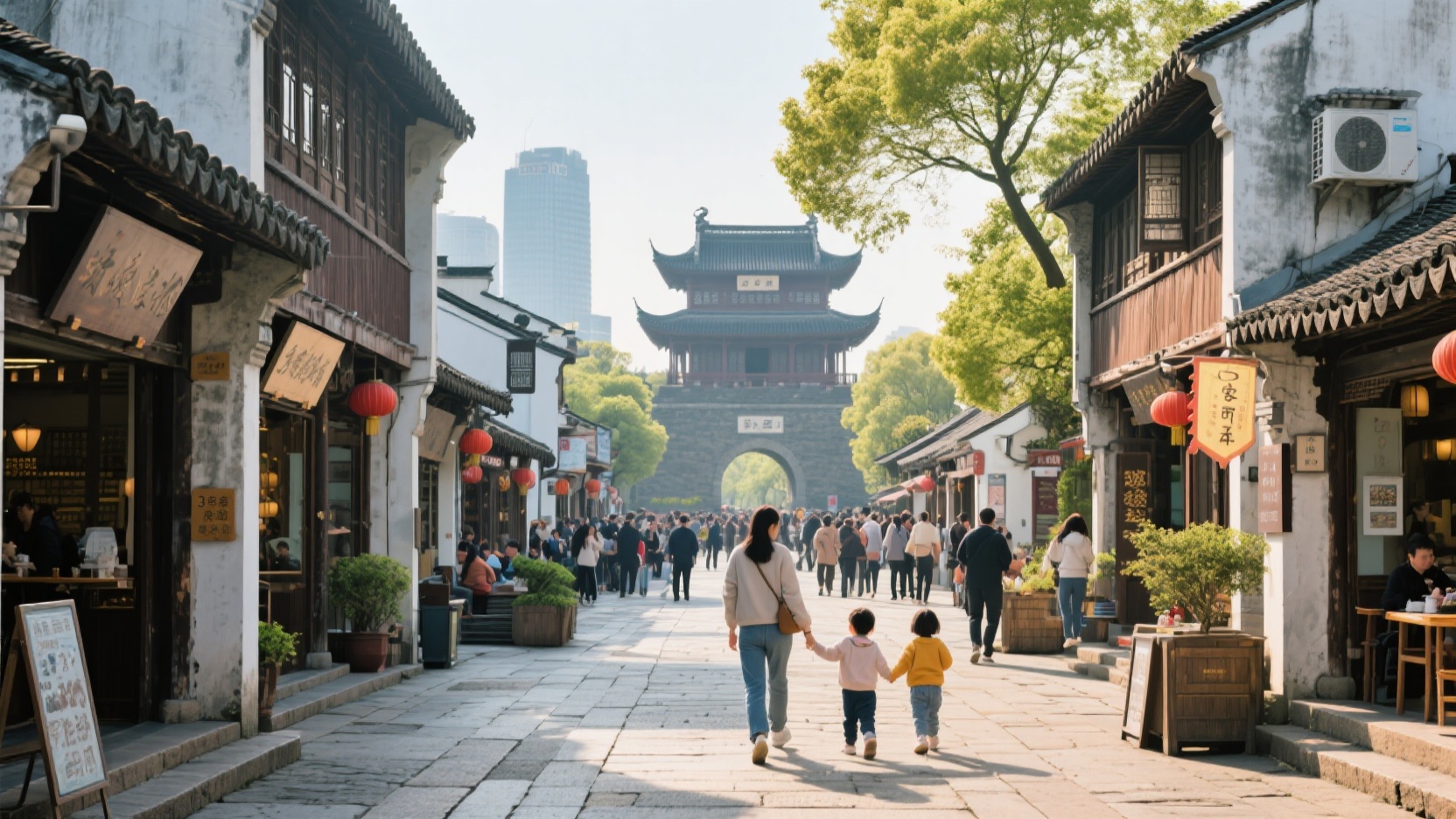
Having lived in Ningbo for almost eight years, every time I see someone listing Nantang Old Street, Drum Tower, and Tianyi Square as the highlights of a three-day tour of Ningbo, I want to rush over and tear up their travel guide: You're not here for tourism, you're here to queue up for the shopping district.
Ningbo is often portrayed as a "model city in Jiangnan" in travel guides, but I prefer to describe it as a "port city with a strong sense of local life." The biggest problem with those "three-day, two-night classic routes" is that they cram you into shopping districts that locals rarely visit or only visit once, while glossing over the truly great places. Below, I'll break it down point by point and give you a local's revised version.
Let's start by demolishing "Day One": Tianyi Pavilion, Moon Lake, Drum Tower, and Nantang Old Street. What's the problem?
Tianyi Pavilion is worth visiting, but the "classic route" always means you'll be stuck with tour groups starting at 9 AM. Locals recommend entering the park after 1:30 PM, when there are half the crowds and the lighting is better for taking photos. Two hours is enough to see the core area; don't waste your whole day here.
Yuehu Lake is more suitable for locals to exercise in the morning; tourists who walk from north to south will find themselves questioning their existence. It is recommended to only walk a short section on the west side of Yuehu Lake and then turn into the Yongfeng Warehouse Ruins, which is free, quiet, and offers a true view of the scale of Ningbo's old city.
Drum Tower and Nantang Old Street are the worst affected areas. You can walk through Drum Tower Pedestrian Street in 30 minutes, and it mostly sells the same fried skewers and milk tea as anywhere else in the country. Parking on Nantang Old Street can be congested for an hour on holidays, and once you go in, you'll find that it looks almost identical to all other ancient towns and old streets.
The second day of demolition: Dongqian Lake is not a "circle around the lake", don't come to the Old Bund during the day.
Travel guides often describe Dongqian Lake as a "cycling tour around the lake," but the shoreline is longer than you might imagine, with scorching sun in summer and biting winds in winter. Locals prefer to explore specific areas, such as the Taogong Island area or spending half a day at the Fuquan Mountain Tea Garden, which is much more comfortable than trying to cycle around the entire lake.
You need to arrive at Hanling Old Street early; after 10 a.m., tour buses start unloading passengers, and the stone-paved street turns into a queue. The adjacent Southern Song Dynasty Stone Carving Park is often overlooked; it's less crowded and the stone statues are quite interesting, making it more suitable for families or history enthusiasts.
During the day, the Bund feels like a sleepy commercial street; the bars are all closed, and there's no atmosphere for taking photos. Locals only recommend taking a short walk along the river in the evening or after dark, and avoiding the center of the bar street, where prices are high and the food is mediocre.
Day Three of Demolition: Ningbo Museum is Worth It, Tianyi Square and City God Temple Don't Really Need to Be Considered Tourist Attractions
The Ningbo Museum is free and has a very distinctive building, but guidebooks rarely mention that it's closed on Mondays. Many people arrive only to find it closed. It's recommended to arrive before 10 AM; there will be fewer people and more space on the exhibits, making an hour or two ideal.
Tianyi Square is just a commercial area for locals to eat and shop; it's not a tourist attraction, so there's no need to make a special trip there. After the City God Temple was restored, there were more tourists than worshippers. The real traces of old town life are hidden in the nearby Xianqian Street and Hutong Street; just wander into any of them and you'll find a more authentic Ningbo flavor.
If you only have three days, remove Tianyi Square and replace it with the Ningbo Gang Museum or Baoguo Temple. Baoguo Temple's Northern Song Dynasty wooden structure is among the best in China, and its tranquility far surpasses those popular tourist spots.
List of restaurants with long queues: Don't queue for these two, locals think it's not worth it.
Gangyagou is touted as a "must-try," but locals rarely queue up specifically for it. Its glutinous rice balls aren't much more expensive than those from the old shops near the market, and in fact, they're more expensive per person. If you want glutinous rice balls, the freshly made ones at the community breakfast shops near Gulou are good enough.
The queues at Gulou's "Dwarf Cake" and Nantang's "Youzanzi" are often over half an hour long, and once the Youzanzi cools down, it's not much different from a regular biscuit. Instead, the ash-water dumplings, rice buns, and roasted vegetable rice cakes from the market are the everyday snack choices for Ningbo locals.
The seafood stalls near the scenic area have a fast turnover but the taste is mediocre, especially in the Nantang and Bund areas. Locals prefer to go to small seafood restaurants around residential areas, order a few seasonal stir-fries, which are inexpensive and can taste the wok hei (wok aroma) that Ningbo cuisine should have.
Indigenous Optimized Version: 3 Days 2 Nights + 1 Day Flexible Alternative
Day 1: In the afternoon, visit Tianyi Pavilion, the west side of Yuehu Lake, and the Yongfeng Warehouse Ruins. In the evening, relax on Huayan Street; the community cafes and bakeries are more comfortable than the shopping districts. Have seafood at a small restaurant in the residential area in the evening; avoid Nantang and Gulou.
Day 2: Head to Hanling Old Street early in the morning, followed by the Southern Song Dynasty Stone Carving Park. In the afternoon, choose either Fuquanshan Tea Garden or Taogong Island in Dongqian Lake. Return to the city in the evening. A 20-minute walk along the river from the Old Bund is enough, then turn into the alley next door to find some home-style restaurants.
Day 3: In the morning, visit the Ningbo Museum (confirmed to be open), have lunch at a nearby noodle shop, and in the afternoon, choose either the Ningbo Gang Museum or Baoguo Temple. Spend the remaining time strolling along the Eastern New Town Ecological Corridor, which is more relaxing than the business district.
One extra day is optional: with an extra day, you can visit Cicheng Ancient Town or the Tiantong Temple and Ashoka Temple route. Spring and autumn are the best seasons. In summer, Sunhu Lake or Jiulong Lake are recommended for escaping the heat. In winter, a combination of museum visits and hot springs can be arranged.
10 Things You Shouldn't Do (Ningbo Avoidance List)
First, don't go to Nantang Old Street on a weekend afternoon; second, don't treat Dongqian Lake as a single scenic spot and tour the entire lake; third, don't buy the same snacks as those sold nationwide at Gulou; fourth, don't queue for long lines for Gangyagou; fifth, don't believe that the Bund is fun during the day.
Sixth, avoid cycling around Dongqian Lake at midday in summer; seventh, avoid visiting the Ningbo Museum on Mondays; eighth, avoid looking for attractions in Tianyi Square; ninth, avoid taking elderly people and children to crowded Chenghuang Temple; tenth, avoid eating at seafood stalls near scenic spots.
In conclusion
First, the best seasons to visit Ningbo are spring and autumn, with April and the end of October being the most comfortable and the seafood being plump. Avoid the scorching heat of midsummer.
Second, when traveling with elderly people or children, avoid rigidly adhering to the "three days and two nights classic" itinerary. Instead, reduce walking and explore different areas, and choose only one spot in Dongqian Lake to spend time at a leisurely pace.
Third, locals also go to Dongqian Lake and Hanling on weekends, so try to go on weekdays or go early on weekends.
Fourth, don't rely solely on the subway for transportation. Taking taxis or buses is more practical for Dongqian Lake and some scenic spots, especially when you have luggage.
Fifth, the real taste of Ningbo can be found in the wet markets and neighborhood streets. Don't follow the guides to find the "authentic" one; follow the small windows where locals queue up for a more reliable experience.