
Are the Ningbo delicacies mentioned in online travel guides actually eaten by locals?
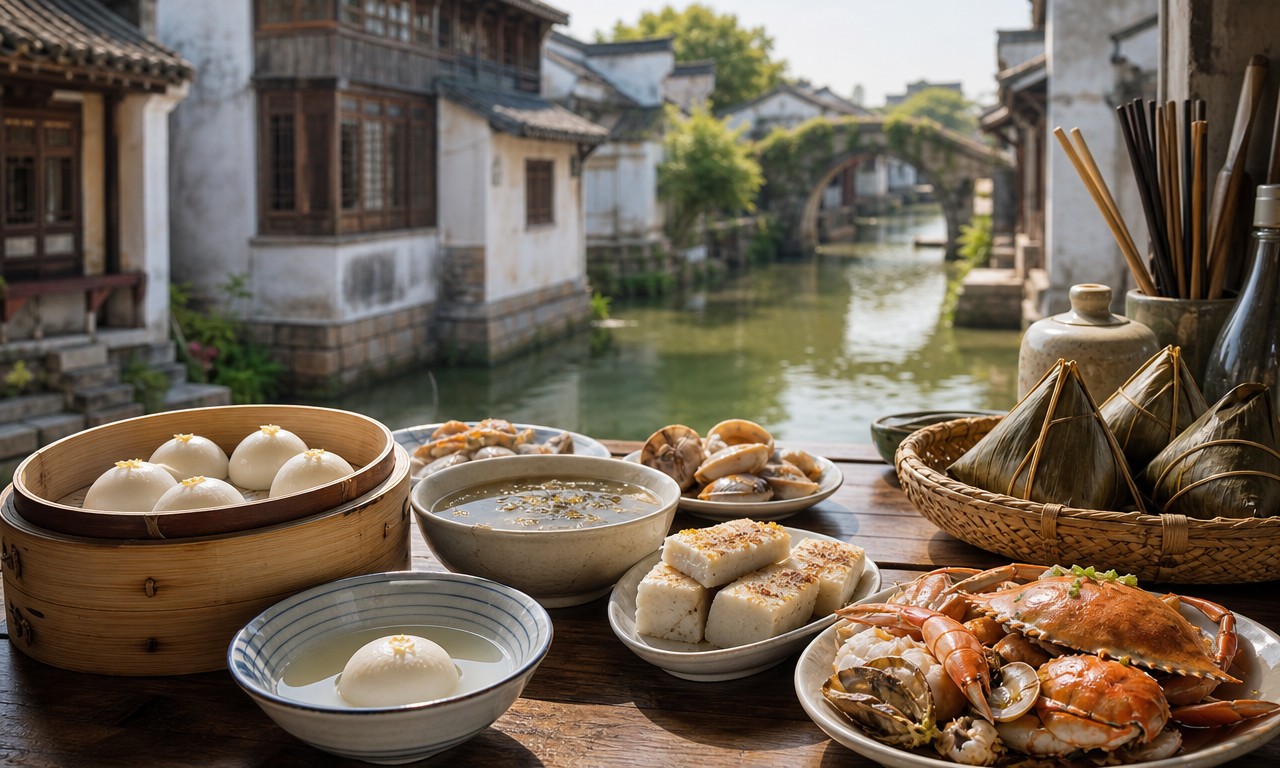
Many readers ask the same question before their trip: Are those few dishes that appear repeatedly in Ningbo food guides really worth making a special trip for? If you only look at restaurant reviews, you can easily arrive at two conflicting conclusions. I've compiled the actual ways locals eat these dishes, which I repeatedly heard and saw while doing my fieldwork in Ningbo. I won't speak for the restaurants; I'll simply compare what "it's said online" with what "locals actually do," and the differences will become clear.
Regarding tangyuan (sweet rice balls): Gangyagou is a popular spot for taking photos, but the "Ningbo tangyuan" that locals talk about is not the same thing.
Most travel guides will tell you that Gangyagou is the representative of Ningbo Tangyuan (glutinous rice balls), and that you must try a bowl of lard and black sesame Tangyuan when you come, and it's best to take a picture to prove you've been there. In reality, Gangyagou is more like a symbolic presence of Ningbo Tangyuan, turning this snack into a standardized souvenir and a chain business. It's not that locals don't eat it, but they rarely consider it their first choice for a daily treat.
Locals prefer the small stalls near the market where dumplings are made and cooked on the spot, or the pastry shops in old residential areas. The criterion isn't the size of the shop, but whether the owner is cutting and mixing the filling right next to a large piece of pork fat. You can tell the difference like this: if a bowl of glutinous rice balls is served with a clear broth and a rich, oily but not overly sweet filling, then it's probably the right one; if the broth is a sticky, sweet soup, then it's more like a tourist version. So my suggestion is that you can sit at Gangyagou (缸鸭狗) to familiarize yourself with the taste, but to truly experience how Ningbo people eat glutinous rice balls, you have to look in the alleys of old residential areas.
Regarding seafood: guides tell you to look for street food stalls, while locals look for "same-day delivery" and processing methods.
Most travel guides will tell you that to eat seafood in Ningbo, you have to go to a certain open-air seafood stall and order a table full of salt and pepper mantis shrimp and scallion oil razor clams to make the trip worthwhile. In reality, locals also eat at those repeatedly recommended seafood stalls, but usually only when entertaining out-of-town friends or when a lively atmosphere is needed.
Locals, when enjoying seafood, prioritize freshly caught seafood and its "home-style" cooking method. This "home-style" cooking involves simmering the seafood in soy sauce, cooking wine, scallions, and ginger, without using salt and pepper or steaming with garlic and vermicelli, to bring out its natural flavor. When ordering, ask "What seafood do you have today?" instead of just looking at the recommendations. If the restaurant can tell you which direction the razor clams and clams came from and when they arrived, it's generally a reliable place. Both approaches have merit: going to a street food stall with friends is about the atmosphere and variety; for a more comfortable meal, choose a small restaurant that offers "home-style mixed fish" or "soy sauce shrimp."
Regarding the food street: Nantang Old Street is like an exhibition hall; locals tend to frequent the area behind the Drum Tower and around the market.
Most travel guides will tell you that the best snacks in Ningbo are found in Nantang Old Street, where you can buy everything from fried dough sticks and layered cakes to bean curd candy in one street. In fact, Nantang Old Street does offer a complete range of snacks; walking in from the city gate is like visiting a snack exhibition. However, locals don't usually make a special trip to Nantang just to "eat fried dough sticks," because it's more of a one-stop destination for tourists.
Locals tend to frequent the side streets behind the Drum Tower and the snack carts around the market that only open in the afternoon. These places don't have neat storefronts; they might just have a stool and a fryer. The food might not be unique to Ningbo, but the appeal lies in its "just-out-of-the-box" quality. For example, fried dough sticks (yuzanzi) taste completely different when freshly fried and cooled for a few minutes compared to packaged ones. If you only have half a day, I suggest checking out the variety in Nantang first, then grabbing a hot snack near the Drum Tower.
Regarding breakfast: Travel guides rarely discuss Ningbo breakfast in detail; locals start their mornings with "salty" foods.
Most travel guides will tell you that you can just grab a bowl of wontons or soy milk at any shop in Ningbo for breakfast, since the focus is on lunch and dinner. However, Ningbo locals actually have a strong local breakfast selection, among which the savory "salty soy milk" and "soy sauce wontons" are absolute must-try dishes. These might seem surprising to outsiders, but locals have been eating them for decades.
Salty soy milk isn't just salted soy milk; it's soy milk mixed with soy sauce, dried shrimp, fried dough stick crumbs, and a touch of chili oil, resulting in a flavorful blend of soy and savory. Soy sauce wontons are simply cooked wontons scooped into a bowl and topped with a spoonful of soy sauce-based broth. This style of eating is widespread in Ningbo's old town. Wherever you go for breakfast, if you see an elderly local sitting down and ordering "One bowl of salty soy milk, one bowl of wontons" without even looking at the menu, you can usually just sit down and join them. Online guides don't cover this aspect much, but breakfast is the most authentic part of a city's daily life.
Regarding rice cakes: Travel guides present them as "local specialties you can take home," while locals appreciate their "chewy texture when freshly made."
Most travel guides will tell you that Ningbo rice cakes are famous, and you should buy a few vacuum-packed packs to take home and stir-fry or make rice cake soup. In reality, vacuum-packed rice cakes and the "fresh rice cakes" that locals buy at the Ningbo market taste very different. Fresh rice cakes, when sliced and cooked, become soft and chewy in just a few minutes without falling apart, and have a chewy texture rather than a powdery feel.
Locals have specific pairings for rice cakes: stir-fried with shepherd's purse and bamboo shoots, rice cake soup with pickled vegetables and shredded pork, or cooked with swimming crabs. These dishes are also common in restaurants, but whether they're prepared well depends mainly on the freshness of the rice cakes. My suggestion is that if you want to buy some as souvenirs, you can buy a few vacuum-packed bags; but if you want to truly understand Ningbo rice cakes, go to a local market in the morning, buy half a pound of fresh rice cakes, and have a nearby restaurant cook a plate of stir-fried rice cakes with shepherd's purse. After eating it, you'll understand why locals consider rice cakes a staple food rather than a local specialty.
Regarding souvenirs: Travel guides recommend buying fried dough twists and layered pancakes, but locals will also give you a packet of pickled vegetables.
Most travel guides will tell you that Ningbo souvenirs are fried dough twists, layered cakes, and bean curd candy—the packaging is attractive and serves as proof of your visit. However, if you ask locals what they bring back for relatives from out of town, besides these sweet snacks, they'll often casually slip in a bag of homemade pickled mustard greens. This might not sound like a typical souvenir, but it's essential for the flavor of many Ningbo dishes.
Salted pickled vegetables can be eaten alone or cooked with shredded pork or yellow croaker. They are available in bulk and vacuum-packed in small packages, and are inexpensive, making them suitable for soups or stir-fries. Judging their quality is simple: when opened, they should have a fermented, sour aroma, but not pungent; they should feel neither wet nor sticky. When giving them as a gift, adding the phrase "This is the soul of Ningbo cuisine" is more meaningful than simply giving a box of layered pancakes.
Regarding how many meals are needed to "eat right": three main meals plus a visit to the market or morning market basically completes the meal plan.
Most travel guides will tell you that you can't try all the food in Ningbo in two or three days, and you have to follow a list to visit each restaurant. Actually, if you just want to get a feel for the basics of Ningbo cuisine, you don't need to eat at a dozen places. One and a half to two days, with three main meals and a visit to a local market, is enough. For your first meal, have a bowl of soy sauce wontons with salted rice porridge; for your second meal, find a small restaurant for home-style braised seafood; and for your third meal, have stir-fried rice cakes with shepherd's purse and bamboo shoots with a bowl of salted vegetable soup.
The free time you have in between is more useful than eating another meal; you'll see what locals are actually buying, asking, and selecting their produce. This kind of observation is more reliable than any travel guide. So, back to the initial question: Do locals actually eat the Ningbo delicacies described in online guides? The answer is: yes, but the way they eat and the setting are often different. Once you understand this, you won't need to follow any lists anymore.