
A Day in Lhasa: A Local Food Timeline from Tibetan Noodles in the Morning to Roasted Trotters at Night
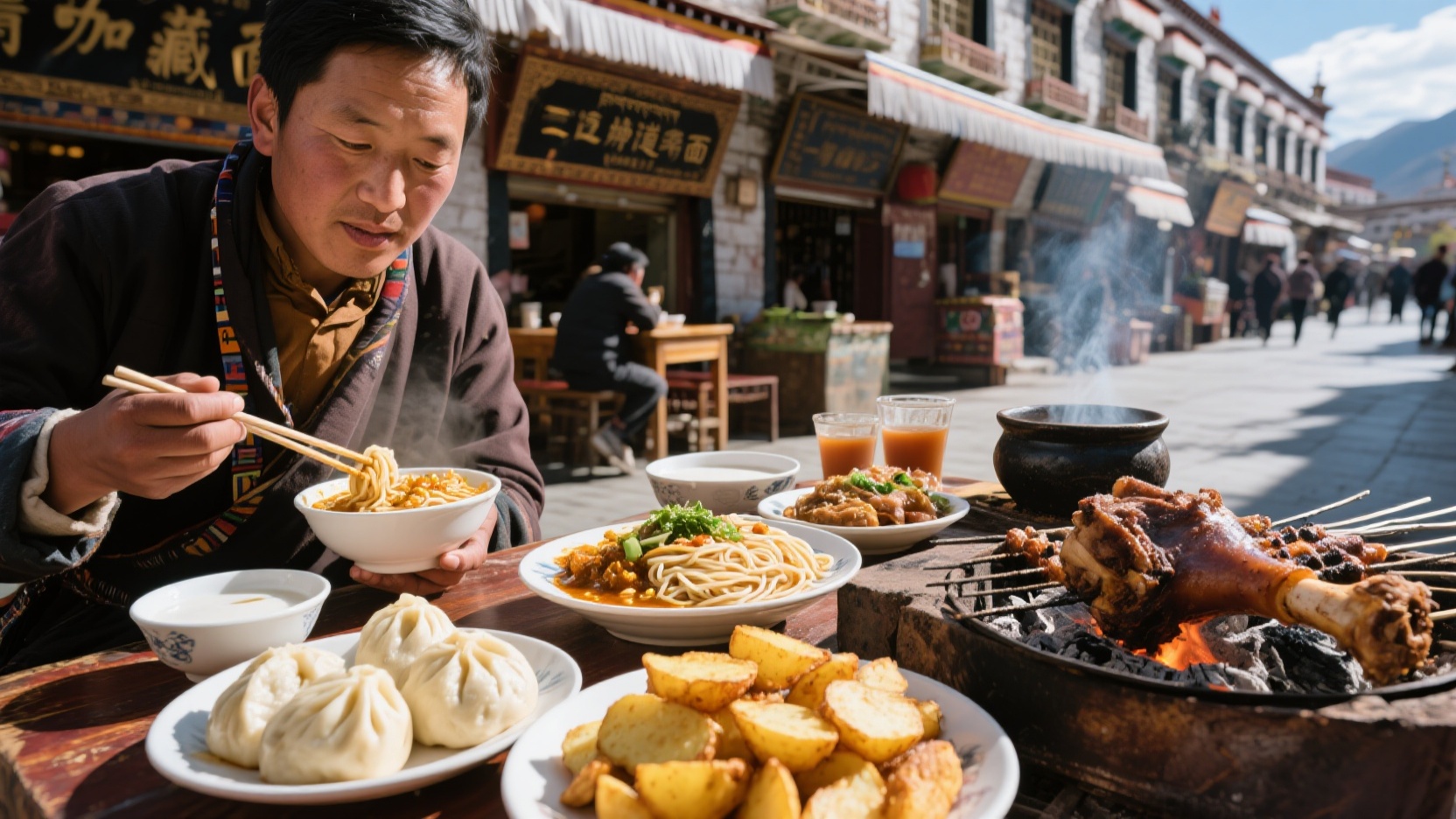
In Lhasa, the "Tibetan food" that tourists often talk about is not the same as the daily meals of locals. To understand the culinary essence of this city of sunshine, a more direct way is to spend a day with a local: from breakfast stalls in the morning, to bustling restaurants at midday, street vendors in the afternoon, and late-night food stalls. The following is a timeline of the most common foods eaten by Lhasa locals for three meals a day, without including dishes adapted for tourist areas, only recording daily life.
Morning: Tibetan noodles with sweet tea
Tibetan noodles are the most popular staple food at breakfast stalls in Lhasa. The noodles are made from wheat flour mixed with a certain proportion of barley flour, pressed with alkali, and then dried. After cooking, they have a slightly coarse and firm texture, with a subtle alkaline aroma and the fragrance of barley. The broth is simmered for several hours with yak bones and yak meat, resulting in a clear, flavorful soup. Before serving, it's sprinkled with chopped Tibetan scallions and a small amount of diced yak meat. Locals typically eat Tibetan noodles by first drinking a few sips of the broth, then mixing the noodles with chili sauce and finishing them in one go. Sweet tea is made by repeatedly stirring and boiling black tea, milk powder or fresh milk, and sugar in a large pot, and then pulling the tea to fully blend the tea and milk before pouring it into a thermos to keep it warm. The tea soup is light brown, smooth, and has a balanced sweetness and tea flavor. Almost every teahouse has its own ratio of milk to tea. Elderly people returning from morning prayers and working people dropping off their children often quietly enjoy this breakfast on the same bench; the warmth and familiarity it provides are enough to start a day on the plateau.
Lunch: Tibetan curry rice and Tibetan buns
In the small restaurants of the old town at midday, Tibetan curry rice and Tibetan buns are the most frequently seen combination. Tibetan curry rice doesn't use Japanese or Thai curry; instead, it uses Tibetan curry powder as the main ingredient. This curry powder is often seasoned with spices such as turmeric, coriander seeds, and chili peppers. Yak meat, potatoes, and carrots are stewed until tender, resulting in a thick, yellowish-brown broth. The beef is usually cut into large chunks, and after long stewing, the fibers become loose. The potatoes and carrots absorb the broth, served with a bowl of white rice and a side of pickled radish to cleanse the palate. Tibetan buns resemble steamed dumplings, with a dough made from semi-scalded dough. The filling is mainly yak meat, seasoned with Tibetan scallions, salt, and a small amount of Sichuan peppercorn water. After steaming, the skin becomes chewy, and the meat juices seep into the bottom. They are eaten dipped in chili sauce or Tibetan soy sauce, releasing the aroma of meat and spiciness simultaneously. For locals, lunch doesn't need to be elaborately presented, but it must be filling enough to sustain them through the afternoon's energy expenditure and long hours of sunshine.
Afternoon tea: street corner fried potatoes and Tibetan yogurt
Around three or four in the afternoon, the fried potato stalls on the streets of Lhasa are often crowded with students and wanderers. Highland potatoes have a high starch content and relatively low moisture content. Cut into thick strips, they are deep-fried in rapeseed oil until the outer skin wrinkles and the inside becomes soft and mealy. They are then removed from the oil and sprinkled with salt, chili powder, and a small amount of Tibetan spices, primarily Sichuan peppercorn powder and cumin powder. The freshly fried potatoes are piping hot, so they are eaten on the go with bamboo skewers, the spiciness and starchy aroma spreading simultaneously in the mouth. At the same time, Tibetan yogurt is also sold at street stalls. Traditionally made with yak milk through natural fermentation, it has a significantly higher acidity than regular yogurt. Locals usually add white sugar or ginseng fruit and mix it before eating. There is also yogurt served in wooden buckets, which has a thicker texture, almost solidified. This afternoon snack isn't about filling the stomach, but rather an instant gratification in the slow-paced life of Lhasa.
Late at night: casserole and charcoal-roasted pig's trotters
As night falls, food stalls and night markets in Lhasa gradually set up. Tibetan-style hot pot is a popular choice for many locals after work. The pot contains yak meatballs, vermicelli, kelp, tofu, and potato slices, served in a yak bone broth that is still bubbling when it arrives at the table. The yak meatballs are often hand-chopped and beaten until firm and elastic. The broth is clear yet flavorful, and the ingredients retain their individual textures, served with a side of chili sauce for dipping. On the nearby charcoal grill, roasted lamb trotters and lamb skewers are equally popular. The lamb trotters are first simmered in a broth until tender, then grilled over charcoal, brushed with oil, sprinkled with cumin and chili powder, resulting in a crispy, bubbly skin and tender, gelatinous tendons. The skewers are typically made with fatty yak or lamb meat, the charcoal grill rendering out the fat, and the seasoning is bold and direct. Eating these late at night is both a way to replenish the day's energy and an occasion for acquaintances to meet and exchange information.
From Tibetan noodles and sweet tea in the morning, to curry rice and Tibetan buns at noon, to fried potatoes and yogurt in the afternoon, and roasted pig's trotters in a clay pot at night, Lhasa residents' daily meals do not rely on "tourist menus," but rather unfold naturally around highland produce, physical needs, and social habits. From the streets to the alleys, understand this city through its food in a day.