
Avoid the major paid attractions in Hefei | Local's firsthand experience: 4-day in-depth tour with no entrance fees, don't be fooled by travel guides!
Don't be fooled by the "must-see attractions in Hefei" list anymore—I've lived in Hefei for over six years, and my most comfortable weekends were spent walking around the paid gates without spending any money on tickets, which allowed me to fully experience the essence of this city.
Online travel guides often list Sanhe Ancient Town, Bao Park, and Li Hongzhang's Former Residence at the top of the list, but locals rarely buy tickets to squeeze in. Hefei's charm lies not in the fenced-off "attractions," but in the cooking fumes of the vegetable markets, the young faces on the back streets of universities, the new exhibitions emerging in the old factory areas, and the sudden quiet of the evenings at the corners of the old city's alleys.
This 4-day itinerary completely avoids major paid attractions, with a different theme each day, connected by subway, bus, and shared bikes. It's perfect for solo travelers to enjoy a leisurely pace, or for groups of friends who don't want to rush. The daily expenses are kept very low, yet the experience is much richer than checking off the "top ten landmarks."
Day 1: Siwan Farmers Market and surrounding area, a "Hefei stomach" workout from early morning to afternoon.
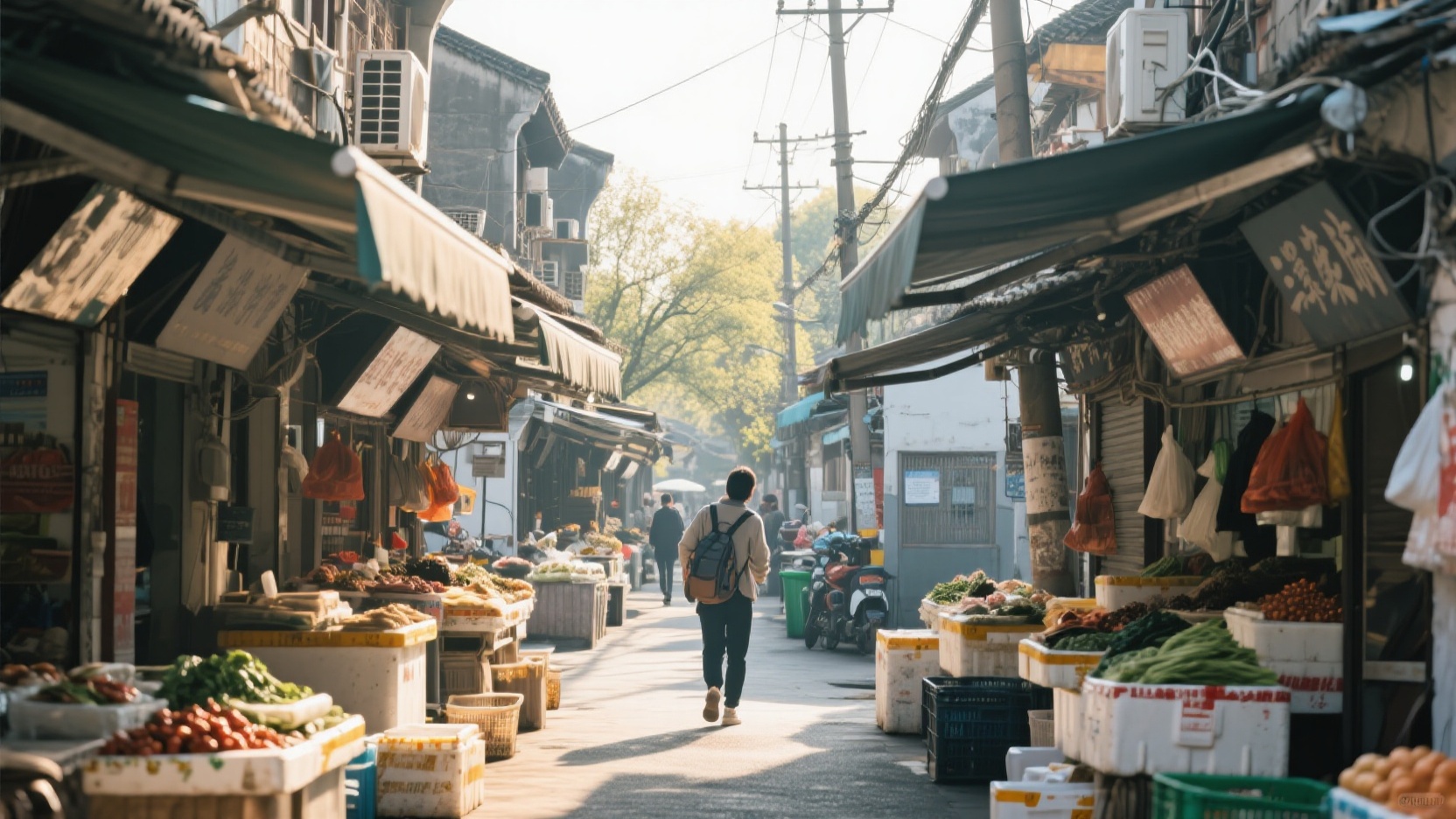
Siwan Market (Gongchen Street Market) isn't a tourist attraction, but it's worth getting up early for more than many tourist spots. Around 7 a.m., vendors set out their braised pork meatballs, potstickers, and soy milk, filling the air with the aroma of cooking oil and fresh vegetables. You can buy a few small portions and eat as you walk around; no one will rush you.
After leaving the market, you can walk towards Xinghua Park, or turn into the shade of the trees in the Ring Park and sit for a while. The amount of greenery in Hefei's old city is underestimated; the walkways along the moat are free and quiet, often frequented by locals playing chess or the erhu. This morning is free, but you'll understand that "living life" is the main theme of Hefei.
For lunch, find a traditional noodle shop or a local restaurant nearby; you can have a very satisfying meal for just a few dozen yuan per person. Don't blindly trust the "must-eat lists" on review apps; just go to the ones that are full of middle-aged and elderly people—you're unlikely to be disappointed.
Day 2: The area around USTC and the back streets of the university – the afternoons without classes are the best time to visit Hefei.
The areas around universities in Hefei are hidden gems of delicious food and great for strolling. Along Shuguang Road and Huangshan Road near the East Campus of the University of Science and Technology of China, there are many small restaurants that have been open for years, offering student-friendly prices while still delivering decent food. On a weekday afternoon, the streets are so quiet they feel like another city altogether.
Riding a shared bike from USTC to the old campus of Anhui University or the area around Hefei University of Technology, bypassing the main gates and taking the side streets frequented by students. The print shops, used bookstores, and dessert shops mixed together will instantly transport you back to your twenties. Buy a cheap cup of lemonade, sit under the shade of a tree outside the school gate and daydream, and you won't feel like you're "wasting time" at all.
Dinner can be found on the back streets of the university. Small portions of spicy hot pot, casserole, and rice bowls are all available, and you can have a hearty meal for just a few dozen yuan per person. Don't eat in the shopping malls; the "cheap and earnest" vibe around the university is the most authentic representation of Hefei's youthful spirit.
Day 3: Hechai 1972 and Changjiang 180, free exhibition space in the old factory area renovation.
Hechai 1972 is a cultural and creative park converted from the old Hefei prison. Most areas are open to the public free of charge, and there are installations, photography exhibitions, and displays of vintage items all year round. It's not a "paid tourist attraction," but more like a backyard for locals to stroll around on weekends. It's best to visit on a sunny afternoon, when the red brick walls of the factory buildings look beautiful in the light.
The Yangtze 180 Art District is located in Yaohai District. Formerly the Hengtong Machinery Factory, it now houses graffiti walls, a small theater, and independent cafes. It's not crowded, making it perfect for a leisurely stroll, and taking photos is effortless. Many travel guides don't mention it, but I find it much more genuine than some "old streets" that charge admission.
Both industrial parks are accessible by subway or bus. While transferring, you can grab a bowl of local Hefei beef noodles or potstickers. The old industrial area has a completely different feel from the city center—rugged, rough, and somewhat wild—which is precisely the unrefined side of Hefei.
Day 4: Explore Cuozhaoshan Lane, Beiyoufang Lane, and Qinlao Lane, turning the old town's alleyways into a map.
Huaihe Road Pedestrian Street is too noisy, so don't go there. The real gems are the renovated alleys behind it. The murals, shops, and lights in Cuozhaoshan Alley, Beiyoufang Alley, and Qinlao Alley are more photogenic at night than during the day, but they are quieter during the day, perfect for leisurely strolling around counting the addresses.
Hidden in the alleys are many unassuming stalls selling fried skewers, vermicelli, and baked pancakes, with affordable prices and consistently delicious flavors. Don't be misled by the signs for "trendy pedestrian streets"; just turn to either side, and in a few minutes you can escape the crowds and enter the most relaxed capillaries of Hefei's old city.
In the evening, you can stroll along the outskirts of nearby Yinhe Park or Baohe Park; the free trails are just as pleasant. No need to enter the paid areas; simply walk around the water, watching the elderly fish and children run around – a gentle way to end the day with minimal expense.
Transportation and pace: Subway, bus, and bicycle – even without entrance fees, you can get around smoothly.
Hefei Metro covers most of the area, fares are cheap, and transfers are straightforward. For solo travelers, it's recommended to get a transportation card or use a QR code to avoid having to deal with change each time. Shared bikes are widely available in the core area; riding between the market and the old alleyways will actually allow you to see more street corners.
Don't schedule more than two main areas each day: one in the morning to afternoon, and one in the evening. This way, you won't get tired and you'll have time for unexpected detours. The surprises in Hefei often happen at the wrong alleyway, not at the destination indicated by your navigation.
The biggest expenses throughout the trip are actually meals and milk tea, but this is up to individual budgets. If you want to control costs, you can have breakfast and lunch at the market or the back street of the university, and eat at street stalls in the evening. This might save you more money in a day than buying two bottles of water in the scenic area.
In closing: Don't ask the locals if I didn't tell you.
1. Don't carry too much cash when you go out alone. Using a QR code for public transport and mobile payment is enough. Carry a small bag for easy access to the market.
2. The freshest produce is better when you go to the market in the morning than at noon. Around 8 a.m. is the best time. If you go too late, the market will be closed and you won't see the lively atmosphere.
3. The atmosphere around universities is completely different during holidays and the start of the semester. Try to go on weekdays, as many small shops will be closed during winter and summer vacations.
4. Hechai 1972 and Changjiang 180 are basically free, but some special exhibitions may charge a fee. Ask before you go in, and don't scan the code without knowing why.
5. The old town alleys are brightly lit at night but crowded. If you want to take photos, go early in the evening to get a good spot without having to squeeze with the crowds.
6. No need to deliberately check off the route. Just set a starting point each day and follow your appetite and the green light for the rest. It's the easiest way to travel alone.