
How many days are enough to explore Hangzhou? Seven things you should think about before you go.
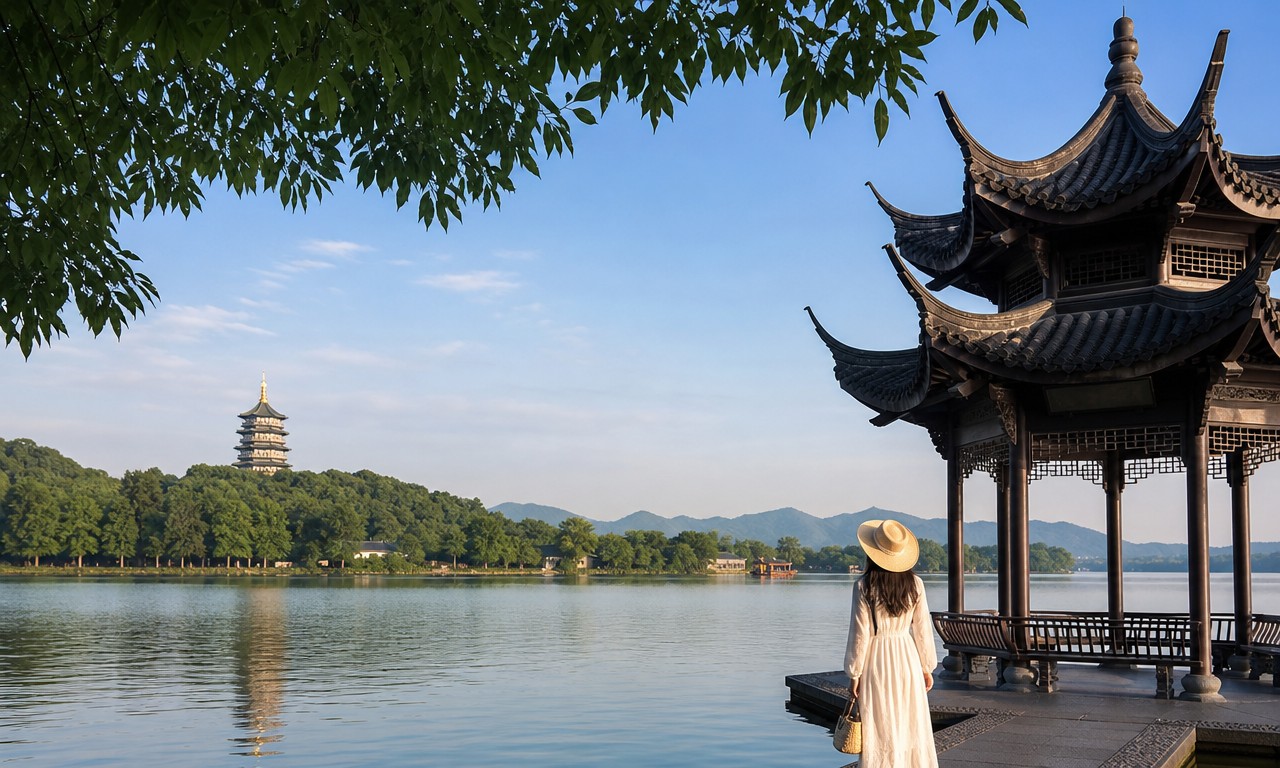
Reading too many Hangzhou travel guides can actually make you more prone to getting stuck before you even set off: how to schedule your time, where to stay, how to travel with family, and how to control your budget. These questions may seem basic, but they truly determine whether your trip goes smoothly. Below are seven questions that I'm most frequently asked in my Q&A sessions, and I'll explain them one by one.
How many days are enough to visit Hangzhou?
If you're only visiting the core area of West Lake, two days and one night is the minimum. The first day could include a short walk around the lake, a boat trip, and a visit to an island. The second day could be spent heading towards Lingyin Temple or Longjing – a perfect pace. However, if you want to include Xixi Wetland, the Grand Canal, and Liangzhu Island, you'll need at least four days and three nights.
My assessment is that a three-day, two-night trip is the most comfortable for a first-time visit to Hangzhou. It's neither rushed nor too empty. Arrive at noon on the first day, then walk along Beishan Street to Gushan in the afternoon; visit Lingyin Temple in the morning and Yanggong Causeway and Maojiabu in the afternoon on the second day; take a walk along the lake in the morning on the third day and leave at noon. With this itinerary, the places I don't visit actually become reasons to come back again.
What season is the best to visit?
There's no standard answer to this question, but a very practical way to judge is to consider what you're most afraid of. If you hate the heat, avoid July and August; if you hate the rain, don't gamble on the plum rain season; if you hate crowds, don't force yourself to visit during the National Day and Qingming Festival holidays. The beauty of Hangzhou is that it has something to see in almost every season, but the experience varies greatly.
Personally, I highly recommend visiting from mid-March to mid-April, and from mid-October to mid-November. The former is when spring is at its most vibrant, and the latter offers the most stable autumn weather. If you can only come during the summer holidays, then focus your itinerary on early mornings and evenings, and escape to museums or tea plantations at midday. Winter is also a good time to visit; it's less crowded, quieter, and if you happen to be there during the snowfall at the Broken Bridge, it's one of Hangzhou's most precious sights.
Is it safe for me to come to Hangzhou alone?
Hangzhou's public safety is among the best in China. During the day, one can move freely between West Lake, the old city, and scenic areas without significant safety concerns. At night, as long as one avoids remote mountain roads, returning to one's accommodation from the Hubin or Nanshan Road area around 9 PM is generally safe.
A few small things to keep in mind: when riding shared bikes at night on Nanshan Road, try to stay on the side; walking in groups on mountain trails is safer; send the address of your hostel or guesthouse to a friend in advance. Overall, Hangzhou is a convenient and safe destination for solo travelers, perfect for unwinding.
Is it appropriate to bring elderly people and children?
It's suitable, but only if you're willing to simplify your itinerary. Hangzhou doesn't have many steps, but the West Lake loop is quite long, so don't expect to take elderly people or children on a long walk. The smartest approach is to explore in "points": take a ride on an electric cart, take a boat ride, find a place to sit, drink tea, and relax—this is much more important than rushing.
The preferred route is from the lakeside to the Broken Bridge, as the road is flat and you can stop anytime. The steps to Lingyin Temple aren't steep, but considering the large number of visitors, it's recommended to go early in the morning. Families with children can choose between Flower Harbor Park and Hangzhou Zoo, which is more appealing to kids than forcing them to visit the Southern Song Imperial Street.
What is the approximate budget?
Tourism spending in Hangzhou is quite flexible, but here's a rough but helpful guideline: This only includes food, accommodation, transportation, and sightseeing, excluding major transportation costs. A budget-friendly approach would involve spending under 200 RMB per person per day, staying in hostels or budget hotels, eating mainly at noodle shops and street food stalls, and only visiting major attractions for admission.
A mid-range experience costs between 300 and 500 yuan per person per day, including a well-located chain hotel or a quiet guesthouse, a few meals at local restaurants, a boat trip, and a few taxi rides. If you're looking for a high-end experience, such as staying in a boutique hotel by West Lake, dining at a Black Pearl restaurant, and hiring a tour guide, it's not an exaggeration to say that you could spend 800 to over 1000 yuan per person per day. What's expensive in Hangzhou is "comfort," not "necessities."
Where would be a convenient place to stay?
For first-time visitors, I highly recommend the Hubin, Fengqi Road, and Wulinmen areas. They're not necessarily the closest to the attractions, but rather the most conveniently located. Subway, bus, restaurants, and fruit shops are all easily accessible, and you can even go shopping in the evening. The area has a lively atmosphere at night, so it won't feel too deserted whether you're alone or with family.
If you're looking for a quieter area, head towards the western section of Beishan Street, Qingzhiwu, or Siyan Well. Qingzhiwu offers convenient dining options, while Siyan Well boasts numerous guesthouses and mountain views, though dragging luggage up the mountain can be tiring. If your sole purpose is to visit Lingyin Temple early the next morning, you can choose to stay near Lingyin, but there's not much to do at night. Generally speaking, the eastern side of West Lake is more tranquil than the western side, while the southern side has a more vibrant, lively atmosphere than the northern side.
What are some suitable souvenir gifts for Hangzhou?
My principle is: don't buy those big boxes from tourist souvenir shops. When giving gifts, consider two options: tea and pastries. As for tea, the West Lake Longjing tea market is quite complex; don't chase after famous brands. Choose higher-priced pre-Qingming tea or pre-rain tea for everyday consumption. It's more practical to find good quality tea at the tea markets on Jiefang Road or Zhuantang.
For pastries, Zhiweiguan and Caizhizhai are both good options. Their Tiaotougao and Dingshenggao are inexpensive but presentable. If you want something more interesting, look for local favorites like braised duck, dried bamboo shoots, or small sachets from Hu Qing Yu Tang. Avoid the cheap West Lake lotus root starch (three boxes for ten yuan); you'll likely never want to open them.
Is it still worth going on a rainy day?
It's worth it, and the rainy side of West Lake is the most beautiful. Unless it's a typhoon, rain actually reduces the crowds. My three top recommendations for rainy days are: Yanggong Causeway, Maojiabu, and Yuhu Bay. The heavier the rain, the calmer the water, the greener the trees, and the emptier the streets.
If the rain is too heavy for outdoor activities, consider two indoor alternatives: the China National Silk Museum, whose architecture is beautiful; and the Liangzhu Museum, with its clear layout, perfect for a leisurely visit. Don't dismiss rainy days as "useless"; sometimes, they're the least touristy days in Hangzhou.