
Solo Trip to Hangzhou Without Mistakes | A Safety Checklist for Dining and Photo Spots for One Person for Three Days and Two Nights (Blogger's Personal Experience to Avoid Pitfalls)
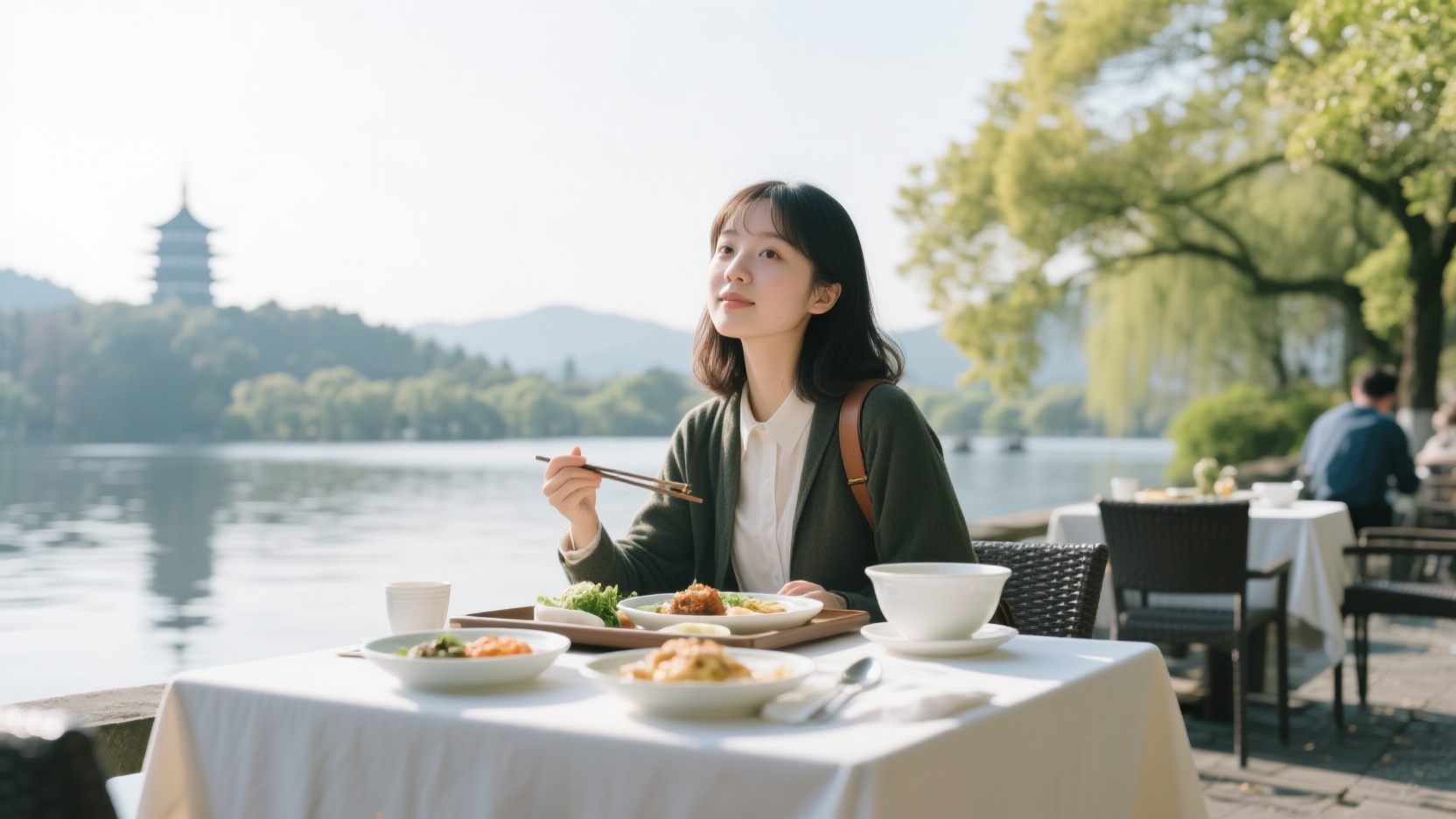
For this solo trip to Hangzhou, I deliberately avoided the Broken Bridge at West Lake on weekends and public holidays. The reason is simple: the worst thing about traveling alone isn't loneliness, but being squeezed in crowds and not daring to even take out your phone. My core goals for this trip were only three—comfortable accommodation, delicious food, and beautiful photos without having to ask for help. The following is a summary based on my own experience over three days and two nights, focusing on practicality and avoiding trendy names.
For safe accommodation areas, the first choice is the "Huanglong-Wulinmen" transition zone, followed by Qingzhiwu.
Why not stay within the scenic area? After personal testing, I found that guesthouses in the scenic area have sparse streetlights and limited delivery options at night. When traveling alone, it's difficult to quickly blend into the crowd if approached or followed. The Huanglong-Wulinmen area is close to the subway. Walking back to the hotel from Kerry Centre around 9 PM, convenience stores, pharmacies, and chain fast food restaurants along the way were still open, offering a high level of safety. Qingzhiwu is suitable for visiting the botanical garden during the day, but it's quiet at night. Solo female travelers should choose accommodations near the main road with 24-hour front desks. Price range: Mid-range chain hotels in Huanglong/Wulinmen cost tens to hundreds of yuan per person; Qingzhiwu mainly offers budget guesthouses, suitable for those with limited budgets but who need to confirm access control and surveillance.
Accommodation details are also important: try to choose buildings with elevators, hallway surveillance cameras, and room doors with deadbolts or doorstops. After checking in, take a picture of the fire evacuation plan and send your location to someone you trust. This time I stayed at a mid-range chain hotel near Wulinmen, and I could still order hot food delivery at 10 pm, which is crucial for solo female travelers.
Dining alone is no longer awkward: noodle shops, snack stalls, and local restaurants that are "table-sharing friendly"
Dining alone in Hangzhou is actually quite comfortable. Locals often have a bowl of Pian'erchuan noodles and a vegetarian dish for breakfast, and a bowl of Banchuan noodles with soup for lunch and dinner. I've personally tried neighborhood noodle shops like Juying and Fang Laoda; they'll proactively share tables when it's busy, so you won't feel out of place if you're dining alone. When ordering, just say "a bowl of Banchuan noodles, plus a poached egg," and the aunties will serve quickly without giving you a second glance. Zhiweiguan and Xinfeng Snack Shop have multiple windows where you can comfortably eat a basket of xiaolongbao, a bowl of wontons, and a serving of Dingsheng cake for just a few dozen yuan per person. The essence of dining alone is to eat at the pace of the locals, not to be fixated on a scenic view.
If you want something a little more formal, you can choose the Hangzhou-style set meals for one at the mall, but I recommend established restaurants like "Baijia Chicken Restaurant." Go in the afternoon when it's off-peak, order a plate of poached chicken and a bowl of chicken porridge, and the price is very reasonable. The environment is not noisy, and the staff are used to serving solo customers. There are also many set meals for one on the B1 floor of Hubin Yintai, perfect for replenishing energy after a long walk.
Tips to avoid pitfalls: Most of the "popular snacks" on the main street of Hefang Street need to be eaten while walking. When there are many people, it is easy to get separated when walking alone, and the tastes are similar. It is recommended to turn into Gaoyin Street or Zhongshan South Road. You can order half portions at the local stir-fry shops, and the owners will remind you that "it is enough for one person".
Taking photos without asking for help: The Long Bridge in the early morning, the Maojiabu Stone Bridge, and the Misty Trees of Jiuxi
Solo photography without needing help relies on utilizing "fixable equipment" and "times with low crowds." My best photo spots this time were, in order: Changqiao Park at 6:30 AM, where the stone railings were just the right size to hold a mirrorless camera or phone, allowing me to use time-lapse or countdown timers to shoot the Leifeng Pagoda in the background; near Yujian Bridge in Maojiabu, where there are flat stone piers and wooden boardwalks, so tripods or tripods don't get in the way; and the rocks in the stream at Jiuxi Yanshu, where I placed my equipment on the rocks on the opposite bank, stood by the water, and the misty weather added even more depth. These places are less crowded in the early morning, so you won't be surrounded by onlookers for setting up your tripod.
If you don't have a tripod, you can use the backs of benches along West Lake, the reverse support of shared bicycle baskets, or even the top of trash cans lined with tissues to temporarily serve as shooting positions. Set your phone to "voice-activated shooting" or use your watch for remote control to avoid running around. I personally tested that the light at the yellow walls of Faxi Temple is good in the afternoon, but it's crowded, so I recommend using a wide-angle lens close to the wall to shoot close-ups, as it's less likely to capture passersby.
Avoid these pitfalls: During the day, it's nearly impossible to find a place to put your equipment on Su Causeway and Bai Causeway, and DSLR cameras posing for photos can easily block the way. It's not recommended to use a selfie stick near the Broken Bridge, as the equipment can easily slip from your hand in the crowds. For nighttime photography, the Chenghuang Pavilion platform and the area near the bridge at West Lake Cultural Square are less crowded and have more stable lighting.
Reliable group tour and travel companion finding channels: hostel front desks, official guided tours, and one-day small groups
Traveling solo doesn't mean being alone the whole time. To save on transportation, have guided tours, and do less planning, I recommend choosing a small day tour through a reputable platform, such as routes to Qiandao Lake, Moganshan, or Anji. These tours usually meet at Huanglong or Wulinmen and include pick-up and drop-off. I personally tested a certain platform's "pure play small group" tour; there was no forced shopping, the guide checked the number of participants, and there was an electronic contract before departure. This felt much safer than soliciting customers on the street.
Looking for dining buddies or nighttime walk companions? Prioritize public areas of international hostels, hotel reception message boards, or official volunteer information booths around West Lake. Many hostels in Hangzhou offer activities like "citywalk night hike up Baoshi Mountain," but confirm whether there are fees and insurance before participating. Women are advised against randomly sharing accommodations or meeting up late at night on public platforms like Xianyu or Weibo. If you really want to find travel companions, choose to meet in public places during the day and send screenshots of the other person's social media profile and itinerary to your family beforehand.
Be wary of "day tour touts" at scenic area entrances and "tea gardens/silk shops frequented by locals" recommended by taxi drivers, especially when traveling alone. Not all enthusiasm is safe.
Blogger's summary: Three-day, two-night itinerary and 10 safety tips for solo travel
Suggested 3-day, 2-night itinerary: Day 1: Arrive in Hangzhou at noon, stay overnight at Huanglong/Wulinmen, afternoon walk along Beishan Street—Gushan—Maojiabu, dinner at Zhiweiguan or Fanglaoda; Day 2: Early morning photo at Changqiao Park, morning at Jiuxi Yanshu, afternoon at Faxi Temple + Yunqi Bamboo Path, evening at Hubin Yintai for a solo meal; Day 3: Morning at Gongchen Bridge/Xiaohezhijie on the Grand Canal, lunch at Xinfeng Snacks, afternoon return journey. This route avoids backtracking and utilizes public transportation or cycling throughout.
1. Before leaving home, send your itinerary and hotel name to at least one trusted person, and let them know you are safe and sound when you return to the hotel in the evening.
Second, only choose reputable hotels with 24-hour front desks, corridor surveillance, and door locks/stoppers; do not look for "Instagrammable homestays".
3. After 9 p.m., try to avoid walking on mountain trails and dimly lit alleys in scenic areas. Prioritize taking the subway or a regular ride-hailing service.
4. Keep your phone battery at least 30% throughout the trip, carry a power bank and charging cable with you, and download offline maps in advance.
5. Do not wear noise-canceling headphones when walking at night, especially near rivers, in underpasses, or in unfamiliar neighborhoods.
6. When dining alone, try to choose street-front shops or shopping malls with surveillance cameras, and avoid eating or drinking beverages that are out of your sight.
7. When taking photos, observe your surroundings first. Do not place your tripod in the main passageway. Keep your backpack zipper facing forward.
8. When joining a group or traveling together, only choose official activities from reputable platforms/hostels. Do not follow street vendors or reveal your room number to strangers.
9. Keep your wealth private. Keep cash and identification documents separate. Lock spare bank cards in a hotel safe or in your luggage.
10. If you feel you are being followed or feel uncomfortable, immediately go to a public place with surveillance cameras, such as a convenience store, pharmacy, or subway station, for help.