
Five Days of Relaxing in Guilin with Parents | Blogger's Personal Test of a Slow-Paced, Zero-Climbing Route, Includes Tips for Seniors to Avoid Pitfalls and Packing List
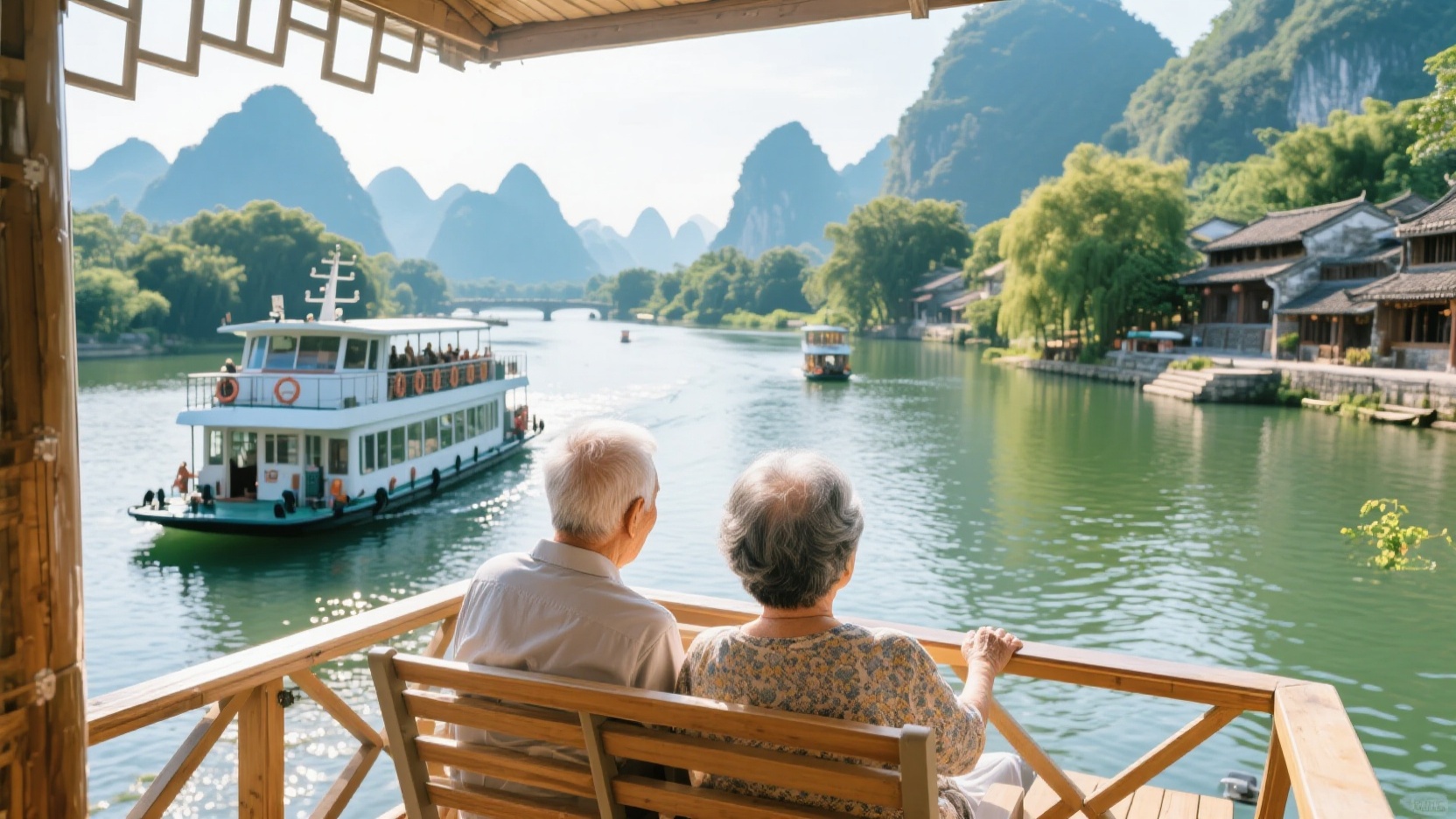
This was my third trip to Guilin with my parents. The first two times, I made the same mistake: forcing them to do things like bamboo rafting and hiking, which are popular with young people, on their 70-year-old legs. This time, I changed it to a more relaxed approach: visiting only one spot each day and returning to the hotel at 1:30 PM for a two-hour nap. My parents didn't complain of being tired at all, and their legs weren't swollen when they got home. This route is best suited for spring and autumn, especially avoiding the May Day and National Day holidays. I personally tested all the locations, paying close attention to toilet density, walking distance, elevator coverage, and distance to hospitals.
Why I advise you to "do the opposite" when taking your parents to Guilin.
Guilin's scenery is indeed suitable for seniors, but only if they abandon the obsession with "must go to West Street in Yangshuo, must take a bamboo raft on the Yulong River, and must climb Xiangong Mountain." West Street is crowded and slippery at night, bamboo rafting requires sitting with legs bent for a long time, and Xiangong Mountain has steep steps and no elevator. When taking parents to Guilin, the principle should be "less walking is better." Most attractions in the city are on flat terrain, the lakeside walkways along the Two Rivers and Four Lakes have railings and gentle slopes, and the East and West Alleys have a high density of public toilets—these are the comfortable areas for seniors.
My five-day itinerary was as follows: the first two nights I stayed near Dongxi Lane, the third day I chose between the ancient town and a hot spring, and the fourth day I took a large cruise on the Li River. Each day I only planned one or two key destinations, and I made sure to return to the hotel for a two-hour midday rest. It turned out that a midday rest is not an "option" for people over seventy, but a "must"—blood pressure is more prone to fluctuations in the afternoon, and a nap allows for a more relaxed and enjoyable meal in the evening.
The first two nights I stayed in Dongxi Lane: I first familiarized myself with the elevator, toilets, and hospital using three maps.
For accommodation, I chose hotels or apartments with elevators in the Dongxi Lane commercial area. The biggest advantages here are: plenty of public restrooms downstairs, most with accessible stalls; the main street, though narrow, has gentle ramps that wheelchairs and walkers can easily navigate; and restaurants are concentrated, with hot rice noodles and porridge within a three-minute walk. Avoid older guesthouses deep in the alleys, as many lack elevators and require climbing wooden stairs, which is extremely uncomfortable for the knees.
The hotel I stayed at was less than a 15-minute drive from the nearest top-tier hospital, and there was also a secondary hospital nearby that could handle routine cases. After checking in, the first thing I did wasn't to put down my luggage, but to take my parents on a walk through the route from the room to the elevator, lobby, public restrooms, and breakfast area, making sure each section took no more than five or six minutes to walk. Elderly people can feel anxious in unfamiliar environments, so knowing the route beforehand makes it easier for them to get up at night or go out in the morning without panic.
A friendly reminder: Guilin experiences frequent rain in spring, and some of the stone-paved streets in the East-West Alley can become slippery when wet. When traveling with parents, be sure to wear non-slip shoes. If it rains heavily, return to the hotel to rest and avoid walking. It's best to choose a hotel with air conditioning and heating, as there are significant temperature differences between day and night in March and April.
The Two Rivers and Four Lakes cruise will now be changed to daytime cruises; on the Li River, only large cruise ships will be selected, not bamboo rafts.
Many travel guides recommend the Two Rivers and Four Lakes night cruise, praising its beautiful lights, but I wouldn't recommend it for parents. The lake is cold at night, the reflected lights can be disorienting for the elderly, and the dim lighting on the dock steps makes it easy to slip and fall. It's better to choose a daytime cruise; visibility is better, staff are available at the dock to assist, and there are restrooms on board for the elderly to use at any time. I chose a cruise around 10 am, which finished just in time for a midday rest at the hotel.
On the Li River section, I skipped the bamboo rafting from Yangdi to Xingping and instead took a large cruise ship from Zhujiang Wharf to Yangshuo. The large cruise ship has enclosed cabins on the first floor with fixed seats and toilets, handrails on the deck, and a gentle ramp at the wharf, making it wheelchair accessible. After disembarking, you can take an electric cart directly from the Yangshuo parking lot to the station, avoiding unnecessary walking. Don't choose the bamboo raft just because it's "closer to the water," as elderly people's legs and feet may go numb after sitting for a while, and trying to stand up and move around could be dangerous.
Day 3: Choose between the ancient town and the hot springs: A firsthand test of the accessibility differences between the two options.
On the third day, we'll offer a flexible option based on your parents' condition. Option 1: Visit Xingping Ancient Town, about an hour's drive. The main street is flat with two public restrooms, but some of the cobblestone paths in the old alleys are uneven. Just walk on the main street and avoid the alleys. Option 2: Visit Longsheng Hot Springs, about a two-hour drive. The mountain roads are winding, but the hot spring resort hotel has elevators, indoor pools, and wheelchair accessible facilities, making it suitable for elderly people with knee problems. I've taken my parents to experience these places twice, and my conclusion is: if your legs are still able and the weather is fine, choose the ancient town; if you're sensitive to cold and want complete relaxation, choose the hot springs.
Regardless of which option you choose, you must depart before 10:00 AM and return to the hotel by 1:30 PM. If you are going to Longsheng, take motion sickness medication 40 minutes beforehand and prepare vomit bags and warm water for the journey. Do not soak in the hot spring for more than 15 minutes, and put on a bathrobe after getting out of the water to avoid dizziness due to temperature differences.
The biggest advantage of this two-option option is that you don't have to get up early to rush around, and you won't be exhausted from traveling to two far-off places in one day. My parents' exact words were: "This day feels like a day for fun, not a day for your life."
Five-day, four-night daily rhythm and a 20-item packing list for seniors
I've roughly outlined my five-day itinerary: Day 1: Arrive in Guilin in the afternoon, stroll leisurely through the East-West Alley, find a rice noodle shop with a restroom, and sit down for a meal; Day 2: Morning cruise on the Two Rivers and Four Lakes, return to the hotel for a midday rest, and take a walk along the river in the evening; Day 3: Choose either an ancient town or a hot spring, and return to the hotel before dark; Day 4: Take a large cruise on the Li River, with no other sightseeing planned for the return trip; Day 5: Sleep in until you naturally wake up, then pack up and head home. A two-hour midday rest is mandatory every day.
I've used this packing list three times in a row. It contains twenty items categorized into five groups. Just follow it when you receive the packages. First, bring your ID card, medical insurance card, and chronic disease treatment card; second, commonly used medications categorized into five types: cardiovascular medications, gastrointestinal medications, cold and fever reducers/pain relievers, external liniments for sprains and bruises, and sleep aids or motion sickness medications; third, bring a five-day supply of chronic disease medications, plus an extra three days' worth; fourth, two pairs of non-slip soft-soled shoes; fifth, a lightweight folding cane or walking aid; sixth, knee and ankle supports; seventh, a portable thermos; eighth, individually packaged biscuits and nuts; ninth, quick-acting nitroglycerin tablets (carry on, not checked); tenth, a folding sitz bath stool; eleventh, disposable toilet seat covers; twelfth, disinfectant wipes and hand sanitizer; thirteenth, a raincoat and a folding umbrella; fourteenth, a light down or fleece jacket; fifteenth, a sun hat and sunglasses; sixteenth, a neck pillow and lumbar support; seventeenth, medications labeled for morning, noon, and evening; eighteenth, a blood glucose meter and blood pressure monitor (if needed); nineteenth, a charging cable and a power bank; twentieth, a printed copy of the hotel address and hospital route map, in case your phone runs out of battery.
In conclusion: When taking parents to Guilin, the key isn't "how many attractions we visited," but rather "fewer steps to climb, an extra nap, and nearby restrooms." I've taken this route with my parents three times, and the spring and autumn seasons were the best. Checking the route to the hospitals beforehand and asking "Do you need to use the restroom?" before leaving each day gives them more peace of mind than any tourist attraction.