
A leisurely trip to Guangzhou without getting tired: A 5-day, 4-night travel guide for seniors, tested and proven by my parents (including a list of pitfalls to avoid during lunch breaks).
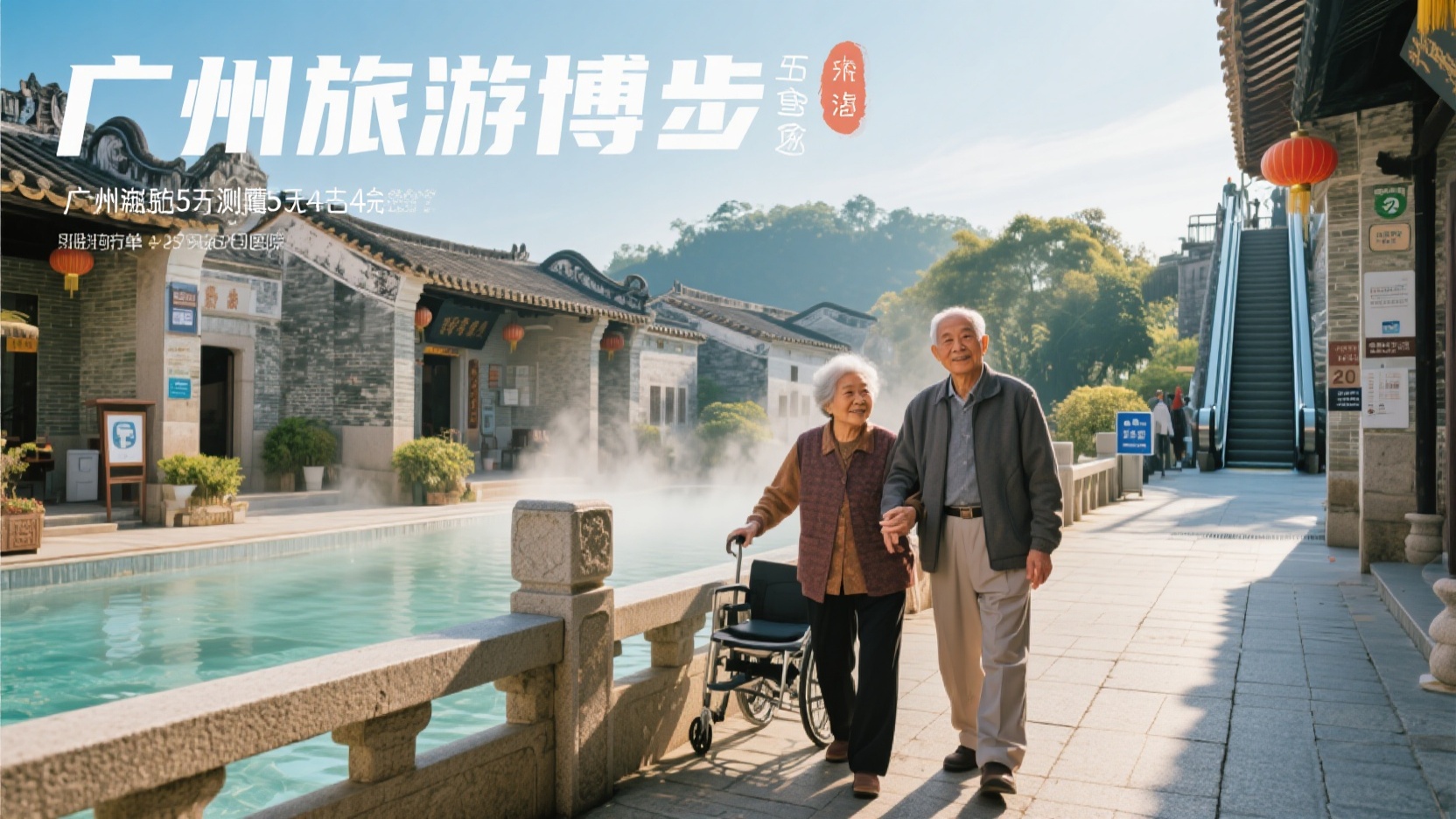
Taking my parents on a five-day trip to Guangzhou, the biggest lesson wasn't choosing the wrong attractions, but rather neglecting "elevator coverage, toilet density, and distance for lunch breaks." Last time, in another city, we visited three attractions in one day, and by the afternoon, their legs were so sore they didn't want to go out anymore. In the evening, we even took a long detour because we couldn't find accessible pathways. This time in Guangzhou, for five days and four nights, I rearranged the itinerary according to "one attraction in the morning, two hours of rest at the hotel after lunch, and then decide what to do in the afternoon depending on their energy levels," and they hardly complained at all.
I. For senior citizens traveling to Guangzhou, I only need to meet three key criteria.
Guangzhou's old city has many arcade buildings, but most museums, shopping malls, and subway stations in the core areas of Yuexiu and Liwan districts have elevators. When traveling with my parents, I check the "Guangzhou Metro accessible elevator entrances" in advance, because some older lines only have escalators at their entrances, requiring wheelchair users or those with mobility issues to use designated entrances. Regarding accessible pathways, the side entrances of Chen Clan Academy, Guangdong Provincial Museum, and Sun Yat-sen Memorial Hall are relatively gentle, but the thresholds of older buildings and some arcade buildings in Shamian are high, requiring a detour.
Toilet density is more important than you might think. Parks, large shopping malls, and museums have high toilet density, but old alleyways don't. My method is to arrange each rest stop next to a toilet in a shopping mall or park, with each section of walking distance not exceeding 500 meters. If it's longer, I take a taxi or the subway. The distance to nearby hospitals (level II or above) must also be checked in advance. When choosing a hotel, I'd rather forgo a river-view room to ensure there's a general hospital within about ten minutes' drive.
II. Daily Rhythm for Five Days and Four Nights: Only one activity is scheduled in the morning, with a fixed two-hour lunch break.
Day 1: Chen Clan Academy and Lai Chi Wan Canal. The Chen Clan Academy has a small threshold, wheelchair access, and clean restrooms. The Lai Chi Wan Canal has a gentle walking path; if you get tired, you can take a boat with low steps. After lunch, return to the hotel for a two-hour rest. After 4 PM, visit Wing Hing Fong, walking only on the main street and avoiding the side alleys.
Day 2: Yuexiu Park and Sun Yat-sen Memorial Hall. At Yuexiu Park, only walk from the main entrance to the Five Rams Statue; there's a gentle slope with no steps, and electric carts are available within the park. Sun Yat-sen Memorial Hall has more steps, but there's a ramp at the side entrance; just admire the exterior. After a two-hour lunch break, go to Beijing Road Pedestrian Street in the evening, only to see the ancient glass pavement. When tired, go into a shopping mall to enjoy the air conditioning and find a restroom.
On Day 4, choose either Haizhu Lake or Yuntai Garden. Haizhu Lake has a flat lakeside path, a short distance from the entrance to the birdwatching boardwalk, and electric carts are available. Yuntai Garden's flowerbed area is gently sloping. After lunch, visit the Guangdong Provincial Museum, focusing only on the Chaozhou wood carving and Duan inkstone exhibition halls, keeping the visit within an hour. On Day 5, after morning tea, head to Shamian Island. The central axis is about one kilometer long, with many old trees and benches where you can sit anytime. Return in the afternoon.
3. On the third day, choose between an ancient town and a hot spring – how can you choose without getting too tired?
If your parents are prone to joint problems and prefer a quieter environment, Conghua Hot Springs are the best choice. It's about an hour's drive from Guangzhou. Be sure to choose a resort hotel with a private hot spring pool, as the public hot spring area is slippery and the elderly could easily slip and fall. Hotel guests can soak twice a day, once in the afternoon and once in the evening, with a two-hour nap in between.
If your parents are still able to walk and appreciate old architecture, choose Shawan Ancient Town. The core area is small, but some of the cobblestone streets are uneven, so be sure to wear non-slip shoes. Public toilets are spaced a few hundred meters apart, so use them whenever you see one. This is the only stop on the itinerary for the day; no activities are planned for the evening. There is a hospital of level two or above about a 15-minute drive from Shawan Ancient Town, and most hotels in Conghua Hot Springs have clinics or can contact nearby hospitals.
IV. Accommodation and Transportation: Treating the "Lunch Break" as a Key Scenic Spot for Protection
For accommodation, choose properties in Yuexiu or Liwan old town areas, preferably above a subway station or near an elevator. Avoid guesthouses converted from old arcade buildings, as many don't have elevators. Based on my personal experience, staying within 200 meters of a subway station is essential for a proper afternoon nap. The room should have twin beds, and the bathroom should ideally have handrails; if not, bring your own suction cup handrails.
Guangzhou Metro is wheelchair-friendly, but it gets crowded during rush hour. If traveling with parents, try to avoid peak times; leave after 9:30 AM and return to the hotel before 4:00 PM. When taking a taxi, locate the entrance of a shopping mall with an elevator to avoid waiting in unshaded areas on the street.
V. Diet and Medication: Light diet, regular medication, and proximity to the hospital.
Guangzhou's morning tea is suitable for the elderly, but the shrimp dumplings and siu mai can be a bit greasy. It's recommended to order congee, rice noodle rolls, blanched vegetables, and steamed pork ribs, but not too much. For main meals, avoid the long queues at popular restaurants and choose tea restaurants or Cantonese restaurants with seating and air conditioning. The average cost per person is around tens to hundreds of yuan. Guangzhou is humid and hot; you can drink some herbal tea to dispel dampness in the afternoon, but don't drink it on an empty stomach.
Remind your parents to drink plenty of water every day, and not to tough it out if they experience dizziness or chest tightness. Most of the nearby hospitals (level II or above) are within a 10-15 minute drive; this was checked in advance when choosing the hotel. See the end of this article for a list of commonly used medications.
VI. Blogger's Summary: 20 Packing Tips and 5 Commonly Used Medications for a Slow-Paced Trip to Guangzhou
After five days, what my parents were most satisfied with wasn't how many sights they saw, but rather that "they could go back to the hotel and lie down for a while each day." Their senior citizen trip to Guangzhou wasn't about the number of places they visited, but rather about calculating elevators, restrooms, walking distances, and lunch break time in advance. I printed out this checklist before departure and checked it off accordingly.
20 items to pack for seniors traveling: 1. Non-slip soft-soled shoes 2. Three pairs of cotton socks 3. Folding cane or hiking poles 4. Suction cup bathroom grab bars 5. Folding stool 6. Thermos cup 7. Medicine dispenser 8. Electronic thermometer 9. Blood pressure monitor (if needed) 10. Medical insurance card and ID card 11. Sun hat 12. Light jacket 13. Knee pads 14. Band-aids and iodine swabs 15. A small amount of snacks 16. Reading glasses 17. Mobile phone lanyard 18. Power bank 19. Emergency contact card 20. Disposable underwear.
Five categories of commonly used medications to remember: 1. Daily medications for chronic diseases; prepare three days' worth extra. 2. Gastrointestinal medications, such as montmorillonite powder and oral rehydration salts. 3. Cold and fever reducers. 4. Topical medications, such as musk plaster, medicated oil, and adhesive bandages. 5. Antihistamines. Keep all medications in their original packaging and instructions; pack them separately in your bag and suitcase.