
Food in Guangzhou 24 Hours | From Rice Noodle Rolls in the Morning to Clay Pot at Night, the Authentic Flavors of Locals' Daily Meals
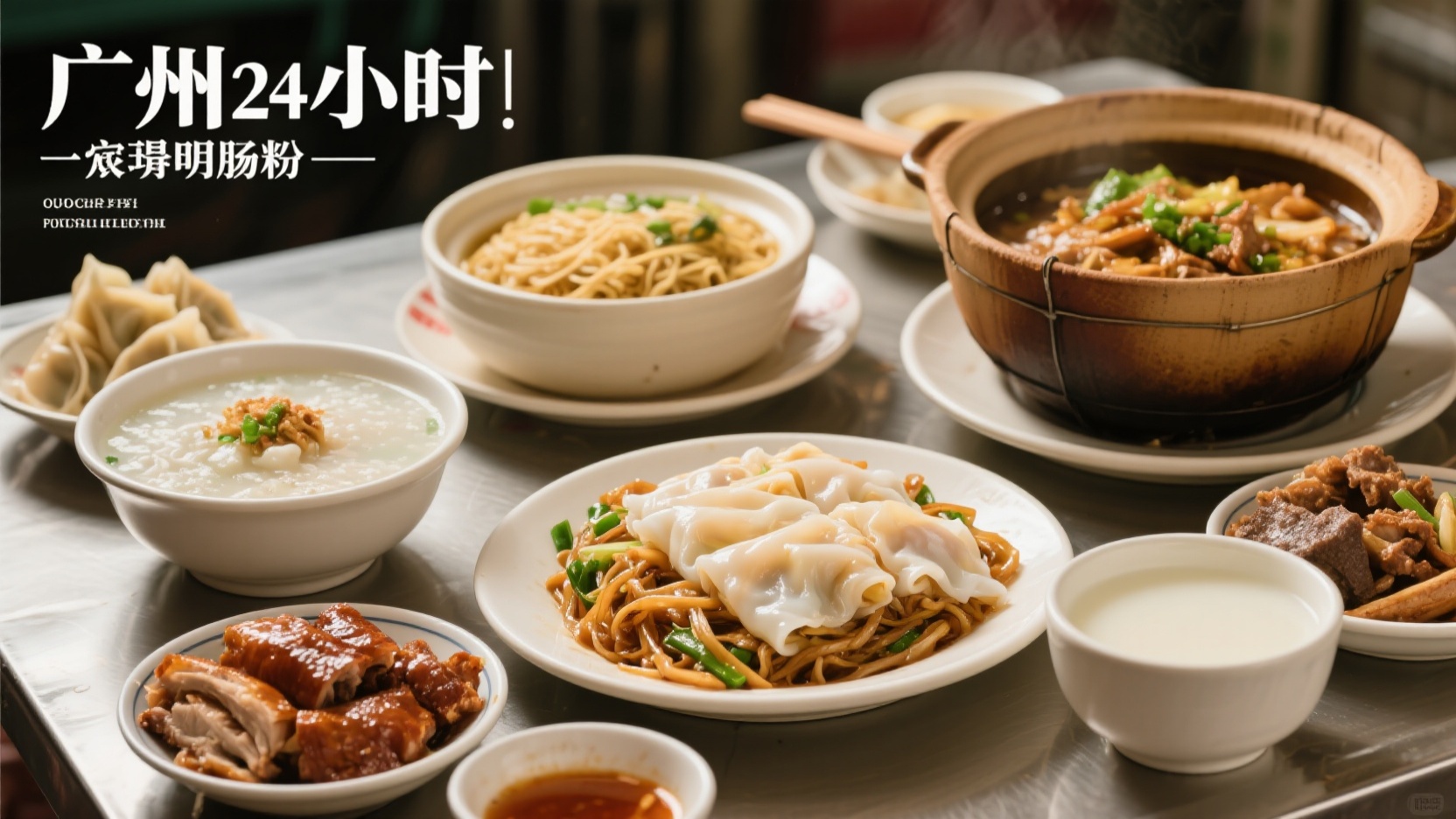
Guangzhou's culinary map isn't on tourist guides' must-eat lists, but rather within the daily rhythm of the day. The aroma of rice in the morning, the glistening roast meats at lunchtime, a bowl of sweet soup at 3 pm, and the wok hei (wok aroma) rising from late-night food stalls—these form the daily sensory coordinates of Guangzhou's locals. Eating along this timeline brings you closer to the city's true character than checking off any famous restaurants.
Morning: A gentle start with rice noodle rolls and congee
In the early morning in Guangzhou, the rice noodle roll stalls in the alleyways awaken before the alarm clock. The rice noodle rolls are made by soaking and grinding aged rice into a paste, paying close attention to the consistency of the paste and the steaming time. The paste is spread on a cotton cloth and steamed until translucent, then scraped off, rolled up, and drizzled with soy sauce and sesame oil. The rice skin is thin and smooth, slightly chewy, and when you chew it, the aroma of rice hits you first, followed by the salty-sweet aftertaste of soy sauce. The fillings can be beef, pork, shrimp, or egg, but the most common choice among Guangzhou locals is the "plain rice noodle roll," to enjoy the rice skin itself. For Guangzhou people, rice noodle rolls are not a tourist attraction, but a three-minute ritual performed before going to school or work.
Rice noodle rolls are often paired with congee. The congee base is made by simmering Northeast rice with preserved eggs, a little salt and oil until the rice grains are fully opened and the water and rice are perfectly blended. After a customer orders, the vendor ladles a spoonful of boiling congee into marinated pork liver, lean meat, or fish slices, and removes it from the heat as soon as it boils briefly, ensuring the meat is just cooked. "Jidi Congee" uses pork kidney, pork liver, and pork intestines. The kidney is deboned and cut into flower shapes, while the intestines are thoroughly cleaned. Each ingredient has a distinct texture: the liver is tender, the kidney is crisp, and the intestines are chewy. The congee is smooth and creamy, seasoned with pepper, and symbolizes "passing the imperial examination," representing the elders' simplest wish for their child's success in exams.
Lunch: The efficiency of street food, including roast meats and wonton noodles.
Small restaurants during lunchtime don't need elaborate plating; the roast goose, char siu, and poached chicken hanging in front of the roast meat stall are the most straightforward menu. The roast goose is stuffed with a marinade of five-spice powder, salt, and sugar, then sewn up, scalded, coated with glaze, air-dried, and roasted until a deep reddish-brown color, resulting in crispy skin, tender meat, and melted fat into juices. The char siu is made from pork shoulder, marinated for hours in seafood sauce, fermented bean curd, and honey, then brushed with honey while roasting, creating a caramelized, crispy crust around the edges. A double-portion rice dish with a spoonful of soy sauce and two stalks of bok choy, the meat juices soaking into the rice, is a satisfying meal shared by office workers and locals alike, and an efficient lunch option for Guangzhou residents.
Wonton noodles are another minimalist lunch option. The bamboo-pressed noodles, made with duck eggs and flour, are incredibly chewy after being pressed with bamboo poles, offering a light alkaline taste and a refreshing, springy texture. The broth, made with dried flounder, shrimp, and pork bones, is clear yet intensely flavorful, without any added sauce. The wonton wrappers are paper-thin, filled with seven parts shrimp and three parts pork, bursting with juice when bitten. Guangzhou locals don't crave large bowls of wonton noodles; they value "clear broth, refreshing noodles, and delicious wontons," finishing in a few bites before getting back to work. This quick, refreshing, yet satisfying bowl perfectly matches the still-running pace of city life in the afternoon.
Afternoon Tea: A Brief Respite with Sweet Soup and Beef Offal
At 3 PM, the dessert shops see a mini-peak. Ginger milk curd is made by heating fresh water buffalo milk to about 70 degrees Celsius, pouring it into a bowl of ginger juice, and letting it sit until it solidifies, resulting in a smooth, tofu-like texture. The spiciness of ginger and the sweetness of milk arrive simultaneously. Old Guangzhou residents believe that ginger milk curd warms the body and stomach, especially after sitting in an air-conditioned room for a long time; a bowl of it can revitalize the spirit. Mung bean soup is slowly simmered until it becomes sandy, then infused with the aroma of citronella or dried tangerine peel, resulting in a refreshing and non-greasy flavor. Desserts aren't considered desserts, but rather a designated mid-morning break for Guangzhou locals.
The radish and offal stall on the street corner is another option. Beef lungs, tripe, intestines, and white radishes are simmered together in a pot with chu hou sauce, star anise, dried tangerine peel, and rock sugar for several hours. The radishes absorb the meat juices, and the offal is tender yet firm, cut into bite-sized pieces. Skewered into small pieces on bamboo sticks and drizzled with a little garlic chili sauce, the sweet, sour, and slightly spicy flavor is a common social activity for students leaving school and people finishing work, enjoyed on the street. The clanging of the vendor's scissors against the pot is a shared afternoon sound for many Guangzhou residents.
Late at night: Stir-fried beef noodles and clay pot stew as the finale
The stoves at late-night food stalls are at their brightest, and stir-fried beef noodles are the ultimate test of wok hei (the smoky aroma imparted by a hot wok). The rice noodles are hand-cut into strips, and the beef is lightly marinated in soy sauce, baking soda, and cornstarch before being briefly fried in oil. It's then quickly stir-fried over high heat with bean sprouts, chives, and soy sauce until the rice noodles have a slightly charred edge, oily but not greasy. A well-made plate of stir-fried beef noodles leaves no excess oil at the bottom, the rice noodles are perfectly separated, and the beef is tender and smooth. It's an unspoken staple for night-shift taxi drivers and stall owners who have just finished their shifts, and also the most direct proof of a food stall chef's skill.
The clay pot was still sizzling when it was served. The clay pot was heated to a rolling boil, then ginger, garlic, and shallots were added and sautéed until fragrant. Marinated eel or chicken pieces were then poured in, along with sizzling sauce and rice wine. The pot was covered and simmered at high heat until cooked through. When the lid was lifted, steam billowed out, and the sauce overflowed from the sides of the pot, releasing a fragrant aroma. The eel meat was crisp and springy, the sauce permeating every fiber. Paired with a bowl of white rice, it was the perfect remedy for a late-night hunger. Guangzhou locals don't rush to eat the clay pot; they wait until the sizzling sound subsides before adding their chopsticks, when the sauce has thickened and the ingredients are at their peak.
From the streets to the alleys, experience the city through its food in a single day.