
Should you visit Chongqing during peak season or off-season? Let me explain the differences.
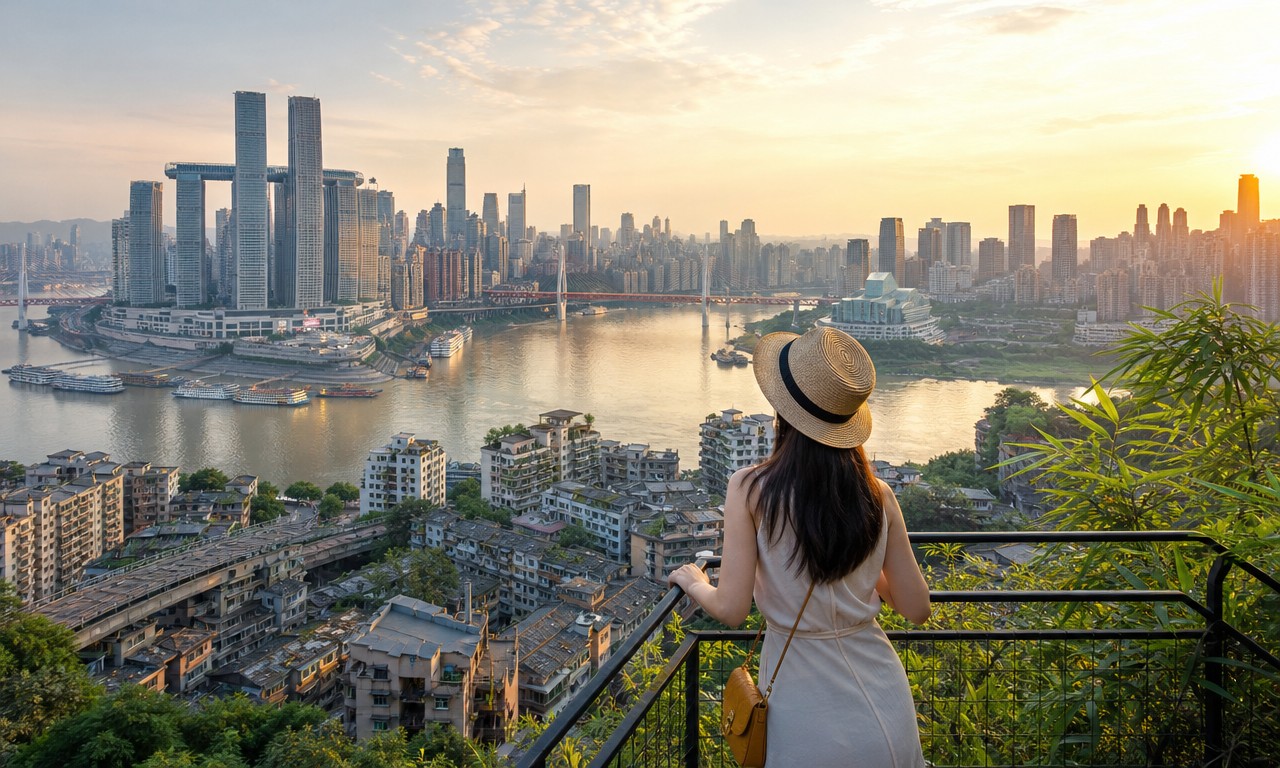
The phrases "peak season/off-season," "weekends/weekdays," and "group tours/independent travel" seem like three choices, but they actually boil down to one thing: how much budget do you want for your trip to Chongqing, and how much leisure time do you want in return? This question deserves a serious answer because Chongqing's terrain and transportation characteristics mean that choosing the wrong time or method won't just result in disappointing tourist attractions, but also a whole day of struggling with crowds, steep slopes, waiting in line, and detours. Below, we've laid out the six most common comparisons, explaining the differences and trade-offs one by one.
Hongyadong in peak season vs. Hongyadong in off-season
Most travel guides will tell you, "You must go to Hongyadong at night to see it illuminated." In reality, during peak season—especially May Day, National Day, and summer vacation—Hongyadong is packed with people from 7 PM to 9:30 PM, stretching from Qianximen Bridge all the way to the cliffside walkway in Daijia Lane. You might think you're looking at the lights, but you're actually spending most of your time looking at the backs of the heads of the people in front of you. However, during the off-season from November to January, especially on weekday evenings, the lights are still on, and there's still a river breeze, but you can walk slowly from the south bank, and even stand on the edge of the platform to watch the entire changing light display. Conclusion: To see Hongyadong, try to go on a weekday evening during the off-season, arriving within half an hour of the lights turning on. You don't need to rush, but don't arrive later than 9 PM.
Peak season cable car across the river vs. off-season cable car across the river
Most travel guides will tell you, "The Yangtze River Cableway is a must-do in Chongqing." In reality, during peak season, queuing for an hour is common, and the carriages are packed with people; during the few minutes from the south bank to the north bank, you can't even get a window seat. Going on a weekday during the off-season, especially before 10 am, you might only have a dozen or so people in line, and you can stand by the window watching the river rise and fall – a completely different experience. If you only have time off during peak season, I recommend taking the cable car from the south bank to the north bank via the Xinjie Station, as the queues are generally less long. The cable car itself is worth riding, but what's worthwhile is the intermittent views of the river and the city, not the sweaty, commotion of a typical peak season ride.
Ciqikou on weekends vs. Ciqikou on weekdays
Most travel guides will tell you, "Ciqikou is heavily commercialized and not recommended." Indeed, on weekend afternoons, Ciqikou's main street is only bustling with people and Chen Mahua (a type of fried dough twist) samples; however, on weekday mornings, the side streets and surrounding alleys offer a vibrant atmosphere where you can see local elderly people playing cards, herbal medicine stalls, and secondhand bookstores slowly opening. The difference isn't in the scenic area itself, but in which day you visit. Between 10 am and 12 pm on weekdays, the main street is less crowded, while the side streets retain a more authentic feel. If you're visiting on a weekend, it's advisable to skip the main street and explore the back streets of Ciqikou or walk to nearby Shijingpo, where the tranquility is significantly greater. In conclusion: Whether or not to visit Ciqikou depends on whether you have time on a weekday morning, not on whether it's worth it.
Group tour vs. leisurely exploration
Most travel guides will tell you, "Group tours are less stressful and more convenient; Chongqing's transportation is complex, so it's best to leave it to a tour guide." In reality, most of Chongqing's core experiences are concentrated in the Yuzhong Peninsula and Nan'an District, which can be covered by light rail and walking. Group day tours typically cram Liziba, Eling No. 2 Factory, Ciqikou, and Baigongguan into a single day, with travel time and meeting times consuming a lot of flexibility, leaving you with limited time at each point – essentially "take a picture and leave." Independent travel isn't expensive; Chongqing's light rail is cheap and covers the core areas. The real challenge is choosing the right accommodation. Conclusion: Unless you only have one day and absolutely don't want to research routes, the potential for an independent travel experience in Chongqing is much higher than a group tour. Group tours are suitable for travelers with elderly people or children, or those completely unsure about hiking or crossing rivers.
Living in Jiefangbei vs. living in Guanyinqiao
Most travel guides will tell you, "Staying in Jiefangbei is the most convenient in Chongqing, it's close to everything." In reality, the quality of budget accommodations around Jiefangbei varies greatly, and some hotels have views of old buildings. Prices also increase significantly during peak season. Guanyinqiao is a local business district, with the light rail line 3 connecting several key points in Jiangbei and Nan'an districts. It offers more accommodation options, prices are usually more stable than comparable options in Jiefangbei, and the amenities are more practical. If you have a limited number of days and mainly want to explore the Yuzhong Peninsula, Jiefangbei is indeed time-saving. However, if you're staying two nights or more and don't want to spend every day searching for food in tourist areas, Guanyinqiao offers a more balanced level of comfort. Also, be aware that the "river view" of Chongqing hotels requires careful review of reviews and floor information; not all river views offer a truly ideal view of the river. Conclusion: For stays of two nights or less, prioritize Jiefangbei; for three nights or more, consider Guanyinqiao; and for a mid-to-high budget, consider the Nanbin area.
Eating hot pot with a tour group vs. finding a local restaurant on your own
Most travel guides will tell you, "Any hot pot restaurant in Chongqing is delicious." In reality, the hot pot restaurants arranged for tour groups are often near tourist attractions, with compromised broth flavors and portions and prices geared towards tourists. The truly worthwhile Chongqing hot pot restaurants are mostly located near residential buildings, on slopes, or next to markets. The ambiance may be basic, but the aroma of the broth and the freshness of the ingredients are completely different. Finding a restaurant isn't complicated: search for established restaurants in your neighborhood that have been open for over five years and see what local diners order. You can enjoy authentic tripe and duck intestines for just a few dozen yuan per person; there's no need to spend a fortune on trendy restaurants. Conclusion: Hot pot is the last thing you should eat on a tour in Chongqing. Even spending just twenty minutes finding a humble, old-fashioned street stall is far more satisfying than being seated in a spacious, brightly lit group restaurant.
How many days is enough to visit Chongqing vs. how many days to have a comfortable trip?
Most travel guides will tell you, "Two or three days is enough for Chongqing, as the attractions are concentrated." In reality, two or three days can cover major spots like Hongyadong, Liziba, Ciqikou, and the Yangtze River Cableway, but at the cost of rushing around every day, climbing hills and crossing bridges, and queuing for the night view. Only with four or five days can you truly include the journey along a light rail line, a leisurely hotpot meal, a stroll along Nan'an Street, and an afternoon in an old teahouse. The essence of Chongqing lies not only in the points of contact with each other, but also in the intricate streets and alleys that connect them. Conclusion: Two days is enough to cover the main routes, but to truly experience the essence of Chongqing, four days is a more comfortable starting point.
How much difference is there between peak season prices and off-season prices?
Most travel guides will tell you, "Go in the off-season for cheaper prices, go in the peak season for more expensive prices." In reality, accommodation is the most volatile area. During peak season, budget hotels in popular areas may double in price and still be fully booked, while in the off-season, prices for the same type of accommodation drop to a level that allows for a more relaxed budget. Food prices are actually not that different; the prices of local restaurants and street stalls in Chongqing are stable and won't suddenly increase significantly just because there are many tourists. Transportation costs are also basically fixed, with the light rail and buses costing the same in both peak and off-seasons. The real cost differences lie in accommodation and some expenses around tourist attractions. Conclusion: If you are budget-conscious, avoiding holidays and the hottest weeks of summer is the most effective way to save money and enhance your experience in Chongqing.