
My first trip to Chongqing only includes one meal. Which restaurant should I eat at?
This question seems simple, but behind it lies the real dilemma for everyone visiting Chongqing: too little time, too many choices, and the fear of eating the wrong thing. This article doesn't provide a list, but rather addresses several frequently asked questions by readers before their trip, explaining them one by one from a local's perspective. You don't need to eat at every restaurant; you just need to know what choices to make in different situations.
This is my first time here, and I only have one meal. What should I eat?
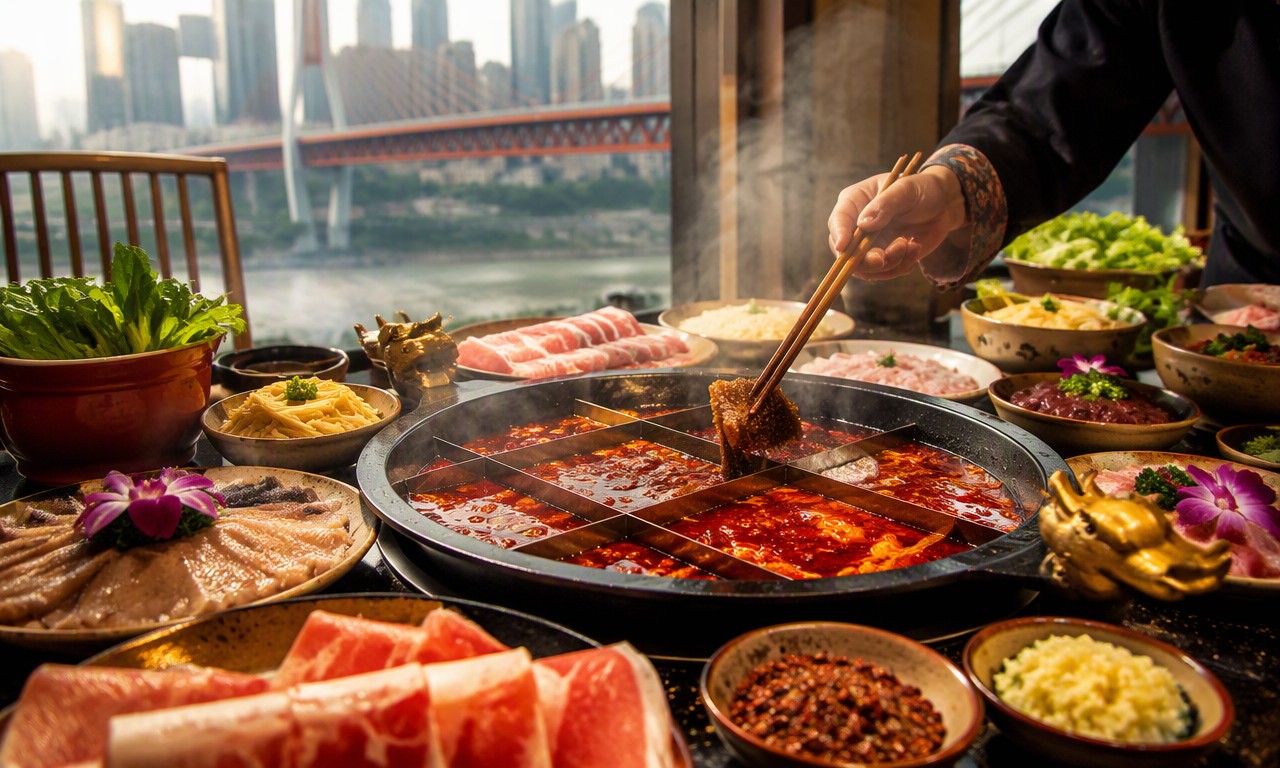
If you only have one meal, choose hot pot. Not because it's a "must-eat," but because the four dimensions of Chongqing hot pot—the broth, the ingredients, the dipping sauce, and the atmosphere—are almost impossible to replicate elsewhere. The reasons are: from the preparation to the seasoning, it's difficult to recreate the rich, mellow flavor and the lingering sweetness after the initial bitterness outside of Chongqing; the supply chain for fresh ingredients like tripe, duck intestines, and beef aorta is only fast and reliable locally. The correct way to eat it: first, cook the "crispy" ingredients like tripe and duck intestines; after the broth has boiled for twenty minutes, add the "flavor-absorbing" ingredients like haor fish and luncheon meat; use only minced garlic and sesame oil for the dipping sauce, do not add soy sauce or vinegar.
As for which restaurant to choose, if you're not too concerned about the ambiance, look for places located downstairs in residential areas, with middle-aged people queuing outside, and tables that aren't perfectly clean but have a fast turnover. These kinds of restaurants don't have fancy broths, give you plenty of beef tallow, and you won't feel extremely thirsty after eating. The criteria for judging them are: they've been catering to the local community for a long time, their ingredients have a fast turnover, and the broth isn't repeatedly recycled and develops off-flavors.
What do locals eat for breakfast?
The most common dish isn't Chongqing noodles, but rather "two liang of noodles with an egg" or a bowl of oil tea or tofu rice. Chongqing noodles are indeed the mainstream, but locals eat them differently from tourists: it's not a ritual, just a bowl of carbohydrates costing six to eight yuan, eaten in ten minutes and then gone. The correct way to eat it: order "dry-fried pea and minced meat noodles," with less broth, letting the minced meat sauce and pea puree coat the noodles, adding a spoonful of chili paste, mixing well, and then eating a bite without drinking the broth. The reasoning: dry-fried noodles best bring out the chewiness of the noodles and the layers of seasoning, while soup noodles tend to dilute the flavor.
If you're looking for an alternative to Chongqing noodles, try oil tea, an older Chongqing breakfast. It consists of a base of rice porridge topped with fried dough twists, sprinkled with Sichuan peppercorn powder, chili oil, and crushed peanuts. When eating it, don't stir it too much; you should scoop it up with a spoonful that's both crispy and chewy. There aren't many places that still serve it well these days; they're usually hidden near old neighborhood markets.
How spicy is hot pot? Is the mild version still very spicy?
For most people from other regions, even the "mild" spiciness of Chongqing hot pot is considered quite hot. The reasoning is that the spiciness of Chongqing hot pot isn't simply due to capsaicin, but rather a complex spiciness from chili peppers, Sichuan peppercorns, and beef tallow. The oil temperature continuously releases this spiciness. The longer the broth cooks, the spicier it becomes—this is a physical law, not a sign of the restaurant staff being sloppy.
Correct procedure: First, order "mild" to start. Don't order medium spicy just because you can handle spice; Chongqing's medium spicy is on a completely different level than that of many other cities. Second, if you feel the spiciness halfway through the meal, don't add vinegar. Instead, add "fermented glutinous rice water" or ask the waiter to add a piece of butter. This will soften the spiciness without damaging the broth. Third, to relieve the spiciness, drink Wei Yi soy milk or iced glutinous rice balls. Don't drink carbonated beverages, as the bubbles will amplify the burning sensation.
What's the difference between trendy online stores and old shops tucked away in alleyways?
The difference isn't in the words "how delicious" or "how bad it is," but in "stable expectations" and "eating authentic food." The advantages of trendy restaurants are standardized food, a tourist-friendly environment, and easy-to-find locations. The disadvantage is that many restaurants make the broth more "fragrant" but lack the richness of established restaurants. The reasoning is: established restaurants often have their own homemade broth, with a subtle aroma and a lingering sweetness; trendy restaurants sometimes rely on flavor enhancers and large amounts of MSG for umami, creating a wonderful initial taste, but it becomes bitter and salty towards the end.
The problem with old-fashioned restaurants in alleyways is that the environment is generally mediocre, the service is inconsistent, and some are only open for lunch or dinner. The correct approach: If someone in your group doesn't eat spicy food at all, or has high standards for the dining environment, choose a mid-range chain restaurant from a popular online presence; you can't go wrong. If you want to enjoy the hot pot broth itself and don't mind queuing or sharing a table, go to the old-fashioned restaurants. Two criteria to consider: are most of the customers speaking with a local accent, or are they mostly there to take photos and check in?
Where can we eat after 10 p.m.?
In Chongqing, late-night snacks and hot pot are two separate categories. Many hot pot restaurants are still open after 10 PM, but the truly late-night eats are barbecue, braised pig's trotters, hot and sour noodles, and street-side spicy hot pot. The reasoning is that eating hot pot late at night is hard on the stomach, and many ingredients are already sold out, limiting choices. The smoky aroma of barbecue and the flavors of cumin and chili powder are much more suitable for late-night dining.
Specifically, I recommend three categories: First, grilled pig brain and grilled sweet potato skin, these are the two most recognizable items in Chongqing barbecue. The grilled sweet potato skin is wrapped with pickled radish and houttuynia cordata, crispy on the outside and soft on the inside; Second, braised pig's trotters, a whole pig's trotter stewed until the bone falls off, eaten with chili dipping sauce, the soup is white and warming to the stomach; Third, "oil tea" or "spicy skewers" from street vendors, one or two yuan a skewer, eaten standing up and gone. Correct way to eat: Barbecue must be eaten while it's hot, as the chili powder will turn bitter when it cools down.
With so many noodle shops, how do I choose?
Choose the shop that serves noodles that are cooked a bit firmer. Reasoning: The soul of Chongqing noodles lies in the seasonings; the noodles themselves aren't important, but the cooking time is crucial. Many shops cook the noodles too soft to increase turnover, and they clump together within two minutes of being served. You can tell the owner, "Please make the noodles firmer," or "I'll just pick them up and eat them."
When choosing a restaurant, pay attention to three details: First, is the condiment station clean and tidy, and does it have its own chili oil? The chili oil should be dark red with black chili seeds, not bright red. Second, see if locals order "dry noodles". If a restaurant only serves soup noodles, it means it is catering to tourists. Third, check the opening hours. Restaurants that only open for breakfast and lunch usually pay more attention to the freshness of the noodles than restaurants that are open all day.
What are some Chongqing flavors you can take home?
Don't buy anything randomly, especially "Chen's Fried Dough Twists" and "Hot Pot Base Gift Boxes" sold at the entrance of tourist attractions. Reasoning: Hot pot base without beef tallow and fresh ingredients will taste very different from what you get in Chongqing restaurants when you cook it at home. Fried dough twists are deep-fried dough; they'll soften after a couple of days, and no matter how good the packaging, they won't taste the same as freshly made ones.
What's truly worth bringing back are the "Ciqikou Salt and Pepper Fried Dough Twists"—buy small bags and eat them on the same day. Alternatively, you can buy "Strange Flavor Broad Beans," "Hechuan Peach Slices," and "Jiangjin Rice Candy" from time-honored brands. These three are local favorites during festivals, keep well, and have a consistent flavor. The correct approach: sample them in the store before buying, choosing those that are crisp and don't stick to your teeth. If you're going to buy hot pot base, buy it in bulk with visible butter and peppercorns. Once home, divide it into small pieces and freeze it immediately, using it as soon as possible.