
The Spiritual Corners of Chengdu | Following the alleys of Yulin, we connect 8 artistic and cultural scenes.
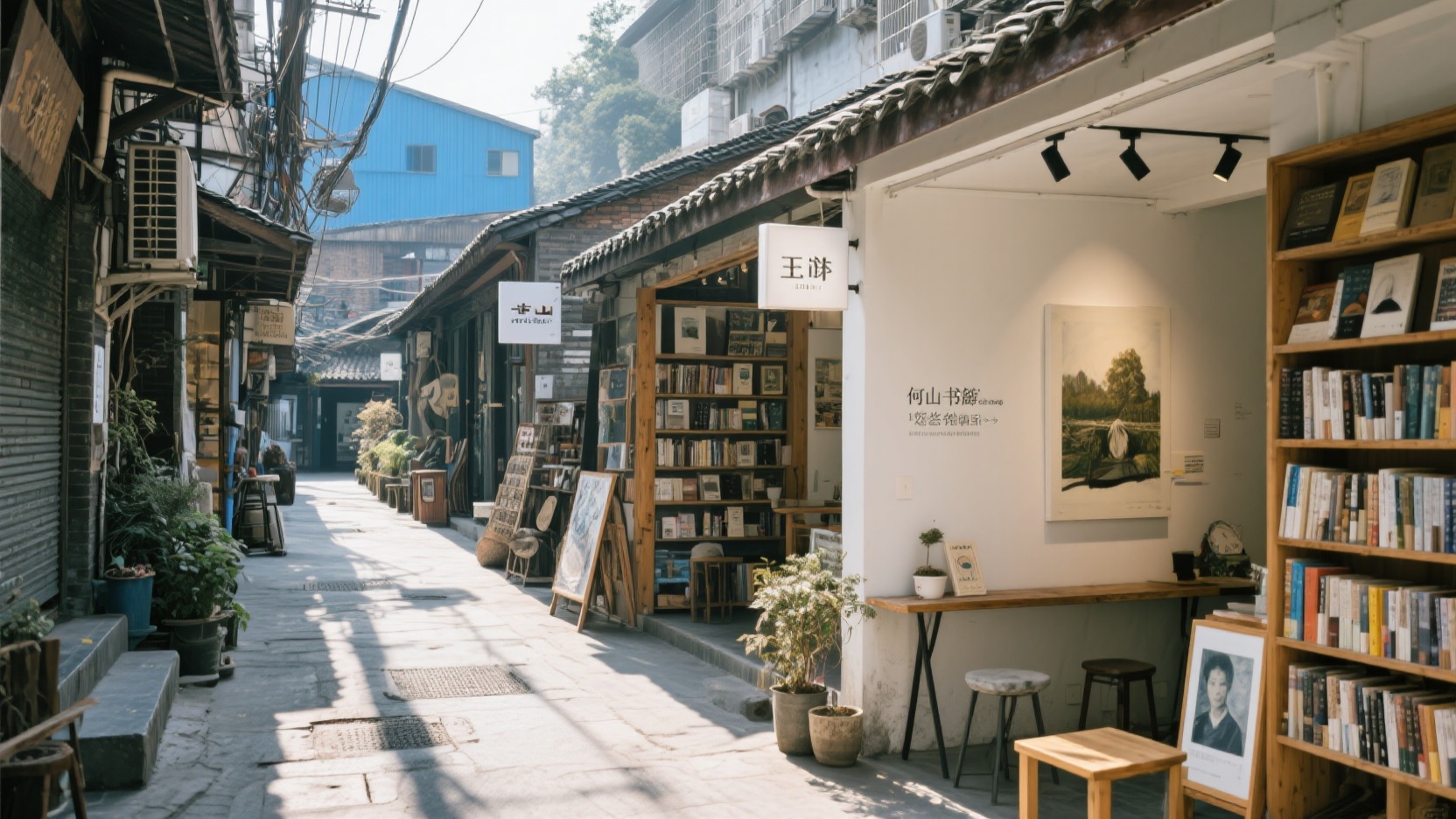
Chengdu's cultural resources are not limited to museums and traditional tourist attractions. Hidden within communities and old factory areas such as Yulin, Shaocheng, Landing, and Taiping Temple are independent bookstores, private art galleries, and renovated old factory buildings that offer a more authentic and relatable experience. This niche cultural map avoids crowds, connecting eight key locations to reveal the city's spiritual corners.
Reading House: A humanities and literature room in the old alley of Shaocheng
Located in the ground floor shops of the old Shaocheng community, this small shop boasts a distinctively unique selection of books. It primarily features humanities, social sciences, history, philosophy, and out-of-print titles; almost every book reflects the owner's dedication to their reading preferences. The atmosphere is quiet and restrained, free from distractions from other bookstores, making it ideal for serious book hunters. The highlight is the entire wall-to-wall shelf dedicated to out-of-print books, along with a small selection of Taiwanese and Hong Kong editions. For photography, utilize the warm yellow lighting near the glass entrance to capture the depth of the bookshelves; in the late afternoon, around 3 or 4 pm, natural light from the window falls on the spines of the books, perfect for low-angle shots that reveal the texture of the old paper.
Yiwei Bookstore: A Public Living Room-Style Bookstore in Yulin
Yiwei feels more like a community living room. The space was converted from the ground floor of an old apartment building, preserving the old wooden doors and floor tiles. Evenings often feature lectures, poetry readings, or small exhibitions. The highlights aren't just the books, but also the handwritten activity blackboard at the entrance, the constantly updated themed bookshelves, and the atmosphere of readers gathered around exchanging ideas. For photography, it's recommended to capture the warm yellow lightbox and greenery at the entrance as dusk falls. Inside, take photos of the long table and poster wall in the empty space after salons, remembering to use a wide aperture to blur the background figures and preserve the spatial atmosphere.
He Duoling Art Museum: An Art Garden in a White Cube
Located in the Blue Roof Art District, this private art museum is more worthy of close examination than the exhibits themselves. Minimalist white walls, large floor-to-ceiling windows, and an inward-facing courtyard interplay with each other, showcasing primarily He Duoling's paintings and manuscripts. The permanent exhibitions are presented at a leisurely pace. The key points to observe are how natural light enters the exhibition halls and the visual relationship between the building and the courtyard. For photography, it's recommended to stand on the spiral staircase and shoot down into the first-floor lobby, utilizing the white walls as negative space. Afternoon sidelight from the windows can outline the silhouettes of the paintings and the viewer, perfect for capturing a tranquil artistic atmosphere.
Yishan Miscellaneous Items: Time Stacked in an Old Goods Warehouse
This is a hidden upstairs warehouse, small in size but crammed with old televisions, clocks, vinyl records, toys, and various vintage prints. The atmosphere is warm and slightly cluttered, like a private memory museum, perfect for leisurely browsing. The highlight is the sense of time created by juxtaposing objects from different eras, and the regularly changing thematic displays. For photography, it's recommended to use a mid-range telephoto lens to compress the layered objects and avoid wide-angle distortion; utilize reflections in front of the glass cases to create a dreamlike effect; and taking photos from the second floor overlooking the first-floor display area will give you a stronger sense of depth.
Fanmu Flying International Cultural and Creative Park: An industrial site transformed from a glider factory
Converted from an old glider manufacturing plant, the red brick buildings, steel frames, and concrete textures have been well preserved. It now houses design studios, small galleries, and cafes. Its atmosphere is more rugged than typical commercial creative parks, making it ideal for a leisurely stroll on a weekday. Highlights include the truss structure of the old factory buildings, graffiti walls, and the contrast between old and new materials in the renovation. For photography, take advantage of the contrasting colors of the red brick walls and greenery, shooting the corridors under the afternoon's oblique light; and from the elevated platform, capture the roof's steel frame against the sky to emphasize the industrial lines.
White Beard Coffee: A community hand-drip coffee shop in Yulin Alley
Hidden on the ground floor of an old residential building, the shop's facade consists of a few bamboo chairs and a tree at the entrance. The interior primarily serves hand-drip coffee, with a low bar counter and close proximity between baristas and customers. The atmosphere is quiet and restrained, and many customers spend an entire afternoon there with a book or laptop. The highlights are the coffee bean menus from different regions and the view of the alleyway life outside the window. For photography, it's recommended to sit near the entrance and use the shadows of the sycamore trees as a foreground to photograph the coffee cups; inside, you can use backlighting to capture the steam rising from the bar counter and the barista's movements, preserving the warm, community feel.
Littles Space: An Experimental Ground for Small Contemporary Galleries
This is a small contemporary art space with frequently changing exhibitions, focusing on young artists and experimental projects. The space is small, a white cube, but without the alienation of a traditional gallery. Occasionally, there are artist residencies or live creations. The highlight is the curatorial logic and spatial narrative of each exhibition, making it suitable for those interested in emerging faces in contemporary art. For photography, it's recommended to leave a large area of white space in front of the exhibition walls and use spotlights to capture the shadows of the works. If there are video or installation exhibitions, you can use a slow shutter speed to capture the movement, but be careful not to use flash.
Yi Jie Alley: A Community-Friendly Art Complex
Hidden in the alleys of Yulin, this building integrates a community café, small exhibitions, and a public reading corner, with a design that emphasizes accessibility. The wooden corridor and glass facade blur the boundaries between indoors and outdoors, and it's frequently used by seniors, children, and young adults from the community. The highlights are the interactive exhibitions and the building's social design. For photography, it's recommended to capture the depth of the space from one end of the corridor, using the wooden latticework to create light and shadow; outdoors, you can photograph the dialogue between the building and the surrounding old residential buildings, recording the authentic texture of the community.
From old books and vintage items to contemporary art, from old factories to community cafes, these locations lack a fixed route for taking photos, yet together they constitute Chengdu's relaxed yet keen everyday aesthetic. Explore the spiritual corners of this city on foot.