
The portions of dishes in Changchun are shockingly large. How can one person order without wasting food?
"This is my first time in Changchun, and I only have one meal. Which restaurant should I eat at?" This is one of the most frequently asked questions I get. People who ask this often sound anxious, as if choosing the wrong restaurant means missing out on the whole city. Actually, in Changchun, this anxiety is completely unnecessary. The underlying logic of Northeastern cuisine is large portions, rich flavors, and eating it while it's hot. Rather than choosing the wrong restaurant, the real problem lies in how you order. This Q&A compiles eight frequently asked questions from readers, providing my judgment and reasons for each, as well as suggested ways to eat the food.
This is my first time here, and I only have one meal. What should I eat?
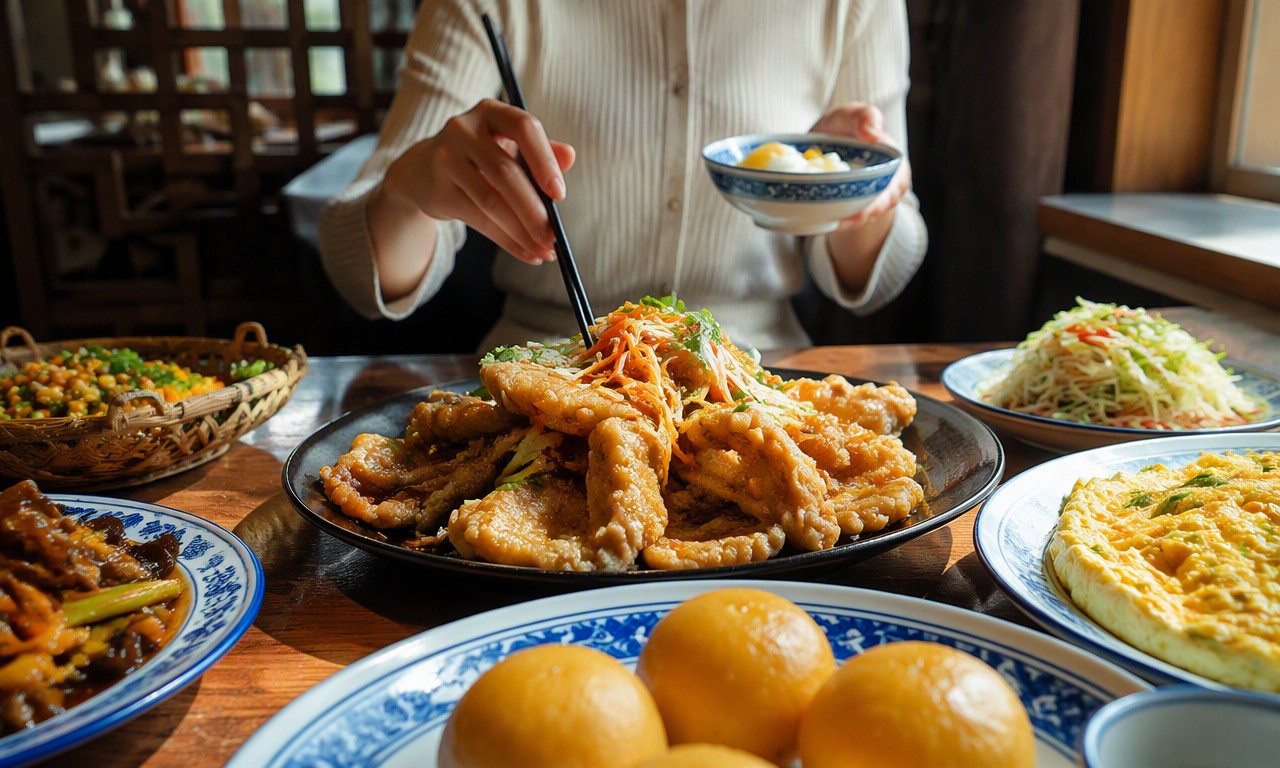
If you're only having one meal, my suggestion is to find a reliable "old-fashioned sweet and sour pork" specialty restaurant or a long-established Northeastern Chinese restaurant, and order a plate of sweet and sour pork, a bowl of rice, and a small dish of pickled vegetables. Why sweet and sour pork and not stew or barbecue? Because sweet and sour pork best showcases the "seasoning" skills of Changchun cuisine. Changchun's sweet and sour pork is mainly sweet and sour, the outer starchy shell should be crispy but not hard, making a slight "crunch" when you bite into it, and the meat slices inside shouldn't be dry. To judge whether a restaurant is good or not, see if it can maintain its consistency "not collapsing or becoming soggy even when cold," which is the bottom line for many experienced chefs.
If you're traveling with two or more people, you can add an extra "Snow-Clad Red Bean Paste" or "Braised Pork Ribs." Snow-Clad Red Bean Paste is a local Changchun sweet dish; egg whites are whipped, coated with red bean paste, and deep-fried. The outer layer is soft and has an eggy aroma, making it a perfect accompaniment to sweet and sour pork. Braised pork ribs come in two types: spine ribs and leg ribs. Leg ribs allow you to suck out the marrow, but it's more laborious. It's best to limit yourself to three dishes per meal; any more than that, be sure to pack some to go.
What do locals in Changchun eat for breakfast?
Tourists often imagine Northeastern breakfasts as large portions of meat and noodles, but in reality, mornings in Changchun are much gentler. The most common breakfasts are tofu pudding with fried dough sticks, or a bowl of "chicken soup with tofu skewers and sesame flatbread." Chicken soup with tofu skewers is a very representative breakfast in Changchun; the chicken soup is light and not greasy, and the tofu skewers are smoked dried tofu skewers that absorb the broth and become very fragrant. The local way of eating it is to first drink some soup, then eat the skewers, and finally break the sesame flatbread into the broth to soak.
Another type of breakfast is "chatiao" or "zhajiangmian" (noodles with soybean paste), but these shops open and close early, many closing by 9 am. If you live near an older residential area, and you go out around 6 or 7 am, if you see a small shop with a frying pan and long tables set up outside, it's generally not bad. Tourists don't need to specifically seek out a particular shop; breakfast is about the neighborhood feel, and proximity is much more reliable than ranking lists.
How many varieties of Guo Bao Rou (sweet and sour pork) are there in Changchun? What are the differences between the versions from other places and those from here?
In Changchun, the two main types of sweet and sour pork are "old-fashioned sweet and sour" and "tomato sauce." The old-fashioned sweet and sour version uses vinegar and sugar, giving it an amber color. It's sweet and sour with a hint of vinegar aroma and remains crisp even when cooled. The tomato sauce version is redder in color, with a thicker sauce and a stronger sweetness; it evolved from some older recipes. My suggestion is that first-timers try the old-fashioned sweet and sour version first, as it represents the quintessential Changchun style.
The main difference from other regions lies in the batter and the cooking temperature. Many old shops in Changchun repeatedly coat the meat with potato starch and fry it twice—the first time to set the shape, and the second time to make it crispy. The sliced meat needs to be of a certain thickness; too thin and it will become dry and hard, too thick and it will resemble fried pork chops. The only criterion is that it should stand upright when picked up and not stick to your teeth when bitten. If a plate of sweet and sour pork arrives limp and lifeless on the plate, you don't need to order a second dish from that restaurant.
What makes this barbecue place different from others? How do I choose a restaurant?
Changchun has a high density of barbecue restaurants, but they can be roughly divided into three categories. The first category is "charcoal-grilled skewer shops," where the skewers are small and served in bunches, perfect for chatting while eating. The second category is "teppanyaki grill shops," where the grill pan has a raised center, allowing the meat to grill in the middle while pickled cabbage and squid are pan-fried on the sides. The third category is "barbecue and smoked/sauce shops," where in addition to skewers, you can also order cold dishes like braised beef and braised tripe.
Choosing a barbecue restaurant isn't complicated. Remember this principle: chain brands that appear repeatedly in travel guides aren't necessarily bad, but truly consistent, old-fashioned flavors are usually hidden on the ground floor of residential buildings. To judge whether a barbecue restaurant is good, first smell the charcoal grill at the entrance, then check if there's garlic and chili powder on the tables. Locals eat skewers with garlic; "eating meat without garlic is like missing half the flavor"—it's not a joke. Don't order too many skewers at once; order a small amount first to test the heat, then add more. I especially recommend trying "grilled chicken heads" and "grilled solid eggs," two of the most recognizable items in Changchun barbecue. The grilled chicken heads are crispy and tender, while the solid eggs are blocky egg products made with eggs and alkali, with a chewy texture that you might not find elsewhere.
What's the difference between trendy online stores and old-fashioned shops tucked away in alleyways? Are they worth the wait?
Most trendy restaurants excel in ambiance, presentation, and brand awareness, but their culinary skills aren't necessarily superior to established, traditional shops. The established shops tucked away in alleyways often specialize in one type of food, have shorter menus, quieter owners, and more consistent flavors. My personal assessment is: if you're short on time, don't waste an hour queuing for a trendy restaurant; if you have ample time, you can try both, but try the established shops first, then the trendy ones, to establish a benchmark for your palate.
The problem with trendy restaurants isn't that the food is bad, but rather "expectation management." Many people queue for so long that their expectations are sky-high, only to be disappointed by a single detail. Established restaurants usually don't have this psychological burden; their food comes out quickly, and their prices are more reasonable. What's truly worth queuing for are small shops that only operate during peak hours and close once they're sold out. The queues at these shops are due to limited production, not marketing-driven factors.
Where can I eat after 10 p.m.?
Changchun isn't strictly a city known for its late-night snacks, but you have two safe havens. One is the barbecue restaurants that stay open late, especially the older ones near residential areas. They get even busier after 10 PM, as many people finishing their night shifts grab their second meal. The other is the "late-night congee shops" or "late-night bone broth stalls." These places aren't fancy, but the hot soup and flatbread are comforting. Some street vendors also sell grilled cold noodles. Changchun's grilled cold noodles are fried until quite dry, and with sausage and an egg, you can get a filling meal for under ten yuan.
I don't recommend looking for restaurants in large shopping districts at night, as most of them close after 9:30 PM. Just remember one principle: after 10 PM, head towards areas with many residential buildings, lots of smoke, and loud noise; those are where locals eat. If you can't find them, just ask a taxi driver on the street; they know better than any online platform which restaurants are still open in the early hours.
I'm visiting Changchun and want to bring some food back with me. What would be a good gift?
My most frequently recommended specialties are smoked and braised meats, such as smoked chicken, braised beef, and pine nut sausage. These kinds of foods keep well and won't lose their flavor even after vacuum packaging and reheating. Changchun's smoked and braised meats have a smoky flavor and aren't overly salty, which is different from the style of southern-style braised dishes. When buying, you can ask, "Can you cut them up and vacuum-pack them individually?" Many delicatessens offer vacuum-packing services, making them convenient to carry.
You can also bring traditional pastries, such as steamed rice cakes, hawthorn cakes, and peach crisps. These foods may look unassuming, but they hold a very important place in the lives of locals. Giving them to elders is far more meaningful than giving trendy snacks. It is not recommended to bring freshly fried foods, such as sweet and sour pork or fried meatballs, as the taste changes drastically when they cool down, essentially leaving the wok-fried aroma of the city behind.