
Tracing the Flavors of Beijing | An In-Depth Guide to Beijing's Specialty Foods
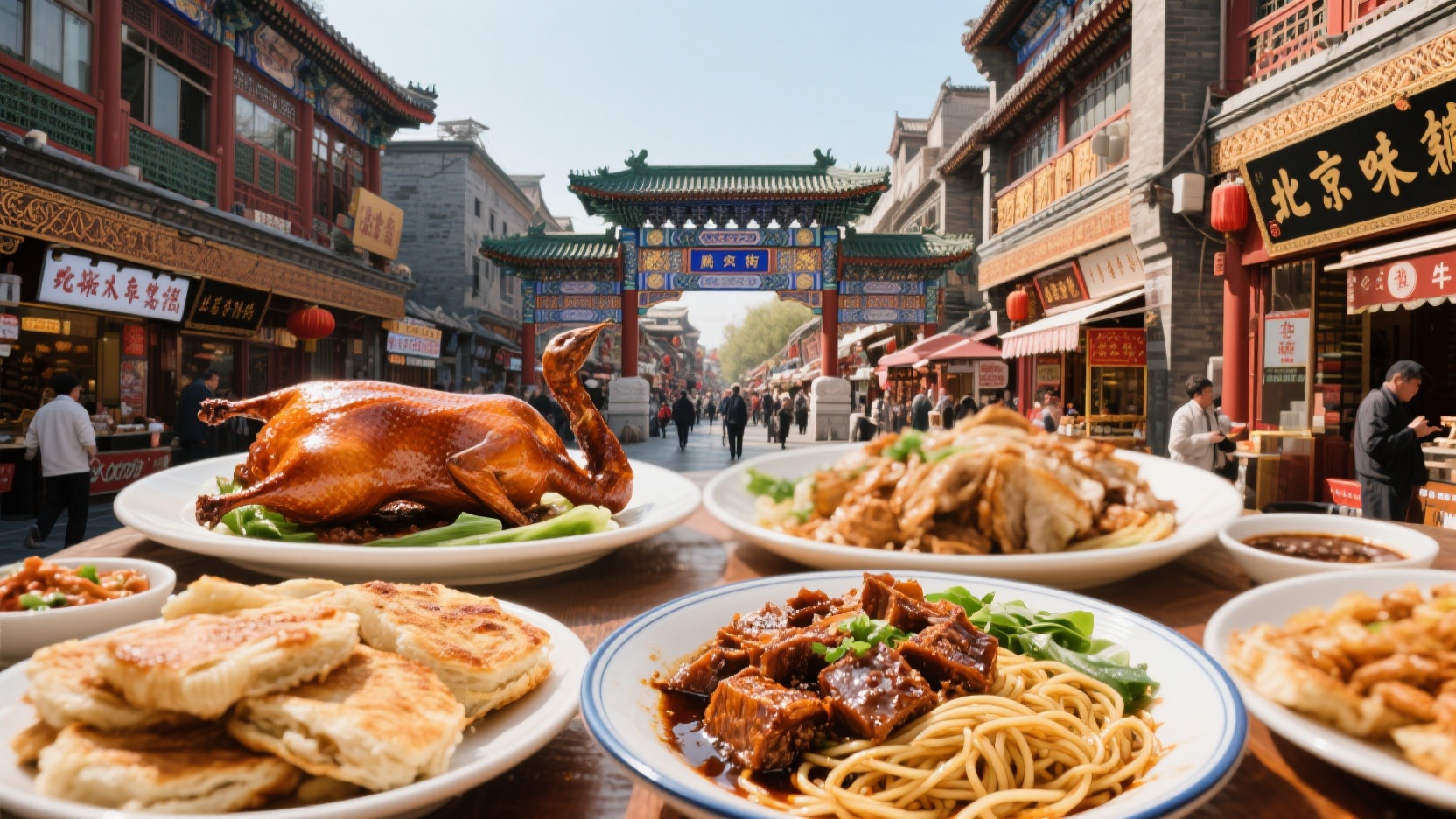
Beijing, an ancient city with over 3,000 years of history and over 800 years as a capital, not only boasts a rich historical and cultural heritage but also attracts food lovers from all over the world with its unique and diverse culinary culture. From imperial court cuisine to street food, every dish embodies the local customs and historical flavors of the capital. XOOTOUR's senior destination columnist has compiled the essence of Beijing's distinctive cuisine to help you embark on an authentic Beijing culinary journey.
Must-try signature dishes list
To truly savor Beijing, here are some signature dishes that you absolutely cannot miss:
Peking duck : As a representative delicacy of Beijing, its history can be traced back to the Northern and Southern Dynasties. Authentic Peking duck uses force-fed ducks, roasted over fruitwood charcoal, resulting in crispy, glossy skin and tender, flavorful meat. When eating, slices of roasted duck are dipped in sweet bean sauce, accompanied by scallions and cucumber strips, and rolled in lotus leaf pancakes for a rich and layered flavor experience with an irresistible aroma. Recommended restaurants include established names like Quanjude or Bianyifang, while newer brands such as Siji Minfu are also worth trying.
Old Beijing Fried Sauce Noodles : This bowl of noodles is a microcosm of the daily life of old Beijingers. Its essence lies in the fried sauce, typically made by stir-frying diced meat, scallions, ginger, garlic, yellow soybean paste, and sweet bean sauce, resulting in a rich and fragrant sauce. The noodles are chewy and served with a variety of toppings such as cucumber shreds, bean sprouts, shredded red radish, and green garlic. When eating, mix the sauce and toppings together; the aroma of the sauce, noodles, and vegetables intertwine, making it an excellent choice for experiencing the authentic flavors of Beijing's street life.
Braised Pork Intestines with Baked Buns : This snack is a testament to the wisdom of Beijing's working class. It uses pork intestines, lungs, fried tofu, and baked buns as its main ingredients, simmered in a rich broth for a long time. The broth is thick and flavorful, the ingredients are tender and infused with taste, and it's served with minced garlic, chili oil, fermented bean curd sauce, and other seasonings, creating a unique flavor that many old Beijingers find irresistible. First-timers may need some time to adjust to the distinctive offal flavor, but once you get used to it, you'll fall in love with this authentic, down-to-earth experience.
Baodu (爆肚): A traditional Beijing halal snack made from beef or mutton tripe, sliced thinly and quickly blanched in boiling water. The key is precise timing and blanching time to ensure a crisp and tender texture. The dipping sauce is the soul of baodu, typically made with sesame paste, soy sauce, vinegar, chili oil, cilantro, and chopped green onions. With its crisp texture and rich sesame sauce, it's a must-order dish at halal restaurants.
Douzhi (fermented mung bean juice) and Jiaoquan (fried dough rings ): This is a highly challenging Beijing-style breakfast. Douzhi is made from fermented mung beans, is grayish-green in color, and has a sour and astringent taste with a distinctive "sour" flavor. Jiaoquan, on the other hand, is a deep-fried pastry, golden in color and crispy in texture. The combination of the two, with the sourness of the douzhi and the crispiness of the jiaoquan creating a strong contrast, is a true "litmus test" for diners' acceptance of Beijing's culinary preferences.
Stir-fried liver : Similar to braised pork offal, stir-fried liver also uses pork offal as its main ingredient, but primarily pork liver and large intestine, thickened with cornstarch to create a rich broth. The broth is fragrant with garlic, the pork liver is tender, and the large intestine is soft and melt-in-your-mouth tender. Eating stir-fried liver involves "slurping"—no spoon is needed; you simply suck the food from the rim of the bowl. It's a typical way to experience old Beijing breakfast culture.
Local favorites for food
To truly experience Beijing's cuisine, one should avoid overly commercialized areas and instead explore the streets and alleys that hold the culinary memories of old Beijingers:
Guijie Street : Located on Dongzhimen Inner Street, it is a famous food street in Beijing. Although some restaurants now cater to tourists, it still retains many local favorites such as spicy crayfish, hot pot, and grilled fish. At night, Guijie Street is brightly lit and full of lively atmosphere, making it a great place for friends to gather for dinner or late-night snacks. It is recommended to choose those old restaurants that have small storefronts but are always packed with customers.
Niujie : As a famous Hui Muslim community in Beijing, Niujie boasts a rich Islamic cultural atmosphere and is an excellent place to enjoy halal cuisine. The area offers a wide variety of halal snacks, such as hot pot at "Jubao Yuan," beef buns, fried cakes, and meat pies at "Hongji Snack Shop," as well as various halal pastries and cooked foods—all authentic in taste and affordable in price.
Huguosi Snack Street (and surrounding area) : Centered around the "Huguosi Snack Main Store," this area radiates outwards and is a hub for sampling traditional Beijing snacks. Here you can find a wide variety of snacks such as douzhi (fermented mung bean juice), jiaoquan (fried dough rings), miancha (millet porridge), zhasutang (offal soup), aiwowo (glutinous rice cake), and wandouhuang (pea flour cake). The selection is abundant and the prices are affordable, making it an ideal place to experience Beijing's breakfast and afternoon tea culture.
The Hutongs Surrounding Nanluoguxiang : While Nanluoguxiang itself is highly commercialized, the surrounding old hutongs such as Mao'er Hutong and Yandaixie Street still hide many authentic private restaurants and specialty snack shops. These small shops often lack eye-catching signs, but attract local diners through word-of-mouth. Exploring these hutongs can reveal many surprises.
Tips for avoiding overpriced and overpriced shops and tourist attractions
On a culinary adventure, it is crucial to be wary of the over-promotion of trendy restaurants and the "price traps" around tourist attractions:
Identifying and Choosing Trendy Restaurants : Many trendy restaurants gain popularity quickly through elaborate decor and social media marketing, but their food quality and value often pale in comparison to traditional, established restaurants. When choosing a trendy restaurant, it's advisable to refer to genuine reviews from local diners and focus on the food itself rather than the overly hyped "Instagrammable" atmosphere. Be cautious if reviews are highly polarized or if only a few "KOLs" recommend it. Truly delicious food is often hidden in back alleys, not in glamorous commercial districts.
Strategies to Avoid Overpriced Restaurants at Tourist Attractions : Restaurants near tourist attractions often command higher prices due to their advantageous location, but the quality of the food is not always guaranteed. For example, dining prices are generally high near popular attractions such as the Forbidden City, the Great Wall, and the Summer Palace. It is recommended to walk a short distance to nearby residential areas or commercial streets before or after your visit to eat, choosing restaurants frequented by locals. Using map applications to search for "nearby restaurants" and filtering for tags such as "highly rated" and "popular with locals" can effectively help avoid overpriced traps.
In summary : The most direct way to determine if a restaurant is worth trying is to observe whether there are locals queuing. Locals' palates are the "living maps" of a city's culinary scene. At the same time, make good use of local service platforms like Dianping and Meituan, but learn to distinguish between genuine and fake reviews. Pay attention to reviews with pictures and low-rated reviews to understand the true situation. Avoid being misled by marketing gimmicks like "secret recipe" or "century-old establishment"; truly established restaurants are often unassuming and discerning.
Beijing's cuisine is the city's vibrant pulse, a culinary feast where history and modernity intertwine. Slow down, savor the unique, down-to-earth atmosphere of the capital, and every bite will be a heartfelt dialogue with this ancient capital.