
8 seasonal delicacies of Xining | Local secrets you'll have to wait a year to find if you miss them (tested and recommended to avoid pitfalls)
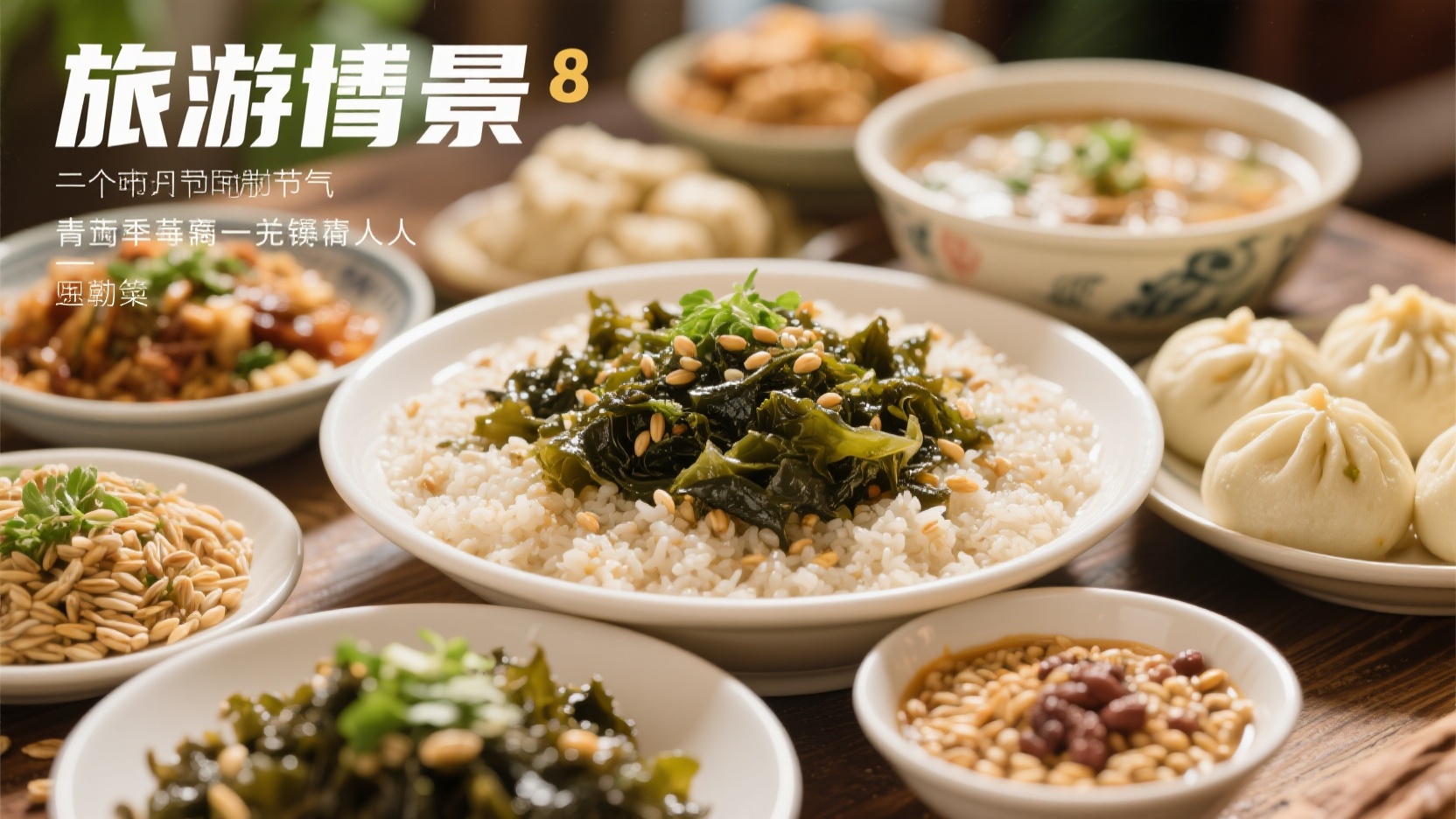
After eight trips to Xining, the biggest lesson I learned wasn't the lack of good food, but rather eating out of season. Those year-round menu items like hand-pulled noodles, liangpi (cold skin noodles), and yogurt are certainly good, but what truly makes locals' eyes light up are the wild vegetables after a few rains, the wheat sprouts that only emerge before the summer solstice, and the wheat porridge cooked starting at dawn on Laba Festival. This post isn't a "must-eat list," but rather a seasonal list I compiled over three years with local friends. Missing some of these places means waiting another year.
Spring awakens: Wild vegetables and elm seeds, only surfacing after several rains.
Spring arrives in Xining a little later than in other parts of China. Between Qingming Festival and the Beginning of Summer, after just two thorough rains, patches of dark green lichen (a type of wild vegetable) will sprout on the grasslands of the southern or northern mountains. This thing resembles wood ear mushrooms but isn't; it grows close to the ground and shrinks into dried sheets when dried in the sun, so finding it in the market is entirely a matter of luck. The most classic way for locals to eat it is in lichen buns, topped with scrambled eggs and chives. The dough must be semi-fermented to prevent it from collapsing during steaming. Biting into it reveals a mushroomy aroma mixed with an earthy scent—the true taste of spring.
Elm seeds, too, don't wait for anyone. Around May Day, elm branches are laden with tender green elm seeds. Locals wash the seeds, mix them with flour, and steam them, calling it "elm seed steamed elm seeds." After steaming, they're topped with a spoonful of hot garlic chili oil. The proper way to eat them is without chopsticks, using a spoon to scoop them out, ensuring each steamed elm seed is coated in chili oil. If you miss this week, the elm seeds will become too old and tough, and you'll have to wait until next year.
Summer Long: Wheat Flour and Sweet Barley Fermentation, Cooling Properties from Summer Solstice to the Dog Days of Summer
The ten days around the summer solstice are the window of opportunity for Qinghai barley to ripen, just before it fully matures. Locals will cut a handful of barley ears from the fields, steam them, and then rub off the barley grains while they're still hot—this is called "Maisuo'er." It's neither a meal nor a dish, but more like a bowl of coarse grain snack with a grassy aroma. Mixed with minced garlic, chili peppers, fragrant vinegar, and a little salt, and drizzled with a few drops of freshly fried rapeseed oil, it's chewy and becomes sweeter with each bite. Because the barley grains become impossible to rub off once they turn yellow, it only appears in a few farmhouses and morning market stalls between the summer solstice and the minor heat (Xiaoshu).
Xining isn't actually hot during the dog days of summer, but locals still believe in "fighting fire with fire." At this time, the new season's highland barley has just been harvested, and homemade sweet fermented barley begins to appear. Unlike the kind available year-round, summer-brewed sweet fermented barley uses fresh highland barley, has a shorter fermentation time, a lighter aroma, and crisper grains. Locals have a tradition of "scooping out the fermented barley first, then drinking the juice," stirring the barley grains with a long-handled spoon and pairing it with a spoonful of yogurt for a refreshing summer afternoon.
Autumn Harvest: Qinghai's giant mooncakes and roasted potatoes, a bountiful harvest from White Dew to Frost's Descent.
Around the Mid-Autumn Festival, even families in Xining facing financial difficulties will steam a "Qinghai Giant Mooncake." Resembling a giant, blooming steamed bun, it's not a Cantonese-style mooncake. The dough is made by layering freshly ground rapeseed oil, fragrant bean powder, red yeast rice powder, and turmeric powder, then shaping the surface into "dragon" or "peach" patterns. When freshly steamed, the whole house is filled with the herbal aroma of fragrant beans and turmeric. Locals don't cut it open; instead, they slice it horizontally down the middle, tearing off layers to eat, accompanied by a bowl of strong, brewed Fu tea—the most comforting afternoon tea in Xining's autumn.
After the White Dew solar term, new potatoes are harvested, and local friends take me to the fields by the Beichuan River to "cook potatoes." The method is rustic: the new potatoes are placed directly into a thick-bottomed iron pot without peeling, with a little water added, and cooked through by the potatoes' own moisture, resulting in a layer of golden-brown "crispy crust" at the bottom. When eating, they are broken in half while still hot and sprinkled with salt and pepper or eaten with pickled shallots. The new potatoes are high in starch and moisture, giving them a naturally milky aroma after cooking—a texture that cold-stored potatoes can never replicate.
Winter Storage: Laba Wheat Rice and Earthen Hot Pot, a Warm Pot for Winter Solstice to Laba Festival
On Laba Festival, the mornings in Xining are awakened by the aroma of wheat porridge. The night before Laba, local families soak wheat kernels, then simmer them in beef or mutton broth until the early hours of the next morning, adding a little Sichuan peppercorns, ginger peel, and salt, until the wheat kernels burst open and the broth turns a rich white. A more elaborate version might include chopped sheep tripe or intestines for added chewiness. This porridge is only truly ceremonial on Laba itself; after Laba, it becomes just ordinary meat porridge.
From the winter solstice to the first month of the lunar calendar, the real main dish for entertaining guests is Qinghai earthen hot pot. Unlike the spicy hot pot of Sichuan and Chongqing, Qinghai earthen hot pot is cooked in a copper pot heated by charcoal. The bottom of the pot is lined with pickled cabbage and vermicelli, topped with layers of fried meatballs, pork belly, fried tofu, and ribbonfish pieces, then simmered in beef bone broth. When eating, you don't dip the ingredients in the broth; instead, you first drink the soup and then eat from top to bottom, where the pickled cabbage flavor becomes stronger. This hot pot is only truly delicious after the weather turns cold; eating it in the summer can feel too rich.
After several trips, I realized that the food in Xining follows a specific timetable. Ground lily requires rain, wheat porridge must be eaten before the barley turns yellow, and Laba wheat porridge must be eaten before dawn. Eating according to the seasons is the right way to experience a city.
Blogger's Practical Tips: 1. In spring, lichen and elm seeds are mostly found in the morning market. It's best to go early in the morning to try your luck, and don't hesitate if you see them. 2. Maisuoer (a type of wild vegetable) doesn't necessarily have fixed stalls. You can follow the market information posted by locals. It's most concentrated around the summer solstice. 3. Qinghai mooncakes and roasted potatoes are not suitable for taking away. The former will harden when cold, and the latter will become mushy when cold. They taste best when steamed and eaten fresh. 4. Many time-honored brands only serve Laba wheat porridge on Laba Festival. If you want to experience the local home-style version, it's more reliable to make an appointment with local friends in advance than to find a restaurant.