
8 Seasonal Dishes in Xi'an | A Seasonal Limited List I Compiled After Traveling Through All Four Seasons (Non-Tourist Version)
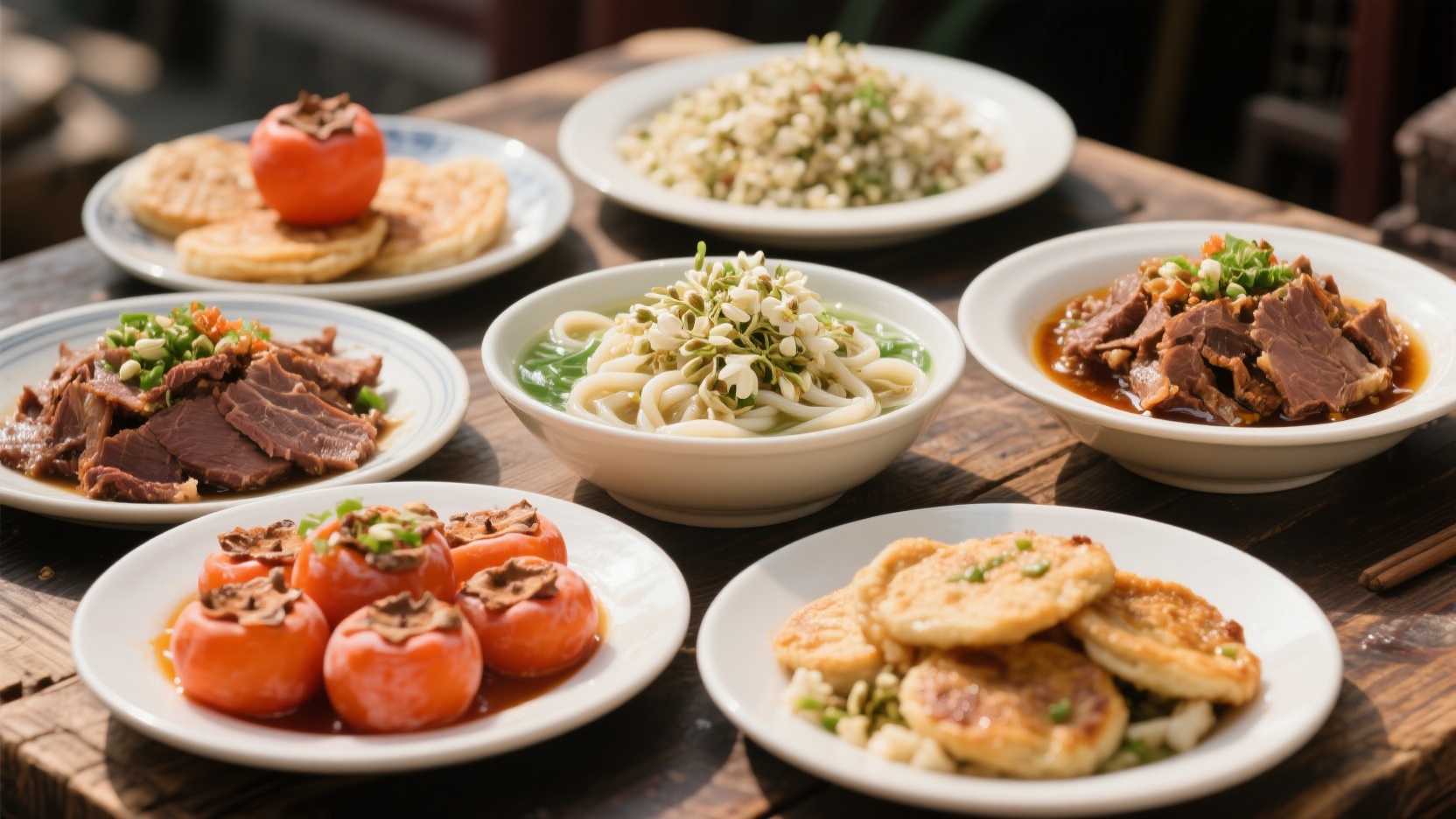
Having lived in Xi'an for four years following the seasonal food trends, I want to start by pouring cold water on this idea: many of the "must-eat" dishes featured in travel guides are actually sold year-round, having long lost their seasonal essence. True locals who know their food carry a "seasonal calendar" in their minds—picking tender shoots in spring, drinking fermented vegetable soup in summer, savoring persimmons in autumn, and slicing cured meat in winter. This post won't cover roujiamo (Chinese hamburger) or liangpi (cold skin noodles), but rather eight limited-time dishes that are only available during their season.
The worst mistake I ever made was going to the Muslim Quarter after the start of autumn to find freshly fried persimmon cakes, only to be met with the owner's smile and the reply, "The new persimmons haven't come yet; it'll be another ten days." Therefore, I've divided this list into four groups based on spring, summer, autumn, and winter, and each dish is marked with "when is the best time to order?" to help you choose the perfect time.
I. From the Spring Equinox to Grain Rain: Locust flower and wheat porridge with shepherd's purse dumplings, eaten as part of Xi'an's "biting spring" ritual.
Spring in Xi'an is short, so short that many seasonal vegetables are out of season before you know it. Every year in mid-to-late April, as soon as the locust flowers bloom at the foot of the Qinling Mountains, the locals can't wait to enjoy them. Locust flower and wheat porridge is the most typical spring dish of the Guanzhong Plain: half-open locust flowers are picked clean, mixed with a small amount of flour, and steamed until the petals are translucent and the aroma of wheat mingles with the fragrance of locust flowers. When eating, it must be topped with a sauce made of minced garlic, chili oil, and fragrant vinegar, and served with a bowl of corn porridge. Xi'an people emphasize "half-open flowers, minimal flour coating," as too much flour would mask the sweetness of the locust flowers, which would be a waste.
Equally prized in springtime flavors as locust blossom and wheat porridge is shepherd's purse dumplings. Shepherd's purse is at its most tender after the Awakening of Insects (Jingzhe), and becomes tough after Qingming Festival (Qingming Festival). Locals blanch the shepherd's purse, chop it finely, mix it with a little flour, shape it into fist-sized dumplings, and then steam them. Biting into them reveals the fibers of the shepherd's purse. Dipped in garlic sauce, they are bursting with the wild, earthy flavor of freshly awakened soil. These two spring dishes aren't about the seasoning; they're about savoring the freshness of spring.
II. From Grain in Ear to Summer Solstice: Fermented Rice Flour Fish and Honey-Glazed Rice Dumplings, Xi'an's Two Perfect Summer Cooling Strategies
In Xi'an, fermented vegetable soup (jiangshui) reaches its peak season after summer arrives. Jiangshui fish, actually called "leaky fish," is made by boiling cornmeal or starch into a thick paste, then straining it through a sieve into cold water until it solidifies and resembles small fish. It's then topped with fermented vegetable soup, celery, chili oil, and a few drops of Sichuan peppercorn oil, offering a perfect balance of sour, spicy, cool, and smooth flavors in one bite. Locals believe the soup should be so cold it's almost tooth-chilling, and the chili oil so thick it's almost black, making it a truly satisfying experience to slurp it down at a roadside stall. This dish sells best around the summer solstice; many stalls close down as soon as the weather cools down.
Honey-glazed chilled rice dumplings are another seasonal treat around the Dragon Boat Festival. Completely different from the meat-filled rice dumplings of the south, these are plain white glutinous rice dumplings, cooled, cut into small pieces, and drizzled with chilled honey and rose jam. The old stalls in Xi'an's Muslim Quarter will ask you "white honey or rose honey," and locals usually use a little of both. They're cool, chewy, and not sticky, with the floral aroma of the rose jam perfectly balancing the richness of the honey. After the fifth month of the lunar calendar, many stalls switch to steamed glutinous rice cakes.
III. From White Dew to Frost's Descent: Lintong Fire Crystal Persimmons and Osmanthus Persimmon Cakes – Missing out on these will only bring your own regret.
After the Mid-Autumn Festival, the persimmons in Lintong begin to soften and turn red, their skins so thin they tear easily. Locals choose the soft persimmons that are "bright red and feel like a bag of water," and suck on them directly with a straw, or gently sip them, the flesh flowing into their mouths like honey. This method only works for completely softened persimmons; when they are hard, they are so astringent you can't open your mouth. I once forced myself to eat one before the White Dew solar term, and my tongue went numb for a long time. My friend from Xi'an laughed and slapped his thigh, saying, "It's not the right time yet, you can't rush it."
Around the same time, Huang Gui persimmon cakes are sold in oil at a stall set up in the Muslim Quarter. They must be made with freshly harvested persimmons, filled with a sweet filling of osmanthus, walnuts, and sesame seeds, and fried fresh. When they're just out of the fryer, the outer layer has a natural sweet aroma of persimmons, and the sweet filling stretches when you bite into it. The owner says, "After the first frost, persimmons become scarce, and we only have frozen cakes left," so if you want to try them, it's best to go around mid-October.
IV. From Heavy Snow to the Twelfth Lunar Month: Cured Beef and Mutton with Mutton Blood Soup, the Wake-Up Call of Xi'an's Winter Mornings.
As December arrives, long queues form outside the preserved beef and mutton shops in Xi'an's Muslim Quarter, a tradition deeply ingrained in the locals' New Year's spirit. This preserved beef and mutton isn't ordinary braised meat; it's a cold dish made using a slow-cooking, low-temperature process unique to December, followed by air-drying and then boiling. The meat is firm yet tender, and when sliced, you can see the translucent tendons. Xi'an locals prefer it sliced thinly, placed inside a freshly made hot tuotuo bun, and paired with a strong cup of tea—the more you chew, the more fragrant it becomes. Many old shops close once they've sold out in December; if you don't go before New Year's Eve, you can only buy vacuum-packed versions.
Lamb blood soup with vermicelli is even more suitable for a snowy morning. The lamb blood is sliced thinly and poured over boiling hot, spicy bone broth, sprinkled with chopped cilantro and garlic sprouts, and then a piece of flatbread is broken off and soaked in it. Locals eat lamb blood soup with vermicelli by "drinking three sips of soup first, then peeling back the chili peppers to eat the blood." The lamb blood should be so tender that it trembles when picked up with chopsticks, and the soup should be so numbing that your lips tingle. After eating a bowl of this, a warm opening is instantly torn open in the sub-zero morning of Xi'an.
The blogger concludes: Xi'an isn't lacking in delicious food, but many dishes have been compressed into a "year-round supply" format, losing their seasonal essence. Of the eight dishes listed above, some require the blooming of flowers, some wait for new fruit, and some only appear in December. Checking the solar terms before you go and deciding which street to visit will reduce the chances of making a mistake compared to queuing up according to a list of popular spots.
Practical Tips: ① In spring, eat locust flower wheat rice and shepherd's purse dumplings. Look for late April, when the locust flowers are most fragrant after the rain. ② Around the summer solstice, look for honey-glazed rice dumplings in the Muslim Quarter. Remember to ask the vendor to add extra rose jam. ③ After the autumnal equinox, when heading towards Lintong, don't buy hard persimmons at the scenic area entrance. Look for soft persimmons to suck on with a straw. ④ In the twelfth lunar month, avoid buying cured beef and mutton on weekend mornings. It's safest to queue before 9 am on weekdays. ⑤ The default for mutton blood soup is spicy. If you can't handle spiciness, tell them in advance, "less spicy, more soup."
(Average price per person: Most of the above are affordable snacks, costing tens to hundreds of yuan per person. The main expense is the gas money for traveling back and forth and the patience to wait in line.)
Eating according to the seasons is the right way to experience a city.