
Eating in Xiamen according to the solar terms is the key to understanding the local cuisine | A list of seasonal specialties that took eight trips to complete (personally tested by the blogger)
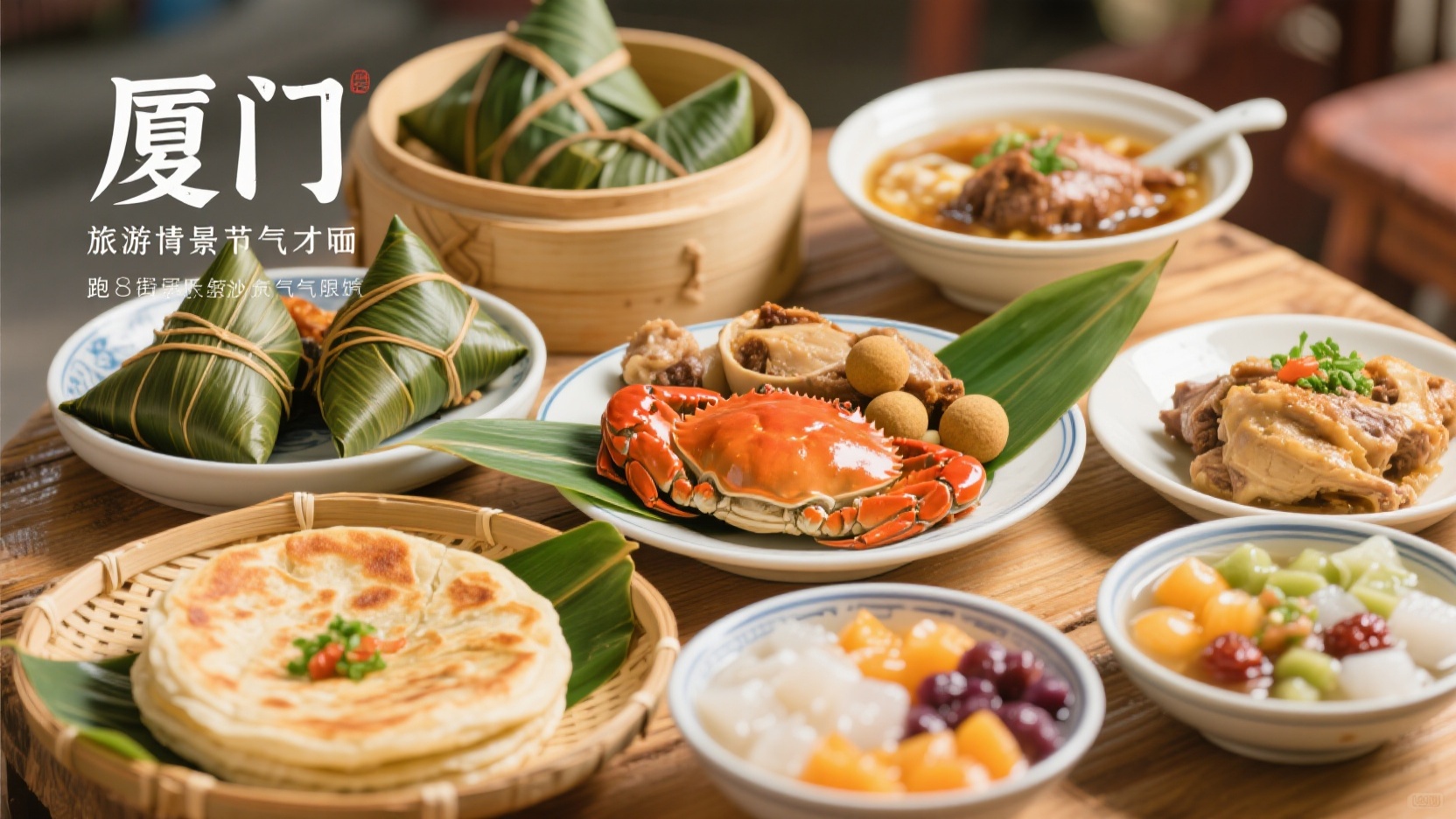
The biggest mistake I made in Xiamen wasn't going to the wrong trendy restaurants, but excitedly searching for ginger duck in the summer, only to find a sign outside saying "Only Served in Autumn and Winter." Later, I made eight trips to Xiamen, specifically targeting the periods around the solar terms, before I finally figured it out: the city's menu doesn't update by season, but by solar terms. These seasonal flavors below can only be enjoyed at their perfect time.
I. Qingming Festival - Thin Pancakes and Mouse-ear Cakes: Sold Only for a Limited Time in Spring
Around the Qingming Festival, people in southern Fujian have a custom of eating thin pancakes. At this time, oysters are at their fattest, bamboo shoots are at their crispest, and carrots are at their sweetest. The filling of the pancakes also includes chopped spiced tofu and celery. Xiamen pancakes are known for their thinness, allowing light to pass through, yet being resilient and unbreakable. They must be made fresh on the same day, as they harden overnight.
Locals eat thin pancakes with the emphasis on "making them fresh and eating them immediately, without the sauce dripping onto your hands." First, spread sweet and spicy sauce on the pancake, then add a layer of stir-fried mixed vegetables, sprinkle with peanut brittle powder and seaweed flakes, and roll it into a pillow shape. Cuddle cake is a limited-edition snack for Qingming Festival ancestor worship; the juice of cuddle grass is kneaded into the glutinous rice skin, giving it a grassy aroma. Older Xiamen locals prefer to pan-fry it until both sides are slightly browned, crispy on the outside and chewy on the inside, perfect with a cup of Tieguanyin tea.
II. Dragon Boat Festival Alkaline Rice Dumplings: Chilled and then dipped in honey – the quintessential Xiamen tradition
Around the Dragon Boat Festival, some stalls selling alkaline rice dumplings (zongzi) appear in Xiamen's vegetable markets for only a few days. These dumplings have no filling; the glutinous rice is soaked in alkaline water and then boiled until it turns golden and translucent, with a cool and chewy texture. Tourists often find them tasteless, but locals have eaten them since childhood, appreciating their alkaline aroma and cool sensation.
The correct way to eat it is chilled and then dipped in white sugar or honey; it shouldn't be judged using the same logic as meat-filled rice dumplings. It's best to visit the old neighborhood market on the morning of the Dragon Boat Festival; many elderly women will be selling their homemade alkaline rice dumplings from bamboo baskets, and they usually close up shop after noon.
III. Summer Solstice: Four-Fruit Soup and Sea Worm Jelly: Summer Cooling Isn't About Ice Cream
After the summer solstice, the four-fruit soup stalls in the old town truly come alive. A bowl of authentic four-fruit soup requires the seaweed jelly to be slowly simmered to extract its gelatinous texture, and the ada zi (a type of jelly) must be freshly cooked and cut, accompanied by mung beans, watermelon, and pineapple. Locals have a secret code for ordering four-fruit soup: add dried tangerine peel, but no coconut jelly. That subtle sweetness from the dried tangerine peel is the true essence of a summer in old Xiamen.
Sea worm jelly is at its best from Qingming Festival to late summer, especially as the weather gets hotter. Sea worms are actually sea worms, rich in collagen and cooling in nature. After being made into jelly, it is served with minced garlic, soy sauce, mustard, and pickled radish. Locals prefer to eat small pieces in one bite, letting the garlic and mustard flavors melt in their mouths, rather than chewing large chunks slowly. Many tourists find it fishy after only one try, mostly because they didn't get enough sauce.
IV. White Dew - Longan with Congee: A Minnan Dish for "Autumn Nourishment"
Around the time of White Dew, longans ripen in abundance in the Tongan area. Longans harvested during this season are picked fresh with their leaves and stems still attached and sold immediately. They have small pits, thick flesh, and sweet juice, and when bitten into, they release a fragrance reminiscent of osmanthus. After about twenty days, only refrigerated longans are available. There's an old saying in Xiamen: "Eating longans during White Dew is like eating a whole chicken."
The most common way to eat longan in Xiamen is to peel a small bowl of longan pulp and eat it with white rice porridge, a sweet and savory breakfast. A more advanced version is to stew longan pulp with eggs or boil it in sweet soup, without adding any sugar, relying on the natural sweetness of the longan itself. For the freshest taste, you can go to the Tong'an Orchard around the time of the White Dew solar term to pick and eat the fruit yourself, which offers a more seasonal experience than fruit shops in the city.
V. Autumn Equinox - Red-Roe Crab: Only chase crabs during the twenty days when their roe is at its fullest.
From the Autumn Equinox to the Frost's Descent, it's the peak season for red-roe crabs in Xiamen. These crabs, also known as mud crabs, have shells brimming with roe before mating, and their meat is firm. Locals have a particular way of steaming red-roe crabs: they place them shell-side down in the pot to prevent the roe from leaking out. After opening the lid, they first scoop a spoonful of roe and mix it into glutinous rice, creating a savory, sticky, and satisfying flavor that ordinary hairy crabs simply can't provide.
If you order red crabs in summer or early autumn, you're likely to encounter empty shells with little roe and loose meat. Regular diners will place orders in advance with their favorite seafood stalls after the ninth month of the lunar calendar, specifically choosing female crabs and checking if their crab navels are plump. Steaming is the safest method, but those who prefer stronger flavors can ask the restaurant to make it into satay-fried crab, but always make sure it's not in season first.
VI. Winter Solstice: Ginger Duck and Duck Congee: Xiamen Residents' "Heating" Method
After the start of winter, the ginger duck restaurants in the old town truly enter their peak season. Ginger duck is made by stir-frying Muscovy duck, old ginger, black sesame oil, and rice wine together in one pot. The ginger flavor permeates the bones, and the duck meat becomes more and more fragrant with each chew. After finishing a pot, locals will ask the restaurant to add more broth, and then dip some noodles or cabbage in it to soak up all the essence of the broth.
If you don't want to eat too much on a winter night, a bowl of duck congee is the perfect way to end the meal. The duck meat is shredded into thin strips, the congee is made with duck broth and simmered until thick, and sprinkled with plenty of white pepper. A bowl of this around the winter solstice will warm you from your stomach to your fingertips. You can also find ginger duck in summer, but the old ginger isn't as fragrant, and the duck meat is a bit dry. Those who know how to eat will wait until the temperature drops before enjoying it.
What truly captivates people in Xiamen isn't the year-round queues for satay noodles, but rather the seasonal specials available for only a few dozen days each season. If you're only visiting once, I suggest focusing on two or three of these seasonal items; it's a more authentic taste of local life than blindly trying different shops.
Practical Tips ①: The week before Qingming Festival, you'll find the best selection of thin pancakes and glutinous rice cakes; on Dragon Boat Festival, alkaline rice dumplings only appear briefly at the market; after the Summer Solstice, go for the Four Fruit Soup in the afternoon for the most generous portions; around the White Dew, you can pick longan fresh at the Tong'an Orchard; check the lunar calendar for the Autumn Equinox, and order red crabs in advance from the seafood stalls; before the Winter Solstice, queues start forming for ginger duck, so it's recommended to avoid peak hours.
Practical Tip 2: These seasonal delicacies are mostly hidden in the old town's markets, neighborhood shops, and around temples. Don't be misled by chain stores in shopping malls. Many stalls don't have signs; just look for elderly people queuing up. Before ordering, ask, "Is this in season?" Locals will immediately consider you an expert. Eating according to the seasons is the right way to experience a city.