
Xiamen's Local Cuisine and Food Guide
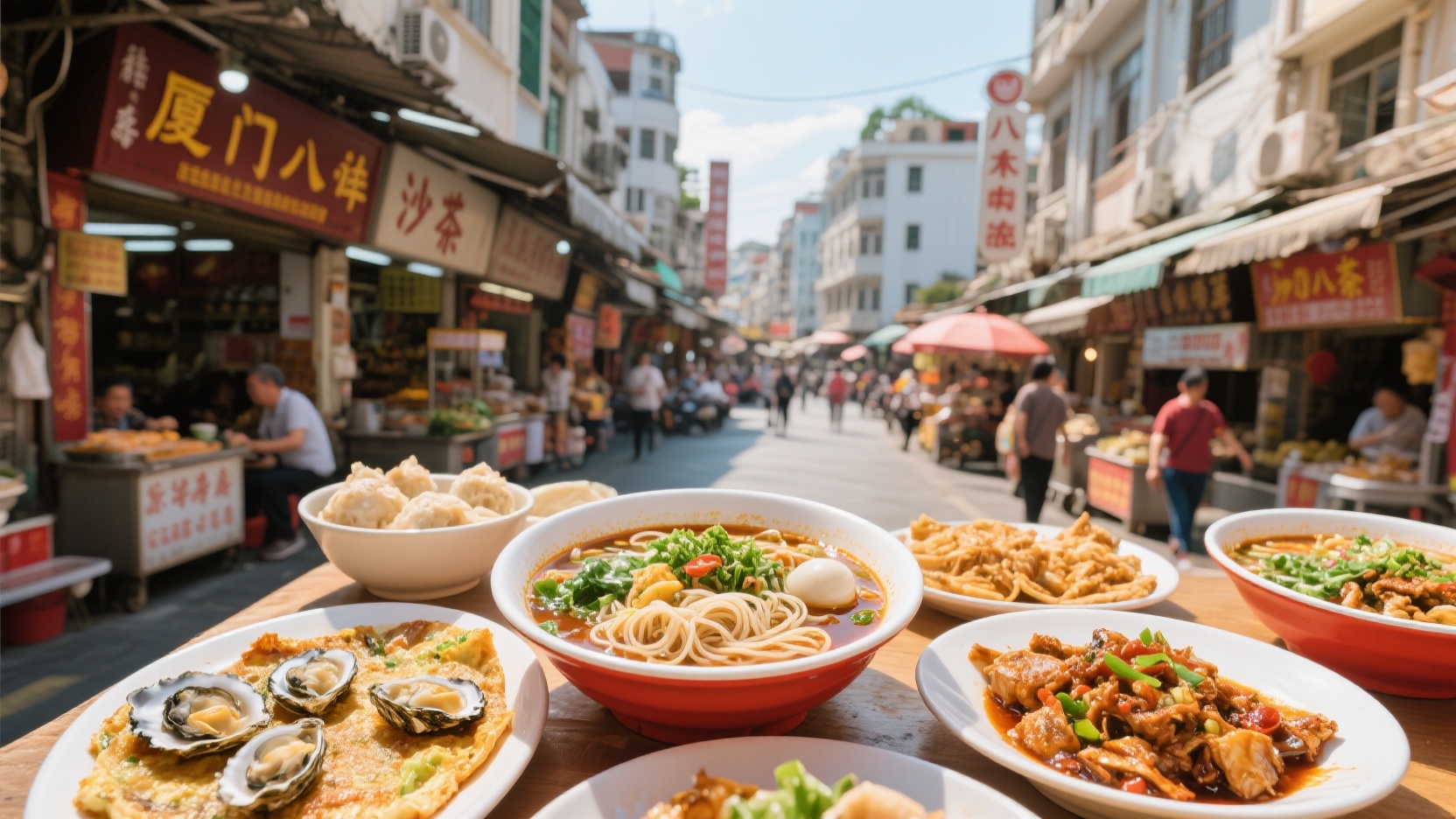
Xiamen, a city known as the "Garden on the Sea," boasts a unique geographical location and rich historical and cultural heritage, which have shaped its distinctive Minnan (Southern Fujian) cuisine. From street food delicacies to exquisite seafood feasts, a culinary journey in Xiamen is a profound experience that combines the vibrancy of the seaside with a nostalgic charm. This article will guide you through Xiamen's must-try signature dishes, show you popular local eateries, and offer practical tips to avoid common pitfalls, helping you make the most of your culinary adventure on this island city.
Must-try signature dishes list
Xiamen's culinary culture is renowned for its distinctive Southern Fujian characteristics and respect for the natural flavors of ingredients. Here are some authentic local delicacies you shouldn't miss:
Satay noodles: As the most representative noodle dish in Xiamen, satay noodles are famous for their rich and mellow satay broth. The broth is made with a variety of spices such as peanut sauce, dried shrimp, minced garlic, and chili, resulting in a complex flavor that is both fresh and mellow. Paired with chewy alkaline noodles and optional toppings such as pork liver, lean meat, large intestine, shrimp, and dried tofu, each bowl offers a unique taste experience.
Oyster omelet: This classic Minnan snack uses fresh oysters as the main ingredient, mixed with eggs, sweet potato starch, chives, and other ingredients. It is pan-fried until golden brown and crispy on the outside, and soft and tender on the inside. The sweetness of the oysters and the richness of the eggs blend perfectly, and dipping it in a special sweet and spicy sauce enhances the flavor even more. Its crispy exterior and tender interior make it an excellent choice for experiencing the seafood flavors of Xiamen.
Ginger Duck: A traditional and nourishing dish from Southern Fujian. Made with high-quality Muscovy duck, it's simmered in a clay pot with old ginger over low heat until the duck meat is tender and flavorful, the ginger is rich but not spicy, and the broth is thick and nourishing. It's especially suitable for enjoying in the cooler seasons to experience its unique nourishing flavor.
Peanut soup: an indispensable dessert on the breakfast table of Xiamen locals. Made with carefully selected plump peanuts, it's simmered for a long time until each peanut is soft, tender, and melts in your mouth. The broth is sweet and has a natural nutty aroma. It's usually served with fried dough sticks, fried dates, or sweet rice cakes, a sweet start to experiencing the slow pace of life in Xiamen.
Wontons: Wontons from the Minnan region have paper-thin wrappers and are filled primarily with pork, resulting in a chewy and delicious texture. The broth is typically light, made from pork or chicken bones, and sprinkled with scallions and pepper. They are a common and convenient street food in Xiamen. Paired with noodles, they form the classic "wonton and noodle" combination, a favorite everyday dish among locals.
Braised Pork Rice Dumplings: Unlike the sweet rice dumplings of northern China, Xiamen's braised pork rice dumplings are typically savory. The glutinous rice is wrapped around a generous filling of braised pork belly, mushrooms, dried shrimp, chestnuts, and egg yolk. After a long steaming process, the glutinous rice becomes soft, sticky, and fragrant, while the filling releases its savory aroma. They are often served with a special sweet and spicy sauce or peanut sauce, offering an authentic local flavor.
Tong'an Braised Pork Belly: A traditional famous dish of Tong'an region, braised pork belly is renowned for its unique cooking method and taste. It uses pork belly with skin, which is marinated, fried, and then steamed in a bowl with shiitake mushrooms, dried scallops, and other ingredients until the meat is tender and melts in your mouth, rich yet not greasy. The broth is rich and flavorful, and it is often served with rice, making it a traditional delicacy at banquets.
Tusun jelly: This seemingly unusual Xiamen specialty snack is actually made by boiling and cooling a type of marine annelid called *Sipunculus nudus*. Tusun jelly is crystal clear, with a bouncy, smooth, and chewy texture. Its flavor is mild on its own, relying entirely on dipping sauces for enhancement. Served with soy sauce, vinegar, mustard, minced garlic, and other seasonings, it boasts a unique flavor and is a must-try for experiencing the distinctive taste of Xiamen.
Local favorites for food
To truly experience the essence of Xiamen's cuisine, one must delve into the neighborhoods where locals live and immerse oneself in the authentic, vibrant atmosphere.
The Eighth Market (八市): This is Xiamen's oldest and most vibrant seafood market, a top choice for locals to buy seafood and sample authentic local snacks. The Eighth Market is lively from dawn till dusk. Here you can buy the freshest seafood and have it cooked at nearby seafood processing shops. In addition, the area around the Eighth Market is home to many long-established snack shops, offering affordable and authentic fried foods, satay noodles, rice noodle soup, and spring rolls.
The alleys surrounding Zhongshan Road Pedestrian Street: Although Zhongshan Road itself is a tourist hotspot, the alleys on both sides and behind it, such as Jukou Street, Dayuan Road, and Siming South Road, retain many time-honored shops and local snack stalls. These alleys are often inconspicuous, but with a little attention, you can discover hidden culinary gems, such as Huang Zehe Peanut Soup Shop (although it's now a popular spot, its peanut soup is still worth trying), Laosong Wonton, and Yuehua Satay Noodles. Savoring authentic flavors amidst the charm of the old town is a unique experience.
Xiamen University West Village/Ding'aozai: These two areas, close to Xiamen University, are home to a large student population and a plethora of affordable and delicious local snacks and restaurants. The food here is plentiful, ranging from rice noodle soup and fried chicken cutlets to various light meals, all at very reasonable prices. At night, it's a great spot for late-night snacks, brimming with vibrant local life.
Within residential communities in Huli/Siming Districts: To avoid peak tourist seasons and experience a more authentic local lifestyle, consider visiting residential communities away from tourist hotspots, such as the Lianhua Road intersection, Songbai Road, and Hexiang West Road area. Restaurants in these areas primarily cater to local residents, offering authentic flavors at reasonable prices. While this may require longer travel time, you're often rewarded with delicious food surprises.
Tips for avoiding overpriced and overpriced shops and tourist attractions
Xiamen boasts a wide variety of culinary options, but it also presents some "Instagrammable traps" and inflated prices at tourist attractions. The following suggestions will help you make informed purchases and avoid these pitfalls:
Beware of over-marketed "Instagrammable" restaurants: Many trending restaurants on social media attract tourists with their exquisite decor and unique gimmicks, but their food may be mediocre or even fall far short of expectations. These restaurants are often accompanied by long queues and inflated prices. One criterion is to observe the proportion of local diners; if locals rarely queue, be cautious. Genuine established brands or reputable restaurants usually win customers with their delicious food, not their flashy appearance.
Avoid overpriced dining in tourist areas: Restaurants in popular tourist areas such as Gulangyu and Zengcuo'an generally charge higher prices than in the city due to higher rents and operating costs, and may also modify traditional flavors, resulting in a loss of authenticity. It is recommended to have a proper meal before entering or after leaving the tourist area, or choose some light meals or snacks within the area as a supplement, rather than relying on the tourist area for your main meal.
Practical tips for identifying authentic local cuisine:
- Observe the diners: A shop frequented by locals is usually a trustworthy choice. Their ordering and conversations can also provide insights.
- Focus on the ambiance, not the decor: Many authentic, long-established shops may have simple, even old-fashioned, environments, but their flavors have stood the test of time. Shops that are overly "refined" or "themed" should be scrutinized more closely.
- Price comparison: Conduct a simple price comparison with similar products. If the price is significantly higher than the market average and there are no special features, you should be wary.
- Verify reviews from multiple sources: When reviewing on platforms like Dianping and Xiaohongshu, pay more attention to specific descriptions of the taste and ingredients, rather than just "check-in" photos. Additionally, ask local residents, hotel staff, or taxi drivers for recommendations; their suggestions are often more insightful.
- Avoid restaurants that actively solicit customers: Restaurants that actively solicit customers and over-promote themselves at the entrance of scenic spots or on the street are usually not the choice of locals, and the quality of their dishes and the transparency of their prices may be questionable.
Prioritize shops located in residential areas, old streets and alleys, and around markets. These places are often where authentic local delicacies gather, allowing you to taste more genuine Xiamen flavors at more reasonable prices.
Xiamen's cuisine is more than just a treat for the taste buds; it's a microcosm of the city's philosophy of life. Slow down and use your taste buds to experience its myriad charms and the everyday life of its people.