
Wenzhou in the Marketplace | 10 Local Treasures Hidden by Locals in the Old Washi Market
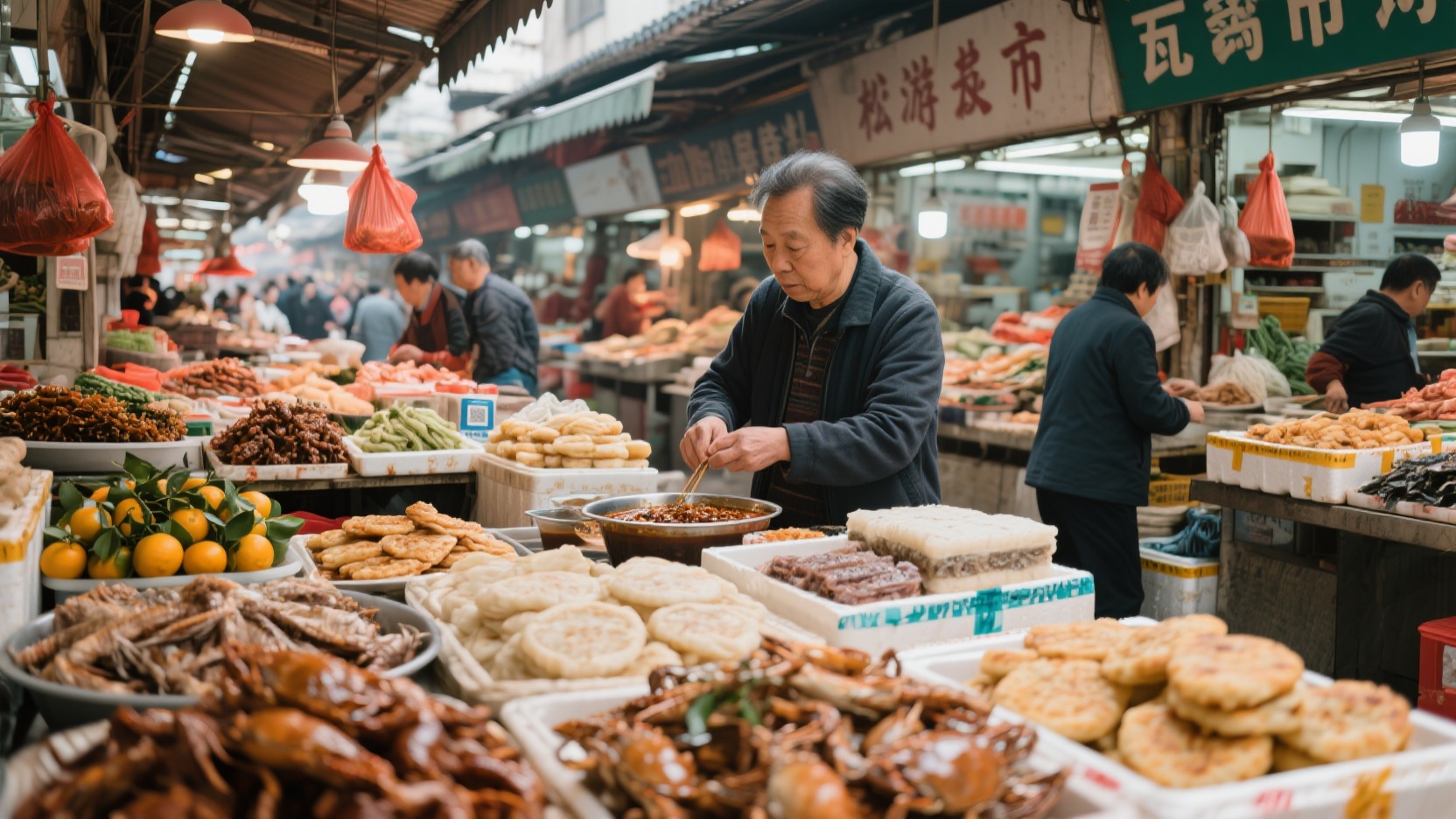
At 6:30 a.m., the first batch of cooked food stalls at the Washi Market have already lit up. Wenzhou locals don't just look at fresh produce; they also pay attention to the deep-colored jars of braised meats, the steaming trays of rice dishes, and the pickled and preserved vegetables in rough earthenware jars under the counter. The following 10 items are flavors worth taking home from this old city market.
Washi Market and Songtai Market: Two Taste Samples
The Washi Market area in the old town of Lucheng is one of the few remaining neighborhoods in Wenzhou that still retains a dense mix of street stalls and indoor markets; the nearby Songtai Farmers Market is known for its cooked food and pickles. The two areas are well-suited for a walking route: start in the morning at Washi to see seafood and handmade pastries, then head to Songtai for preserved meats and seasonal fruits. The most direct way to judge whether a stall is worth stopping at is to see if the local aunties keep coming back; there are no permanent champions in the market, only stalls with more consistent batches that day.
Three items from the cooked food stall: fish cakes, duck tongues, and croaker jelly.
Wenzhou fish cakes come in two types: solid and stuffed. The advantage of selling them fresh from the market's cooked food stalls is that they are steamed and sold immediately, preserving the natural shrinkage of the surface after steaming, and they spring back faster than vacuum-packed ones. When choosing fish cakes, prioritize those that are grayish-white in color, with a small amount of scallion green, and have fine, evenly spaced pores on the cut surface; these have a higher proportion of fish paste and less starch. They don't need to be re-fried; simply slice them and eat them cold or microwave them on low for 30 seconds, served with a small dish of Wenzhou soy sauce and vinegar.
Braised duck tongues are often piled up in small mounds of dark brown sauce at cooked food stalls. A good quality duck tongue is soft at the tip, firm in the middle, and has two pieces of cartilage at the base. The braising liquid should be reduced to a slightly dry consistency, with a glossy sheen but not dripping oil. When weighing the duck tongue, ask the vendor to give you an extra spoonful of the original braising liquid. Add half a spoonful when mixing it with rice or cooking noodles at home; this will better preserve the savory flavor than heating it directly.
Croaker jelly is a chilled dish that is easily overlooked by casual diners. It is made by boiling croaker swim bladders and then cooling them into a jelly, with a texture similar to savory jelly. When choosing croaker jelly, select pieces that are translucent, free of cloudy particles, and with intact edges, indicating that the boiling and filtering process was thorough. To serve, cut it into pieces and drizzle with a little ginger and rice vinegar; it is especially refreshing when paired with porridge in the summer.
Pickled and preserved vegetables: soy sauce pork, raw river crab, raw seaweed, and shrimp nitrate sauce
Soy sauce-braised pork is a basic Wenzhou-style preserved meat. Market-bought versions come in two types: sun-dried and air-dried. Sun-dried pork has a darker color and a shinier fat; air-dried pork is firmer. When choosing pork, pinch the fat; it should be firm but not sticky, and smell of soy sauce and a slight aroma of wine, without any rancid smell. At home, slice it and steam it with white radish. The pork juices will bring out the saltiness and savory flavor; no additional salt is needed.
Raw river crab is a Wenzhou-style raw marinated crab, typically made by cutting swimming crabs into pieces and marinating them in a sauce made with minced ginger, sugar, vinegar, and a small amount of wine. It's best to eat it on the same day you buy it, without heating it, and serve it with hot congee or rice. If you have concerns about eating raw crab, choose crab pieces that are intact, with translucent, gelatinous meat that hasn't released too much water; these are more reliable indicators of freshness.
Raw Pan Cai is made by slicing local Pan Cai (a type of mustard green) into thin strips and then marinating it. It has a sweet, sour, and slightly spicy flavor. When selecting it, look for pieces that are still crisp, not dark in color, and with clear, non-cloudy juice. It's suitable as a side dish for congee for breakfast, or you can squeeze out the excess water, slice it, and stir-fry it with pork belly; the sourness helps to cut through the richness.
Shrimp nitrate sauce is often sold in small jars at pickle stalls. It's dark brown in color and has a strong aroma. For first-time buyers, it's recommended to buy only a small amount and first smell for a pungent ammonia odor; if present, it indicates over-fermentation. It's not suitable for direct consumption. A small spoonful is often steamed with pork belly or mixed with tofu and steamed; this is a common source of savory flavor in Wenzhou households.
Handmade desserts and rice dishes: vegan pastries and nine-layer cake
Yongjia noodles are usually sold in the market in oval bundles, as thin as silver threads, and slightly yellow in color. When choosing noodles, first check the degree of breakage; fewer broken pieces indicate that they were made and transported intact. Then smell for a clean flour aroma. Since the noodles themselves contain salt, use plenty of water when cooking. Add the noodles after the water boils, and cook until they become translucent. Immediately remove them from the water, place a little lard and rice wine at the bottom of a bowl, and then pour in the boiling noodle soup to dissolve them. There is no need to add additional salt.
Nine-layer cake is a traditional Wenzhou rice-based food, made by grinding early-season rice into a paste, and then steaming it with alternating layers of brown sugar and plain rice. A good nine-layer cake has clear layers, doesn't stick to the knife when cut, and has a natural color transition. It hardens when eaten cold, so it's best to slice it thinly and pan-fry it in a little oil until both sides are slightly crispy, then serve it with tea or as breakfast.
Seasonal Fruit Stall: The Selection Logic of Outangerines
Ougan oranges are the most important local fruit in Wenzhou from winter to early spring. They have a slightly thick peel, a slightly bitter initial taste, and a distinct sweet aftertaste. At the market fruit stalls, you can choose by size and ripeness, unlike supermarkets where they are uniformly packaged. When choosing Ougan oranges, they should feel heavy in your hand, with a firm and elastic peel, and no blackening around the stem. Don't rush to eat them after buying them; let them sit in a cool, shady place for a few days. The bitterness will diminish, and the sweetness and aftertaste will become more pronounced. If the stall also displays Waxberries from Chashan, it indicates that early summer is approaching. Choose those that are firm, deep red, and free of water stains.
Visiting the local market is the best way to experience a city.
Tourist attractions may reduce Wenzhou to a few snacks, but the local markets lay out the city's produce, seasonal offerings, and daily meals in their entirety. The steaming fish cakes, the savory aroma of soy sauce-braised pork, the tangy scent of raw vegetables emanating from jars, and a vendor's casual remark, "The shrimp are good today, the fish cakes are freshly steamed," all offer a more authentic taste of Wenzhou than any travel guide. To understand why Wenzhou people have such an almost obsessive appreciation for seafood and rice dishes, don't rush to famous restaurants. Start at the Washi Market in the early morning, free your hands, and patiently ask questions and savor the flavors.