
A Guide to Taizhou Markets | 9 Hidden Gems from Long-Time Taizhou Residents
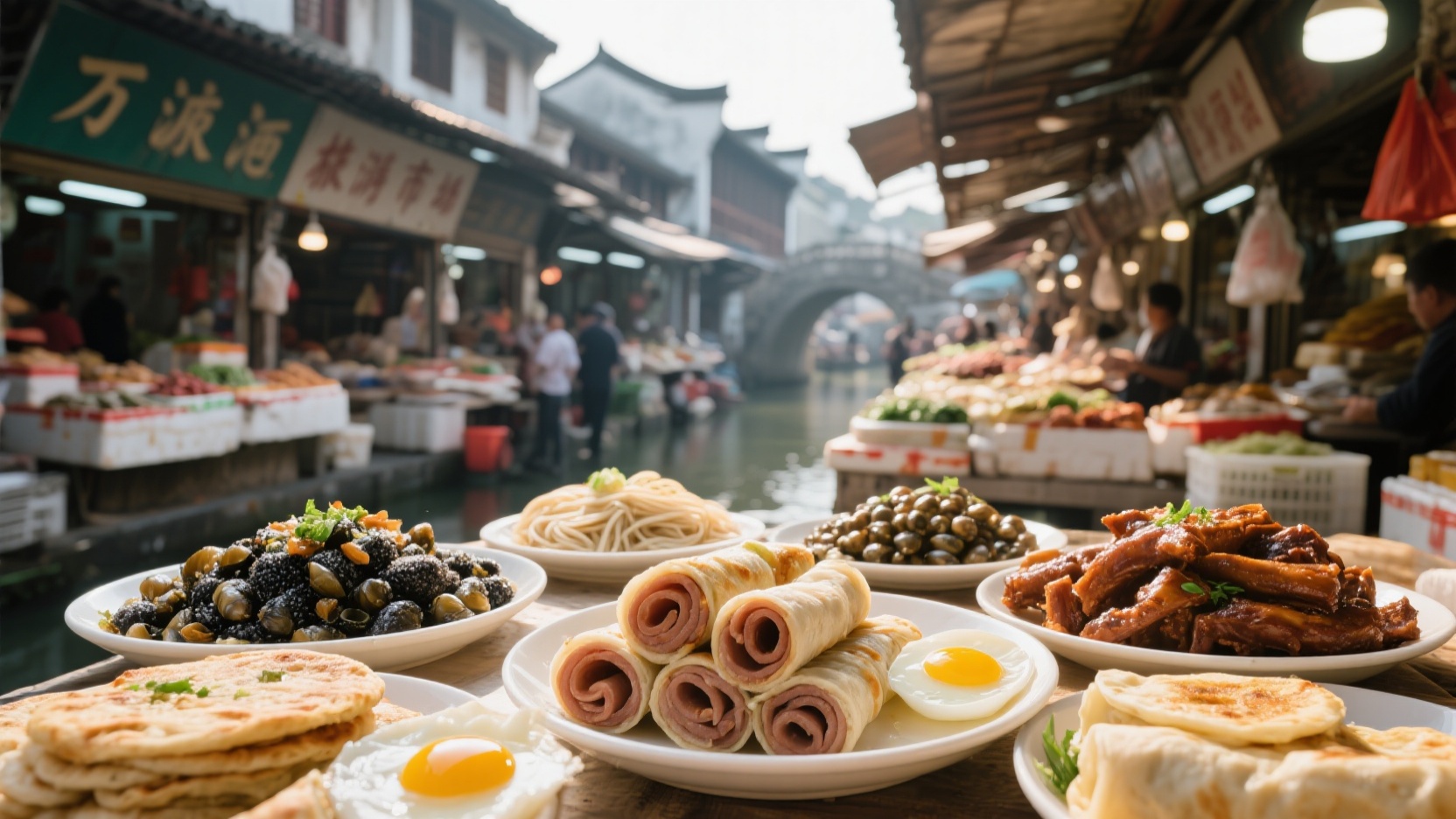
For Taizhou locals, the morning begins at the local market. The Wanji Pond in Jiaojiang and the Central Market of Linhai Ancient City, one by the sea and the other within the city walls, both preserve the most concentrated local flavors of Taizhou. The following nine items, unmarked by tourist attractions, are hidden among the cooked foods, handmade snacks, and pickled vegetables at the stalls, accompanied by selection and eating suggestions—perfect for an early morning stroll.
Wanjichi Market: Braised food, fish noodles, and rice noodle rolls
Wanji Pond is the oldest market in Jiaojiang Old Town. It's recommended to arrive before 7:00 AM for the most complete selection of cooked food stalls. Some stalls will close before noon. The following five items are concentrated in adjacent areas, so you can buy them all at once.
The first item is "small intestine rolls" from the cooked food stall. When choosing, check if the casing is firm, and the best ones are a bright, translucent reddish-brown color. If you smell a sour odor, it means they are not fresh. The local method is to slow-cook them in a rich brine, and the layers of the intestine are clearly visible when cut open. The most straightforward way to eat them is to cut them into sections and serve them with minced garlic and rice vinegar, which is savory, fragrant, and crunchy. Alternatively, they can be stir-fried with green garlic with a little salt.
The second item is "Baishuiyang Tofu" from the bean curd stall. This type of tofu is made with brine, resulting in a fine, porous surface that doesn't crumble when held in the hand. When choosing, smell the bean aroma; look for a slightly yellow surface that feels springy to the touch. It's suitable for home cooking or stewing fish heads, absorbing the broth without falling apart, and has a firmer texture than soft tofu. After purchase, it can be soaked in water and refrigerated; it tastes best when eaten on the same day.
The third item is "fish noodles" from the seafood processing stalls, also known as "knocked fish noodles." Good fish noodles are light yellow and translucent, with evenly distributed fish paste, and are dry and not sticky. When choosing, you can break off a piece; the best ones have a clean, unbroken cross-section and small fish meat fibers. It is recommended to cook them in boiling water until soft, then remove them and serve with shredded ginger, celery, and clear broth. Do not overcook them, otherwise they will lose their springy texture.
The fourth item is "pickled mud snails" from the pickled and preserved vegetable stall. Freshness is indicated by a bluish-brown shell, plump snail meat, and clear brine. When selecting, gently shake the bottle; the snail meat should not fall apart, and the brine should not become cloudy. Before eating, rinse with warm water to remove the raw brine. It best complements the flavor of white porridge. Once opened, it should be refrigerated and consumed as soon as possible.
The fifth item is "Shibing Tongpi" (a type of rice cake wrapper) from the handmade snack stall at the entrance. The wrapper should be thin yet resilient, translucent when lifted without breaking, and the edges should not be dry or hard. When choosing, look for a uniform diameter and a fragrant aroma of rice. After buying it home, wrap it with fried rice noodles, shredded egg, minced meat, and bean sprouts, then bake it in a pan until both sides are slightly browned, resulting in a crispy exterior and moist interior. It is a staple food commonly eaten around the Dragon Boat Festival in Taizhou.
Linhai Ancient City Central Market: Traditional Snacks and Ginger Juice
The central market of Linhai Ancient City is hidden at the foot of the old city wall, with more cooked food stalls and snack stands. It is recommended to go on a weekend morning when handmade snacks are being made in bulk, and items such as egg white lamb tail and black rice glutinous rice are sold out quickly.
The sixth item is freshly fried "egg white sheep's tail". After whipping the egg whites, they are coated with red bean paste and deep-fried. Only those that are round and puffy with unmelted sugar frosting on the surface are considered qualified. When selecting, check if the color is even and light yellow. Collapse or oil seepage indicates that the oil temperature is not right. It must be eaten while it is hot. Take a small bite to release the gas first, otherwise it will be easy to burn your mouth. The texture will become noticeably harder after it cools down.
The seventh item is handmade "Black Rice Mochi". Rice is soaked in the juice of black rice leaves, steamed, and pounded. The finished product is a deep purplish-black color, and the soybean powder on the surface should be dry and not lumpy. When selecting, it should be elastic to the touch and not sticky. It has a firm texture when eaten cold, or it can be cut into sections and pan-fried until soft, then drizzled with a little brown sugar syrup for added flavor. If purchased in summer, it is recommended to eat it on the same day, as it tends to harden overnight.
The eighth item is the "seaweed cake" from the pastry stall. When choosing, look for distinct layers in the flaky crust, and when you break it open, the filling should be a deep green, oily, and without any obvious hard lumps. Freshly baked cakes have a slightly browned bottom, and you can still smell the seaweed aroma after they cool. After bringing them home, you can reheat them in a frying pan over low heat, and they're perfect for balancing the sweet and savory flavors when paired with strong tea.
The ninth item is "ginger juice" in the condiment section. It's made from freshly squeezed local small yellow ginger, resulting in a thick, spicy juice with minimal fiber at the bottom of the bottle. When choosing, look for a light yellow color, without any layering or sourness. It's perfect for making ginger noodle soup or ginger-flavored eggs, removing any fishy smell and warming the stomach, especially suitable for autumn and winter mornings.
Visiting the local market is the best way to experience a city. Tourist attractions and food streets present a packaged version of Taizhou, but the market offers the authentic choices Taizhou people make day after day: a handful of rice cake wrappers, a dish of pickled mud snails, a bag of black glutinous rice cakes—behind these are the seasons, the tides, and the warmth of a family stove. To truly understand Taizhou, don't rely on travel guides; simply follow the elderly people carrying their shopping baskets for a stroll.