
Five-Day Slow Travel in Shijiazhuang | A Trip Tested by Parents That Won't Tire Their Feet and a Packing Checklist for Seniors
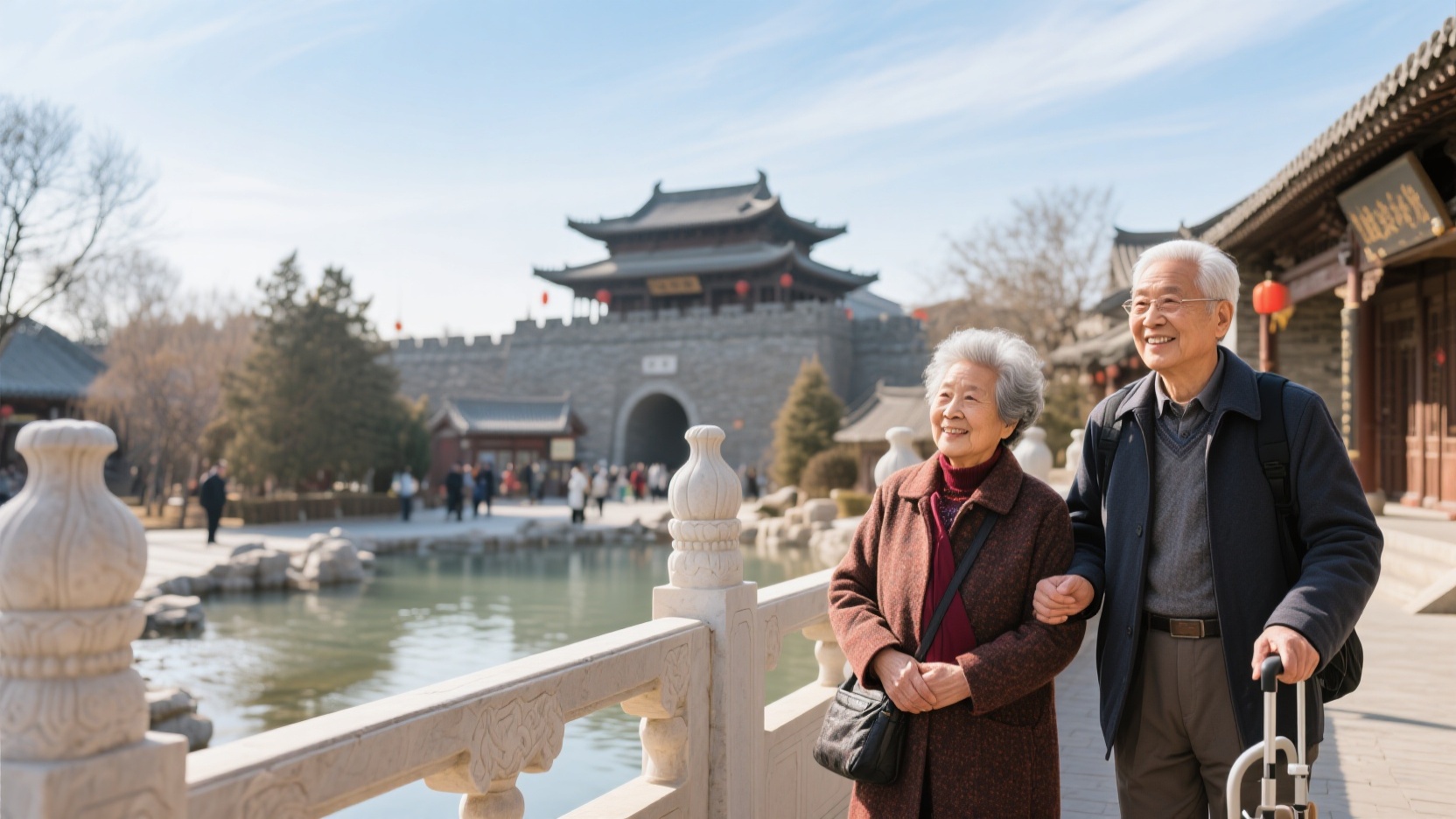
I spent five nights in Shijiazhuang with my parents, and my biggest takeaway was that this severely underrated northern provincial capital is actually more suitable for senior citizens to enjoy a leisurely trip than many popular cities. I traveled there twice, last autumn and this spring, specifically testing the effects of different seasons on my knees and blood pressure. I eventually devised this extremely slow route, which only includes one or two key destinations each day and a two-hour lunch break at the hotel.
Why Shijiazhuang? The plains, hospitals, and the confidence to "not rush."
When traveling with my parents, my biggest fears are the steep stairs in scenic areas and the difficulty of finding restrooms. Shijiazhuang's main urban area has virtually no hills, and the pedestrian paths in Zhengding Ancient City are mostly gentle stone slabs, making it easy to push wheelchairs and those with canes. For accommodation, my first choice is chain hotels in Chang'an or Qiaoxi districts near subway stations, with three requirements: direct elevator access, a sofa area in the lobby, and a taxi ride to a top-tier hospital within 15 minutes. Meeting these three criteria makes my parents feel much more at ease.
Another hidden advantage is that it's not a "celebrity hotspot." There's no pressure to check off tourist spots, parents don't have to queue for photos, and the park is mostly filled with local elderly people playing chess and practicing Tai Chi, so the pace naturally slows down. Spring and autumn have the most stable temperatures, while winter is a good time to move the hot spring trip to the second or third day.
A very slow five-day, four-night itinerary: only one or two key points each day.
On the first day after arrival, no sightseeing was planned. My parents were allowed to take a 20-minute walk in the small park near the hotel to acclimatize. A key point to check was the bathroom's non-slip mat and whether there were handrails next to the toilet. If not, I asked the front desk to install them or change rooms. On the second day, we visited Zhengding Ancient City. I only chose Longxing Temple and the South Gate, using electric carts for transportation, avoiding walking through the entire ancient street. Longxing Temple has an accessible ramp at the side gate, but the main gate has many steps; remember to enter from the east entrance.
The third day is a choice between two options, which I'll discuss separately below. On the fourth day, I visited the Hebei Provincial Museum. Each floor has elevators, wheelchair ramps, and benches for rest. The toilets are plentiful, and the hot and cold water supply is consistent. I usually explored from the third floor downwards to avoid the study tour crowds, leaving the museum around 11:30 am to return to the hotel for lunch and a rest. On the fifth morning, I only visited either the Water Park or Chang'an Park, returning to the hotel before 10:00 am to pack and leisurely head home.
Taking a two-hour nap every day is my ironclad rule. Most scenic spots and parks in Shijiazhuang don't close at noon. If the hotel is far away, I choose a chain hourly room near the scenic spot, but I always make sure my parents lie down with their eyes closed for more than an hour so that their blood pressure is less likely to fluctuate in the afternoon.
On the third day, choose one of two options: the ancient town tour or the hot spring tour. Listen to your body.
If your parents are still mobile and enjoy lively environments, choose the ancient town route. I recommend visiting antique-style streets with elevators and shuttle buses, rather than completely open-air old villages. These streets have short toilet intervals, non-slip floors, and you can easily sit in a teahouse if you get tired. The newly built visitor center around Zhengding Ancient City offers wheelchair rentals, but the number is limited, so it's best to bring your own folding cane.
If your parents have joint problems, are sensitive to cold, or have light sleep, choose the hot spring tour. Many hotels in the Pingshan hot spring area have private soaking pools, avoiding the risk of getting cold after getting out of a public hot spring. Take your blood pressure before and after soaking in the hot spring, and limit each soak to no more than ten minutes. Get up slowly. The journey from the city center takes about an hour; it's recommended to hire a car rather than public transport, and you can stop at a service area along the way.
Don't make a firm decision beforehand when choosing between the two options. Before departure, observe the elderly person's condition in the morning: measure their blood pressure, check for edema, and inquire about their sleep. If their systolic blood pressure is high or they wake up more than twice during the night, decisively choose the hot spring route; if they are in good spirits and want to move around, then choose the ancient town route. Giving yourself a backup plan is more important than any travel guide.
My Hidden Dangers Among Seniors in Shijiazhuang: Toilets, Elevators, and Medical Distance
The first pitfall was climbing the south gate of Zhengding Ancient City. There's an elevator in the city wall, but its opening hours are unpredictable. The first time I went, the elevator was under maintenance, and my parents had to turn back after climbing only half a floor. Later, I learned my lesson and checked the official scenic area app or visitor center announcements beforehand to see if the elevator was running that day. If I couldn't find it, I'd simply give up on climbing and instead sunbathe in the plaza below the city wall.
The second pitfall is underestimating the density of public restrooms in parks. In some older parks in Shijiazhuang, such as Chang'an Park, the distance between restrooms at the east and west gates exceeds 400 meters, which is inconvenient for elderly people who frequently need to urinate. Now, I check the "public restrooms" map beforehand, locate benches near the restrooms, and walk around them.
The third pitfall is focusing only on the hotel's straight-line distance from the hospital, ignoring rush hour traffic. One night, my father had a swollen gum and waited 20 minutes for a taxi. Later, I changed my approach, choosing hotels that were "within 3 kilometers of a top-tier hospital" and "not in an area with a high concentration of one-way streets," and saving the location of the nearest hospital's emergency room entrance. In Shijiazhuang's main urban area, top-tier hospitals are concentrated in Chang'an, Xinhua, and Qiaoxi districts; staying in these districts generally allows for a 15-minute commute.
The blogger summarizes: 20 items for seniors' travel packing list and 5 categories of commonly used medications.
The core of this slow travel route in Shijiazhuang can be summarized in one sentence: simplify the itinerary and enhance the safety and security. Asking my parents only three times a day, "Are you tired? Are you hungry? Do you want to go back?" is more effective than any tourist attraction checklist. Below is a 20-item packing list that I've personally tested, grouped by pre-trip, during the trip, and after check-in.
Ten things to bring before traveling: ID card, medical insurance card, folding cane or hiking pole, non-slip soft-soled shoes, knee pads, reading glasses, thermos, commonly used medicine refill box, paper emergency contact card, and lightweight folding stool.
Six items to bring on the journey: a light jacket, a sun hat, individually wrapped biscuits, oral wipes, a portable urine bag (for emergencies), and a mobile phone lanyard.
Four things to note upon check-in: non-slip slippers in the bathroom, a folding washbasin, travel sheets, and a night light.
Five categories of commonly used medications to remember: Category 1: Antihypertensive and cardiovascular medications, to be carried on board, not checked in; Category 2: Hypoglycemic medications and a few pieces of fruit candy to prevent hypoglycemia; Category 3: Digestive aids and laxatives, as constipation is common when traveling; Category 4: Topical plasters and bandages for minor sprains; Category 5: Antihistamines and eye drops, especially necessary during spring and autumn pollen seasons. Before departure, make sure your children write down the Chinese name, usage, and dosage of each medication on a piece of paper and keep it with your medical insurance card.
The charm of Shijiazhuang lies not in its grandeur, but in its relaxed pace. Give your parents a trip without the hassle of rushing around; what they'll often remember isn't the specific tourist attractions, but rather the two hours of peaceful afternoon nap they enjoyed each day.