
In Shanghai, fresh food waits for no one | My seasonal list, compiled based on the solar terms (local guide to avoid pitfalls)
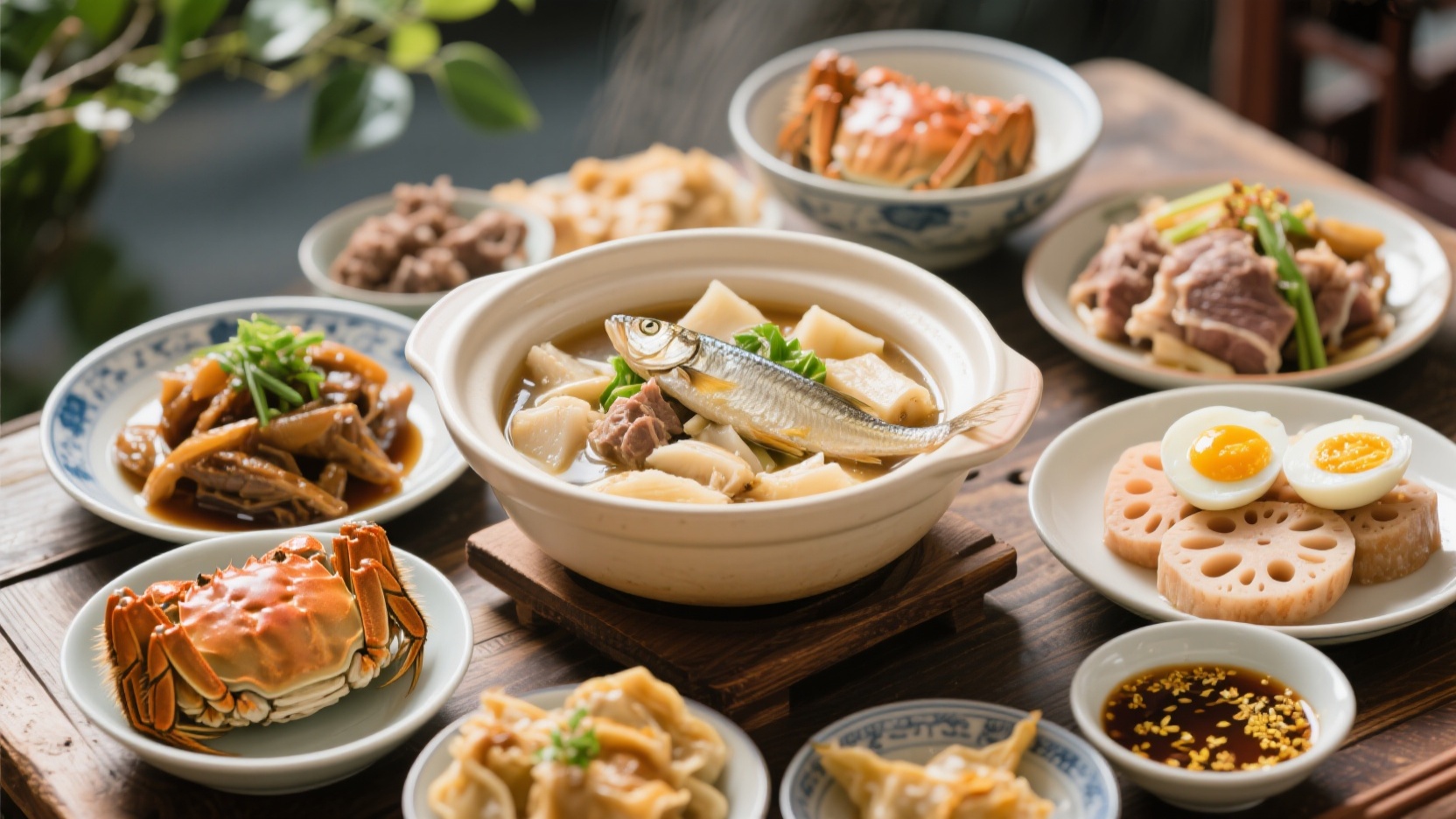
To verify whether Shanghainese's oft-repeated saying "eat what's in season" is just being pretentious, I made a trip to Shanghai at each of the four solar terms. My first stop was a disaster: the off-season pickled bamboo shoots and pork soup was a disaster. The broth was cloudy, the bamboo shoots were tough, and the salted pork was cloyingly salty. A local friend glanced at it and said, "Eating this on this day is like buying mooncakes for the Lantern Festival." After this experience, I realized that Shanghai's seasonal dishes aren't impossible to make; it's just that the produce hasn't arrived yet—even a miracle can't save it.
Spring Equinox to Qingming Festival: The Golden Window for Knife Fish and Braised Pork Belly
From mid-March to before Qingming Festival, the knife fish enters its most precious window of opportunity. After accumulating flavor throughout the winter, the flesh is tender, and the bones have not yet hardened. With a gentle touch, the fish melts in your mouth, leaving only the fine bones on your tongue. Locals prepare it in a very simple way: steamed without any scallions, ginger, or garlic to overpower the flavors, a drizzle of lard and soy sauce before serving, and accompanied by a side of clover. After Qingming, the bones harden, and even if it's cheaper, it doesn't have the same appeal.
At the same window, the soul of the "Yan Du Xian" (a Sichuan dish) isn't the salted pork, but the freshly unearthed spring bamboo shoots. The local aunties buy bamboo shoots by pinching the root; only those that are crisp and juicy enough to release water are considered acceptable. The salted and fresh pork are simmered until the broth turns milky white, with the bamboo shoots added last, soaking up the broth while retaining their crisp sweetness. The most authentic order is: first drink the soup, then eat the bamboo shoots, and finally dip the meat in soy sauce and serve with rice. If you get the order wrong, the old lady at the table will correct you.
Around the time of Lesser Heat | Secret recipes for cooling off with pickled vegetables and June yellow crabs
In Shanghai, a pot of fermented rice wine is a must-have in the refrigerator during the summer. From the Lesser Heat to the Beginning of Autumn, the weather is hot and humid, and appetites often suffer. Fermented rice wine is the switch that "tricks" you into eating. Fermented edamame, fermented shrimp, and fermented pork belly are all cooked, chilled, and then soaked in a fermented rice wine made from Shaoxing wine and fermented rice paste. The soaking time is crucial: two to three hours for edamame, overnight for chicken feet, and half an hour for fermented shrimp. Any longer and it becomes too salty and bitter. Paired with chilled Shaoxing wine, it truly feels like the start of summer.
June Yellow Crabs are the "baby crabs" of the hairy crab family, appearing only from June to early July in the lunar calendar. They have soft shells, semi-liquid roe, and not much meat, but are prized for their freshness and tenderness. Locals don't steam them with plain water; the classic way is to make them with flour-coated June Yellow Crabs: cut them in half, dip the cut surfaces in flour, pan-fry until fragrant, add edamame, soy sauce, sugar, and a little water, simmer for a few minutes, and then thicken with cornstarch. The sauce coats the flowing roe, and you have to use a spoon to scoop it into a bowl along with the sauce and mix it with rice. Even a sweet-toothed child can eat two bowls.
Cold Dew and Frost's Descent | Autumn Rituals of Hairy Crabs and Osmanthus-Scented Lotus Root
As autumn winds blow, Shanghainese begin counting down the days: from Cold Dew to Frost's Descent, is the prime time for enjoying hairy crabs. Female crabs are bursting with red roe, while male crabs have white, sticky roe. Steamed crabs must be placed in boiling water, belly up, with a slice of ginger underneath, and steamed over medium heat for fifteen minutes, then turned off and left to sit for another three minutes. The dipping sauce consists only of rice vinegar, minced ginger, and a touch of sugar; never soy sauce or chili oil. The proper way to enjoy them is to eat the crab roe first, then the crab meat, and finally drink the juice from the crab shell.
At the same time of year, lotus root is soft and powdery, and osmanthus flowers are in their third bloom. Making osmanthus-flavored sweet lotus root is the most labor-intensive: the seven-hole lotus root is cut open at both ends, and soaked glutinous rice is stuffed into the holes little by little. It's steamed until the lotus root is powdery and the rice is soft and sticky, then cooled, sliced, and drizzled with a sauce made from fresh osmanthus flowers and honey. Locals don't eat the sweet lotus root fresh from the pot; they refrigerate it for two hours until the syrup slightly solidifies, resulting in a refreshingly sweet and not cloying taste. Paired with a pot of Longjing tea, it's the perfect afternoon tea in Shanghai's autumn.
Winter Solstice Counting the Nine Cold Days | The Grand Finale: Braised Lamb and Egg Dumpling Hot Pot
Around the winter solstice, Chongming goats fatten up for winter, resulting in firm, non-gamey meat. Queues form at street-side mutton noodle shops. Braised mutton must have the skin on; the skin should be so soft and tender it melts in your mouth, while the meat should be tender yet firm, cooked to a rich, dark sauce. Locals love a bowl of mutton-topped noodles: thin noodles in a red broth, sprinkled with green garlic leaves, and served with chili sauce. Regulars add offal, first drinking the broth, then slurping the noodles, and finally cleaning the bowl clean.
As the Spring Festival approaches, Shanghai families begin making egg dumplings. They must use an iron spoon to "spread" each dumpling individually over a coal stove: pour the egg mixture into the heated spoon, place the meat filling in the center with chopsticks, and fold it in half before the egg solidifies, shaping it like a gold ingot. Egg dumplings aren't the main dish; they're added to a "family reunion" hot pot with cabbage, glass noodles, salted pork, and pork skin as a base. After soaking up the rich broth, biting into them releases a burst of meat juice mixed with the aroma of egg—the warmest and most comforting flavor of the New Year's Eve dinner.
The blogger summarizes: These eight seasonal delicacies each have their own deadlines—knife fish for Qingming Festival, pickled bamboo shoots for spring bamboo shoots, pickled meats for the plum rain season, June yellow crabs for the sixth lunar month, hairy crabs for autumn, candied lotus root for osmanthus blossoms, mutton for the winter solstice, and egg dumplings for before the Spring Festival. Missing out isn't just missing a dish, it's missing out on that "just right" feeling of Shanghainese people enjoying a meal together around the table.
Practical Tips: 1. It's unrealistic to try everything at once; it's recommended to focus on one season. 2. It's easy to get ripped off with knife fish and June yellow crabs; choose local restaurants or farmhouses frequented by locals, and don't believe the "seasonal specials" at tourist attractions. 3. For pickled vegetables and candied lotus root, roadside food stalls are more reliable than large restaurants; eat the pickled vegetables on the same day. 4. Try female hairy crabs before National Day, and male crabs after. 5. You can buy freshly made egg dumplings at local markets, but they must be added to a hot pot. Eating according to the seasons is the right way to experience a city.