
Avoid Xiaoxicheng! | A 5km artsy walking route tested and proven by a Quanzhou local – a list of pitfalls to avoid, so you won't be fooled by travel guides.
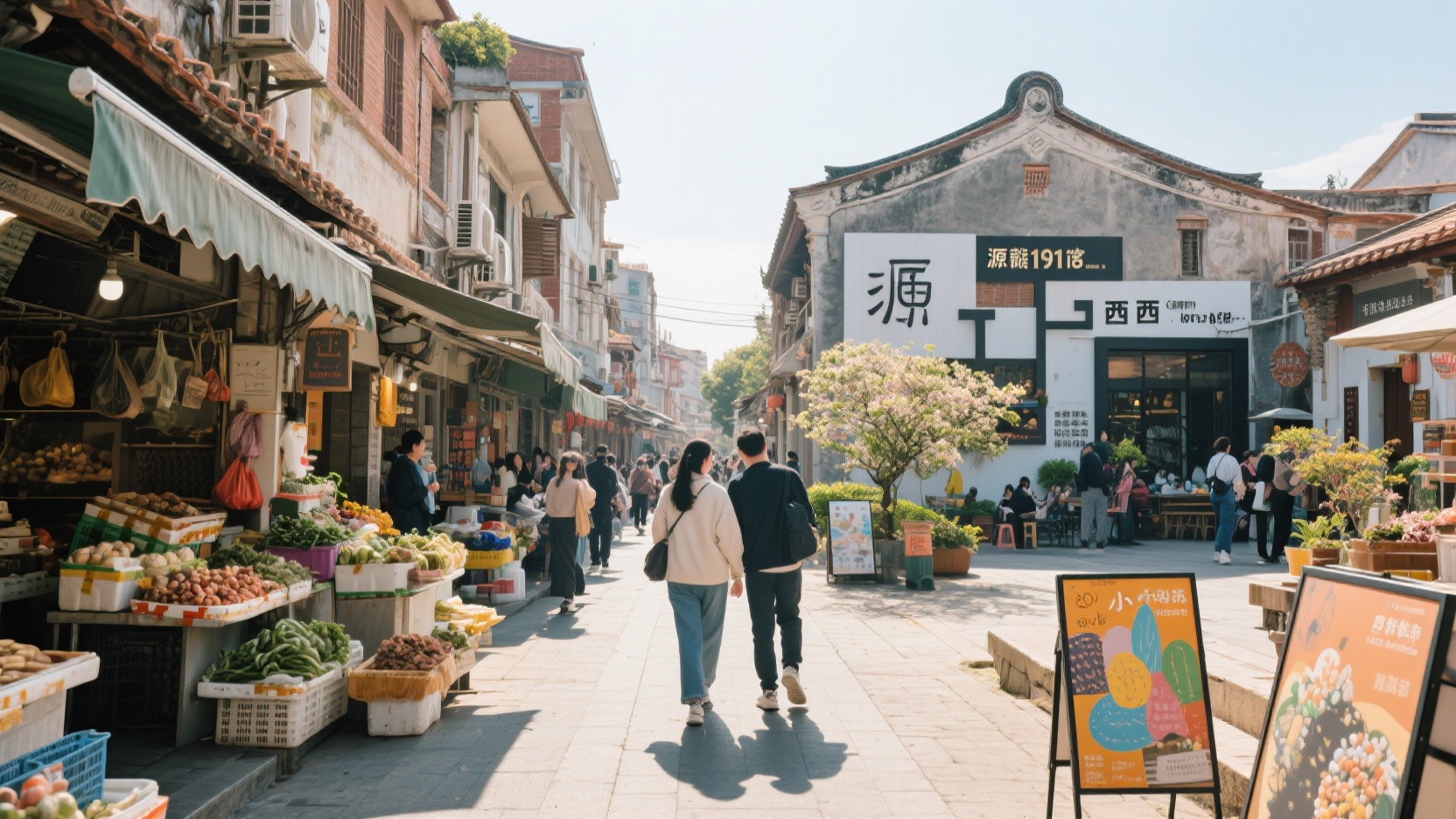
That wall in Xiaoxicheng that says "Quanzhou, a city you must visit at least once in your life"—I've lived in Quanzhou for five years and only been inside twice: once to help a friend find a restroom, and once because the navigation took me the wrong way.
It's not that the statement is wrong, but that place has been squeezed into a narrow alleyway that's all about taking photos and has no real substance. Many people think of a cultural and artistic tour of Quanzhou as simply "standing in front of a trendy wall," which is precisely the most regrettable way to miss out on Quanzhou.
The true art and culture of Quanzhou isn't found at popular tourist spots, but rather in the old streets and alleys, former factories, markets, and theaters that locals walk through every day. The following five-kilometer walking route avoids crowds and preserves the authentic flavor of southern Fujian.
These three popular tourist spots are places that even locals rarely go into when passing by.
The first one is Xiaoxicheng. The alley is so narrow that it's difficult for two people to walk side by side. During peak season, people are packed together, and there's always a queue in front of that wall. The vendors selling grilled sausages, lemon tea, and small commodities that you can find in other places sell nothing of Quanzhou flavor.
The second is several "Instagrammable rooftops" on West Street. People queue up to go up just to take a picture of a gray tile roof and half of the Kaiyuan Temple Pagoda. The photos rely entirely on filters, the drinks are so-so, and the crowds downstairs are so noisy that you can't sit still at all.
The third is MiLi Cultural and Creative Park. The old factory buildings are real, but now it's more like a chain of trendy shopping streets, with neon walls, paid photo spots, homogenized shops, and low-quality content. Locals prefer to go to Yuanhe and 1916.
How to make a smooth 5-kilometer local arts and culture walking route?
Start at the Bell Tower, but don't rush towards the main road of West Street. First, turn into the Old Inn to immediately quiet down the main road. Then, walk through the West Street Market and exit from the west gate of Kaiyuan Temple to reach Yuanhe 1916 Creative Park.
Then walk along Xinmen Street to Quanzhou Nanyin Art Garden or Liyuan Classical Theater, then turn back to Xinhua Road to enter Zhongshan Park, and finally stroll to Overseas Chinese New Village. The whole route is about five kilometers long and takes about an hour and a half to walk. You can easily while away the whole afternoon by walking slowly.
From Jiuguanyi to Xijie Market: The first ten minutes are most like Quanzhou.
It's worth stopping for ten minutes at the entrance of Jiuguanyi Alley, because the alley still retains a large number of old houses, stone guardians, and old wells. You can see the East Pagoda of Kaiyuan Temple just by looking up, but few people from the main road turn into it. That contrast between the quietness and the distant sounds of people is the proper measure of an ancient city.
The best spot is near the intersection of Jiuguanyi and Jingting Lane. You can sit on the stone slabs by an old well and use the gable walls and spire of the old houses as a backdrop. Alternatively, you can shoot from the alley entrance to the east, where the sense of depth is much cleaner than on the main road of West Street.
Nearby food options include local favorites like rice noodle soup stalls and spring roll stands. In the mornings, there are also elderly women selling fried rice cakes, with prices ranging from a few to over ten dollars per person. You can eat while walking, but please avoid spilling soup on the cobblestone streets.
You need to arrive at the West Street Market before 10:00 AM. The vendors greet regular customers in Hokkien. They sell seafood, cooked food, turtle-shaped rice cakes, and fried snacks. There are few tourists, but the atmosphere is lively and bustling. Good spots for photos are the stalls backlit at the entrance, or shooting from the second-floor corridor looking down – the colors are very characteristic of Hokkien. The fried pork with vinegar and peanut soup near the market are cheap and filling.
Yuanhe 1916 and Nanyin Art Garden: Genuine Artistic Elements in Old Factory Buildings and Street Stages
Yuanhe 1916 Creative Park was converted from the old Quanzhou Flour Mill, and the red brick chimneys and old workshop steel frames are still there. Taking a ten-minute break to see the occasional exhibitions, or simply walking around the old machines, is more worthwhile than many paid photo spots.
Hidden within the park are independent bookstores and small art spaces, which often host small exhibitions on the theme of Minnan culture. Sometimes, local photographers or artisans set up their exhibitions on-site. The best shooting spots are where the iron gates and chimneys of the old factory are framed together, or next to the old machines by the central square. Overcast days have a more textured feel than sunny days.
There are several cafes and light meals in the nearby park, costing only a few dozen yuan per person, where you can sit down and rest. Don't rush around on an empty stomach; Quanzhou is best enjoyed at a leisurely pace in the afternoon.
When you reach the Quanzhou Nanyin Art Garden or Liyuan Classical Theater on Xinmen Street, check the notices at the entrance. There are often free Nanyin or Liyuan opera performances in the evenings. Even without a performance, the red brick facade and arcade buildings are great for photos. Take your camera from across the street from the theater to photograph the facade; it looks even more charming when the lights come on in the evening. Nearby are well-established beef soup and ginger duck restaurants, with prices around a few dozen yuan per person.
From Zhongshan Park to Overseas Chinese New Village: Leaving the evening for the community and old villas
Zhongshan Park isn't a tourist attraction; it's a community park where locals exercise, play chess, and bring their children. Taking ten minutes to watch a chess game under the old banyan tree offers a better understanding of the pace of life in Quanzhou than visiting a trendy rooftop.
The best shooting spots are between the old banyan tree on the north side of the park and the elderly people doing their morning exercises, or in front of the Sun Yat-sen Memorial Platform. At dusk, the backlighting can create very soft light for your shots. Near the park, there are affordable and filling restaurants serving A-Qiu beef steak, beef soup, and agar jelly.
Overseas Chinese New Village is the earliest villa area in Quanzhou. There are many old Nanyang-style houses, which have been converted into private studies, tea rooms, small art studios and handicraft spaces. It is not a neat and uniform commercial street, and bougainvillea is always in bloom at the entrance.
This place is perfect for setting aside time for the evening; the depths of the alleys and the flowers outside the villa walls offer excellent photo opportunities. Several private restaurants and cafes nearby are on the mid- to high-end range; if you get tired of walking, you can choose one to sit and linger, but avoid taking excessive photos of people's courtyards.
In closing: Don't ask the locals if I didn't tell you.
1. The most comfortable time to visit West Street is before 8:00 AM or after 10:00 PM. At other times, try to use alleyways instead of trying to squeeze in with the crowds. 2. Many art spaces in Quanzhou are closed or have changed exhibitions on Mondays and Tuesdays. Check the notices at the entrance before you go to avoid disappointment.
3. Nanyin performances are not always held every day. It's best to try your luck if you happen to be passing by around 7:30 pm. There's no need to queue up for the whole day for it. 4. The market is most vibrant before 10 am. Taking photos is fine, but don't block the vendors from doing business, and don't touch the seafood.
5. The entire route is paved with stone slabs, so wear comfortable shoes. It can be slippery in the rain, so bring water in the summer. It's most comfortable to walk on in the afternoons of spring and autumn. The real point of this route is not to rush, but to be willing to stop for those extra ten minutes at alley entrances, vegetable markets, near opera stages, and in old factories.