
Lhasa in the shopping basket | 10 local delicacies hidden in the Chongsaikang Old Market
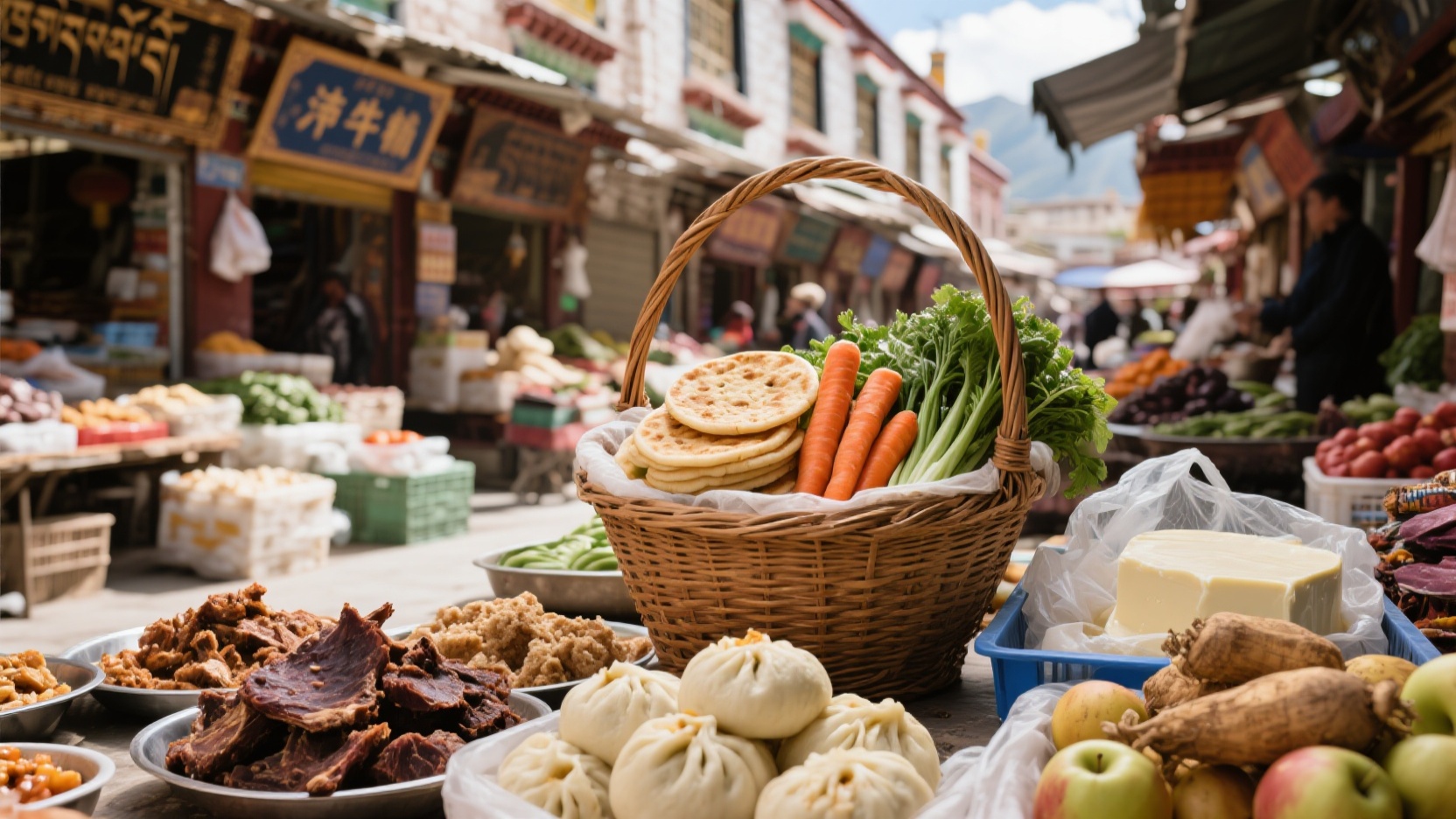
At eight o'clock in the morning, the tin-roofed Chongsaikang Market was already crowded with locals carrying baskets. This is one of the busiest markets in Lhasa's old city, and the most direct way to understand the daily diet of people living on the plateau. Unlike the street food, the cooked vegetables, pickles, cheese curds, and fruits in the market hold the true flavors that locals would buy to take home. It is recommended to go on an empty stomach and browse and eat your way through the market, starting with cooked vegetables, then staple foods, pickles, and finally fruits.
Cooked food stall: Try three dishes before you start shopping.
The first item is Tibetan-style braised yak meat and beef tongue. When choosing, ask the vendor to slice it thinly and check if the cut surface is dark red, has clear texture, and low in fat. Enjoy it plain without dipping sauce first, then add chili powder and pickled radish for a more complex and flavorful taste.
The second item is Tibetan-style cold noodles and cold noodle cakes. Lhasa cold noodles are mostly made with pea flour or potato flour, and have a chewy texture. They are topped with chili oil, garlic water, and local chili sauce. "Cold noodle cakes" are made by sandwiching cold noodles inside a freshly baked thin pancake. The pancake should be slightly charred on the surface and still hot to the touch.
The third item is Tibetan steamed dumplings called "Momo." They are filled with yak meat, have thick skins and generous fillings, and clearly defined pleats. Choose freshly made and steamed dumplings; when broken open, the filling is tightly packed together and contains a small amount of broth. To eat, first take a small bite to suck out the broth, then dip them in Tibetan chili sauce.
Handmade staple food stall: The warmth of highland carbohydrates
Tibetan dumplings are similar to steamed dumplings, but the dough is thicker and chewier. Choose those with intact pleats and a firm bottom; the filling is usually yak meat with a small amount of onion. Barley cakes come in two types: baked and pan-fried. Baked ones are crispy, while pan-fried ones are soft; they can be dipped in yogurt or butter tea. The market also sells freshly made tsampa balls with butter and cheese curds; one is enough for breakfast. Cheese curd cakes are filled with cheese curds, butter, and a small amount of sugar; choose cakes with a non-greasy crust and eat them while they're hot.
Pickled and preserved vegetables and dairy products: a base of sour, salty, and strong flavors
Tibetan pickled radishes are the soul of a Lhasa breakfast. The diced or sliced radishes are soaked in a light red liquid in pickling jars. When choosing them, look for a naturally pinkish-white color; they should be crisp and have a clear, sour taste. They can be served with braised meat, mixed with cold noodles, or simply diced and eaten with chili oil.
Choose whole, deep red yak meat with a naturally oily sheen. When you break it open, the meat fibers are clearly visible, and it tastes salty at first, then fragrant. It's best to shred it into thin strips and serve it with butter tea. Chew it slowly in small portions. It's not recommended to buy pre-cut and seasoned yak meat.
Curd and cheese curd are protein products obtained after extracting ghee. Soft curd is suitable as a snack; cheese curd is drier and suitable for cooking porridge or making tea. Fresh curd should have a clean, sour aroma and no rancid smell. Ghee ranges in color from pale yellow to golden yellow, smells milky, and is not sticky. It is best to buy in small quantities and refrigerate in summer.
Dried goods and seasonal fruits: Highland flavors you can take with you
Ginseng fruit is called "Drolma" in Tibetan. Choose plump, brownish-red, dry fruits without insect holes. Soak them for half an hour beforehand and then cook them with rice porridge, or add yogurt and honey after cooking. It makes a good souvenir.
Seasonal fruits are best enjoyed in season. Linzhi apples are small, sweet, and firm; Zayu kiwis have an even better flavor after softening; Medog bananas are short, soft, and perfect for eating on the spot. Choose slightly firmer ones to take home to avoid damage during transport.
Visiting the local market is the best way to experience a city. In Chongsaikang, you'll see families buying braised beef tongue with pickled radishes, hear elderly women teaching others how to cook porridge with qula (a type of fermented vegetable), and discover Linzhi apples being packed into cloth bags. These everyday transactions and taste tests reveal more authentically than any travel guide: the true flavor of Lhasa isn't found in the food streets near tourist attractions, but in the baskets of locals.