
Harbin Avoid-It-All Checklist | Local Testimonials: Don't Be Fooled by 3-Day 2-Night Itineraries
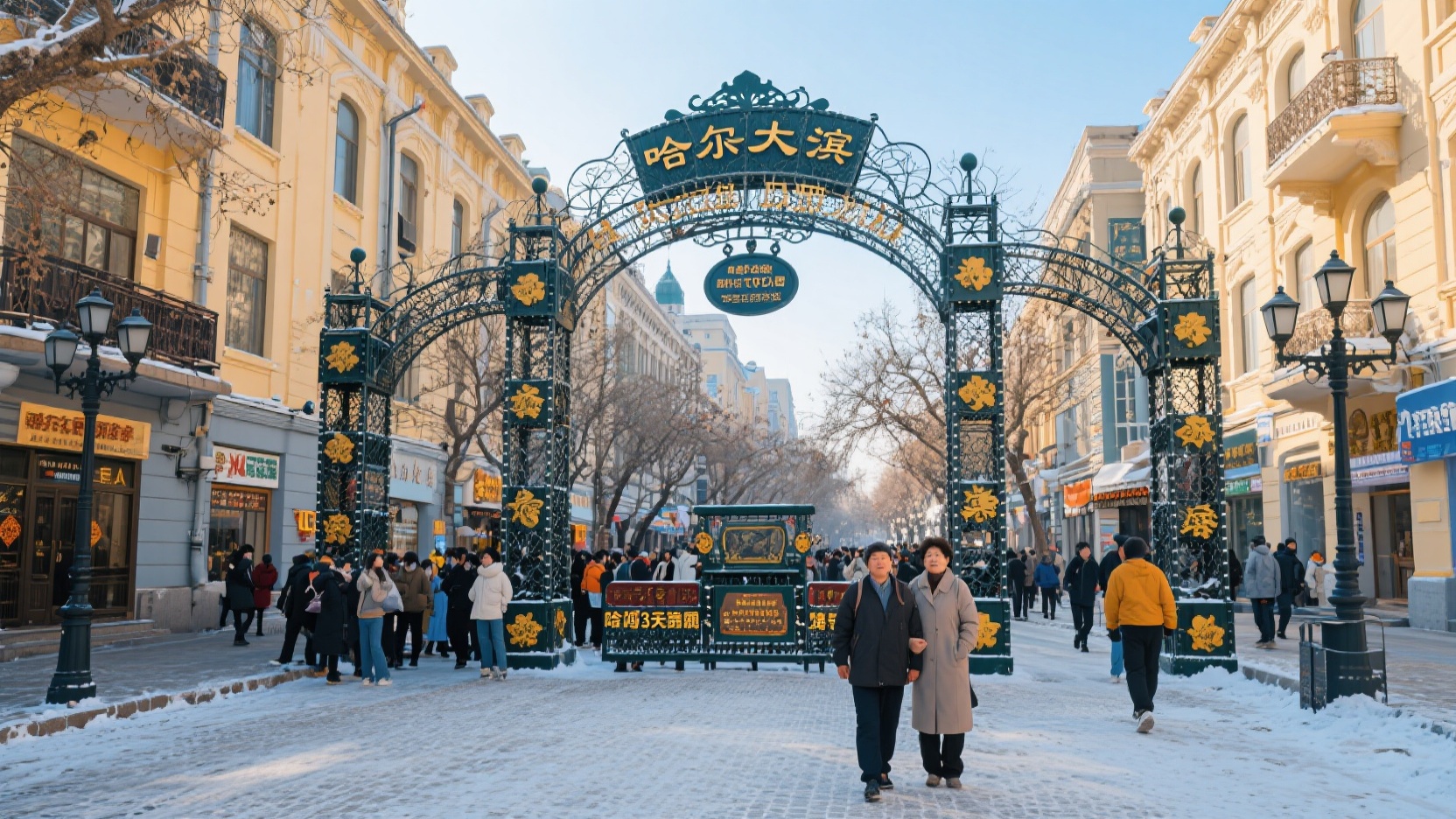
Last week, I took a friend from out of town on a revisited the "classic 3-day, 2-night Harbin route" that I read online. We got stuck in traffic for 35 minutes on Youyi Road and then waited in line for another 20 minutes at the Sun Island parking lot. My friend asked, "Is this the kind of place locals go to on weekends?" I was speechless. That guide turned Harbin into a checklist, forgetting that it's a city where you need to consider the seasons, different areas, and the pace of life.
Most online "classic routes" use the same map: Central Street, Sofia University, Sun Island, Polar Aquarium, Laodaowai, and Gogol Park. This isn't wrong, but they shouldn't be allocated equal time. Below, I'll break down this route, showing you which parts only require half an hour, which should be removed, and which should be replaced with places locals would actually visit.
Don't walk all day on Central Street; you can see the highlights in half an hour.
Travel guides often describe Central Street as "Asia's No. 1 Street," leading you to walk from Jingwei Street to the Flood Control Monument and then back. In reality, locals only walk the middle section: from West Twelfth Street to West First Street. What's truly worth seeing are the cobblestones, a few old buildings, and two or three old shops. The rest of the shops have long been replaced by chain brands, making it no different from pedestrian streets in other cities.
The right way to walk around is to come in the evening, before it gets completely dark, to see the building outlines. After the lights come on, buy a Madier popsicle and eat it while you walk. Half an hour is enough. During the day, save that time and take a stroll through the nearby Zhaolin Street or Diduan Street markets. It's much better than queuing up on Central Avenue to take pictures of the "Instagrammable balcony".
Don't be misled by the "walk from one end to the other" route. The essence of Central Avenue lies in the side streets on both sides: the morning market on Hongzhuan Street, the small restaurants on West Thirteenth Street, and the old signs on Traditional Chinese Medicine Street are all more interesting than the main street.
Hagia Sophia and the Flood Control Monument: ten minutes is enough; don't waste time in the square.
Hagia Sophia is indeed a landmark, but it's just a church shell. The exhibits inside are of mediocre quality, and the square outside is more crowded than a morning market. The guidebooks tell you to "allow a full hour," but on a sunny day with good lighting, taking a couple of photos is enough. The square's lighting is tacky at night, so there's no need to make a special trip back.
The Flood Control Monument is more of a stop along the way. The Songhua River bank behind it is much more worthwhile: watch the old men fly kites, observe the river's flow, and observe locals walking their dogs along the frozen river in winter – it's far more interesting than the monument itself. Save your time for a stroll along the riverbank, or walk from the riverbank towards the old river bridge; it's less crowded and more breezy there.
Visiting Sun Island and the Polar Aquarium all day would be a waste of time.
In summer, Sun Island resembles a city park; the greenery is nice, but there's nothing particularly noteworthy, and visitors from out of town get bored after a half-hour walk. In winter, the island is bitterly cold, and the entrance fee excludes the Ice and Snow World. It's often scheduled as a full day trip, which is completely unnecessary.
The polar aquarium is okay for families with young children, but for adult visitors, the long queues for the indoor shows and the beluga whale photo booths are not worth it. If you're staying by the river, I suggest skipping these two attractions and saving your whole day for something else.
Locals usually drive to the pier in the summer, take a boat across the river, enjoy the breeze, and leave; they don't consider it a core tourist attraction. Instead of spending time on Sun Island, you could visit the riverside park in Qunli or the old river bridge for a more authentic local weekend experience.
The popular sweet and sour pork and Russian food are definitely not worth the two-hour wait.
Some Northeastern Chinese restaurants, popularized by short videos, have lines that start at two hours during dinner time, with out-of-towners dragging their luggage while locals have long since stopped going. This dish, Guo Bao Rou (sweet and sour pork), can be made in most residential restaurants in Harbin; as long as it's freshly fried, it won't be too bad, so there's no need to specifically go to those few places.
The same applies to Russian food. Several long-established restaurants near Central Street offer average taste and service, relying on high prices to attract customers during holidays. If you want to experience Russian flavors, go to the ordinary Russian fast food restaurants frequented by locals or the small shops in the old Nangang neighborhood; you can eat more comfortably for just a few dozen yuan per person.
If you really want to check it out, arrive at the store around 4:30 pm on a weekday afternoon, and you'll basically not have to wait in line. But I would suggest you use the time you would have spent waiting in line to buy some fried cakes at the morning market, or sit down and have a bowl of hot pot at the Daoli vegetable market, that's the daily life of a Harbin local.
Which areas should be deleted: Laodaowai, Gogol, or the Russian-style town?
The old Daowai Chinese Baroque architectural complex is worth seeing, but the guides suggest "walking street by street," but many courtyards are actually locked, and the old shops that can be entered are scattered, so you end up walking all the way to the exterior walls. I suggest only visiting the small area from South Second Street to South Third Street, taking your photos, and leaving. Don't waste time looking for so-called "hidden photo spots."
Aside from buying local specialties at Qiulin Company, Gogoli Street isn't worth a dedicated visit, and it's notorious for its traffic congestion. The Russian-style town is more of an artificial set, with people queuing to take photos in front of the matryoshka doll wall; it has little to do with Harbin's real history. Replacing these with the old neighborhood morning market and the riverside sunset would be much closer to local life.
Families with elderly relatives or children can split the Laodaowai area into half-days, resting at the hotel in the middle, and taking a walk on the Songhua River Railway Bridge in the afternoon, which is much easier than forcing themselves into Gogol Street.
Indigenous Optimized Version: 3 Days 2 Nights Plus 1 Flexible Alternative Day Itinerary
Arrive on the first evening, check in, and walk along the most scenic section of Central Street (about half an hour). Then turn into Zhaolin Street and find a restaurant in a residential area to eat sweet and sour pork. In the evening, go to the Flood Control Monument by the river to enjoy the breeze; there's no rush. On the second day, go to the area near South Second Street in Laodaowai to look at architecture. In the morning, go to St. Sophia Cathedral to take photos with good lighting. Have a Russian fast food lunch in the old Nangang community. In the afternoon, walk along the Songhua River to the Songhua River Railway Bridge. In the evening, go to Qunli or Haxi to find local barbecue.
On the third day, skip the Sun Island Polar Aquarium. Sleep in, then head to the nearby morning market for tofu pudding and fried dough sticks, and buy Qiulin red sausage or Lao Ding Feng dim sum as souvenirs. In winter, visit the Ice and Snow World in the evening, but don't follow the guides and queue for the popular rides in the afternoon; the small slides and ice lantern alley in the southwest corner are actually better for taking photos. In summer, add an evening riverside concert or a sunset at the Old Jiang Bridge.
Add an extra day for flexibility: If you're traveling with parents, Volga Manor is more comfortable than the Polar Aquarium; if you're young, the industrial ruins in Pingfang or the Acheng Jinshangjing Museum are much more authentic than the Russian-style town. If it rains or is too cold, just stroll around the Daoli Market at your leisure, which is better than rigidly following a guidebook.
Don't stay right on the main street of Central Avenue. Opt for accommodation a block or two north in the old town area or a newer riverside neighborhood; these are quieter and closer to everything. As for transportation, taxis in the city center are always congested during rush hour. Taking the subway or walking across the area around Central Avenue is the fastest way to save time.
In conclusion
Rule #1: Don't ask locals "Which restaurant serves the most authentic Guo Bao Rou?" Our answer is always "The one downstairs from my house."
Second: Don't buy Russian nesting dolls and roasted red sausages on Central Street; those prices and flavors are for tourists.
Article 3: Don't believe "You don't need to come to Harbin in the summer." The riverside and the morning market are the hidden gems of summer for locals.
Article 4: Don't wear high heels when strolling around Laodaowai; the cobblestone streets will teach you a lesson.
Article 5: Don't rely solely on the Ice and Snow World as your only reason for winter; the free ice surface on the Songhua River is even wilder and more fun.