
Avoid the crowds in spring | Hangzhou winter solstice specials, locals' firsthand experience: these 6 are the hidden gems of the old-fashioned menu.
If you still believe that "going to Hangzhou in spring to eat Longjing shrimp" is absolutely correct, then you've probably never been pulled into an old alley by a local to eat braised mutton on a cold night before the winter solstice—at that moment you'll understand that spring is for tourists, and winter is for yourself.
Hangzhou's spring and autumn seasons are often overhyped in travel guides: in spring, people queue for two hours at Longjing Village for a bowl of glistening shrimp noodles; in autumn, Manjuelong is so crowded that even the fragrance of osmanthus is unpleasant to smell. True food connoisseurs in old Hangzhou, however, are already waiting for three things from the first northwest wind: pickled vegetables, braised duck, and braised mutton. These aren't fancy dishes, but their flavors mature only around the winter solstice; miss them, and you'll have to wait another year.
This article doesn't focus on trendy restaurants, but rather weaves together six limited-edition dishes that are "perfect for this season" for four meals a day, explaining why locals don't eat them in the spring.
Breakfast: Pickled vegetables and bamboo shoots in winter, sliced noodles – the taste buds of Hangzhou in winter.
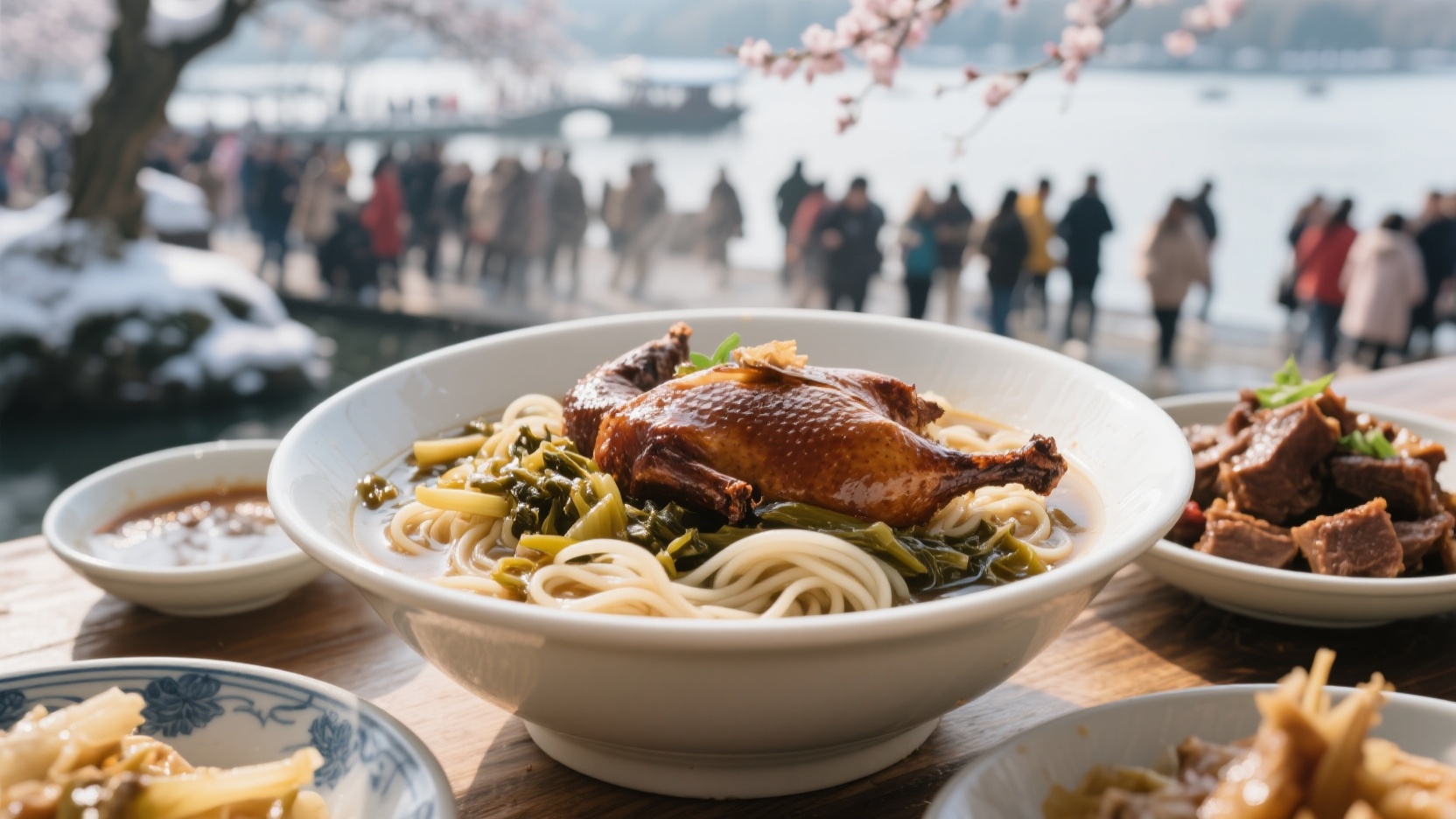
Pian'erchuan noodles are available year-round, but only those harvested around the winter solstice truly deserve to be called Hangzhou's winter breakfast. The key lies in the winter pickled vegetables. Hangzhou people use long-stalked cabbage, sprinkling salt and tamping it down, starting to pickle it after winter begins. By around the winter solstice, it's just taken out of the jar, crisp and fresh, without the over-fermented sour smell of summer. Winter bamboo shoots also sprout at this time, their freshness at its peak.
How do locals eat it? They insist on alkaline noodles, and the broth must have the aroma of lard. Thinly sliced winter pickled vegetables and bamboo shoots are stir-fried with shredded pork, then added to the boiling broth. The standard accompaniment is a bite of braised tofu with vegetables and a couple of drops of chili oil. Only when you're sweating from the nose do you feel you've truly broken free from the damp chill of a Hangzhou morning. The "premium Pian'erchuan" at chain noodle shops in tourist areas has nothing to do with being a winter solstice special.
If you're feeling a bit greedy, you can ask the restaurant to make the stir-fried rice cakes with pickled winter vegetables into a dry-mixed version, but this is a hidden option for regular customers and isn't often on the menu.
Lunch: Braised duck with bamboo shoots; the savory flavor needs a northwest wind to carry it away.
Hangzhou-style braised duck isn't something you can always find in the deli. Traditionally, the braising process begins after the start of winter, and the duck is hung in a cool, well-ventilated place to be slowly dried by the northwest wind. It reaches its best state around the winter solstice: the skin is a deep reddish-brown, and the meat is firm, dry, and fragrant, but not so tough as to be dry and tough.
Why is it best enjoyed during this solar term? Because the "dryness" of braised duck depends on low temperatures and dry weather. Springtime humidity is too high, causing the duck to become soggy and sticky; it's simply impossible to make it in summer. Around the winter solstice, the braised duck is cut into pieces and steamed with winter bamboo shoots. The aroma of the sauce and the oil permeate the bamboo shoots, while the sweetness of the bamboo shoots balances the saltiness. Locals typically serve it with a bowl of white rice, placed on a bed of tofu knots, and drizzled with a little Shaoxing wine before serving.
Warning: Don't buy vacuum-packed braised duck at tourist attractions. Go to a local market and find a small shop with braised ducks hanging everywhere. Look at the color and smell, and ask the owner to cut and steam it on the spot. You can have a very decent meal for just a few dozen yuan per person.
Afternoon tea: Sweet fermented rice balls with osmanthus sugar; the sweetness of the winter solstice comes from the low temperatures.
Many people consider sweet fermented rice balls a traditional Lantern Festival dessert, but in Hangzhou, people actually start cooking them around the winter solstice. At this time, the new glutinous rice has just been harvested, and the fermentation of the sweet fermented rice is most stable, resulting in a clean, sweet taste without any sourness. In the high temperatures of summer, the sweet fermented rice is prone to turning sour and bitter, while the slow fermentation at low temperatures in winter is what cultivates that bubbly, refreshing sweetness.
The locals have a fixed way of preparing it: cook the small glutinous rice balls until they float, then pour in the bulk sweet fermented rice bought from the market, turn off the heat, add an egg, and finally sprinkle a spoonful of osmanthus sugar. The fermented rice shouldn't be cooked for too long, otherwise the aroma will dissipate. More particular families will add a small piece of rice cake to cook together; Hangzhou locals call it "sweet fermented rice cake." It's high in calories, but a bowl of it on a winter afternoon is more comforting than a cake from a trendy cafe.
Don't order this afternoon tea from a dessert shop in the mall. Go to the old neighborhood and find the auntie pushing a small pot downstairs, or buy some fermented rice wine and cook it at home. The cost is so low that it can be ignored.
Late-night snack: Braised mutton noodles, a winter night's remedy for Yuhang locals.
People in Hangzhou also eat mutton, but not the kind of clear broth mutton hot pot that tourists imagine. Around the winter solstice, the braised mutton in Yuhang, Cangqian, and Linping is at its most flavorful. Large chunks of mutton are braised with old ginger, rice wine, and sugarcane tops until the skin is tender and the meat is soft, and the broth is sticky. The aroma from the pot can be smelled throughout the entire alley when the lid is lifted.
Why is it so delicious in winter? Lamb is warming and nourishing, and after the winter solstice, when the weather is coldest, the body needs high levels of fat and protein. Most local lamb stalls only open after the northwest winds pick up, and they generally close in the spring. Locals have a rather rustic way of eating it: they eat the meat first, then use the remaining broth to make a bowl of thick soup noodles, sprinkled with chopped green garlic; a cup of hot yellow wine completes the meal. For around 100 yuan per person, you can eat your fill.
Don't bother queuing up at the "Old Hangzhou Lamb Restaurant" by West Lake. The really good braised lamb is found near the small town markets in the north and west of the city. The environment is average, but the taste is far superior to any trendy restaurant.
Bonus: Lin'an walnuts paired with Jiuqu red plums, a winter snack secretly kept by Hangzhou locals.
If you don't want something sweet for afternoon tea, locals stock up on Lin'an walnuts around the winter solstice. Walnuts are still quite moist after autumn harvest, so they're roasted until dry, fragrant, and crispy around the winter solstice, crumbling easily when cracked by hand. The creamy flavor is the most classic, while the salt and pepper flavor pairs well with Shaoxing wine.
Why eat it during this season? Because pecans are high in oil, and the low temperatures of winter allow them to be preserved longer, aligning with the local people's underlying logic of "replenishing their bodies with good oils" in winter. The tea to pair with it should be Jiuqu Hongmei, a fermented tea from Hangzhou, which warms the stomach and cuts through greasiness, making it more suitable for a winter afternoon than Longjing tea. Longjing tea is a springtime delicacy; drinking it in winter can actually harm the stomach—this is common knowledge among experienced tea drinkers.
When visiting Hangzhou in winter, don't buy packaged walnuts for tourists on Hefang Street. Instead, go to the Lin'an direct-sale store or a local roasted nut stall to buy freshly roasted walnuts. Sit by West Lake, peel a couple of walnuts, and enjoy a cup of Jiuqu Hongmei tea – that's a true local afternoon.
In conclusion
1. Don't ask locals which restaurants are good in spring. Many old restaurants only serve braised duck and braised mutton in winter, and in spring they only have the regular menu left.
2. Avoid the "winter limited edition" shops with long queues at tourist attractions. Shops that actually make winter pickled vegetables and braised duck are often hidden next to small markets. Just follow the locals in line.
3. When visiting Hangzhou around the winter solstice, it's more convenient to choose accommodation in the old city or the northern part of the city. There's no need to squeeze in by West Lake. In the damp and cold weather, being close to delicious food is the right choice.
4. Pickled vegetables and braised duck are high in salt, so don't order too much at once. They're best served with white rice or rice cakes to balance the saltiness. People with sensitive stomachs should eat less fermented rice with egg.
5. If you only have one day, don't miss out on three things for breakfast: Pian'erchuan noodles, braised duck with bamboo shoots for lunch, and braised mutton for supper. For afternoon tea, try pecans with Jiuqu Hongmei instead of trendy cafes.