
Avoid these pitfalls when exploring art in Hangzhou | Local expert's advice: Skip these 3 trendy artsy spots, the real gem is this 5km canal walking trail.
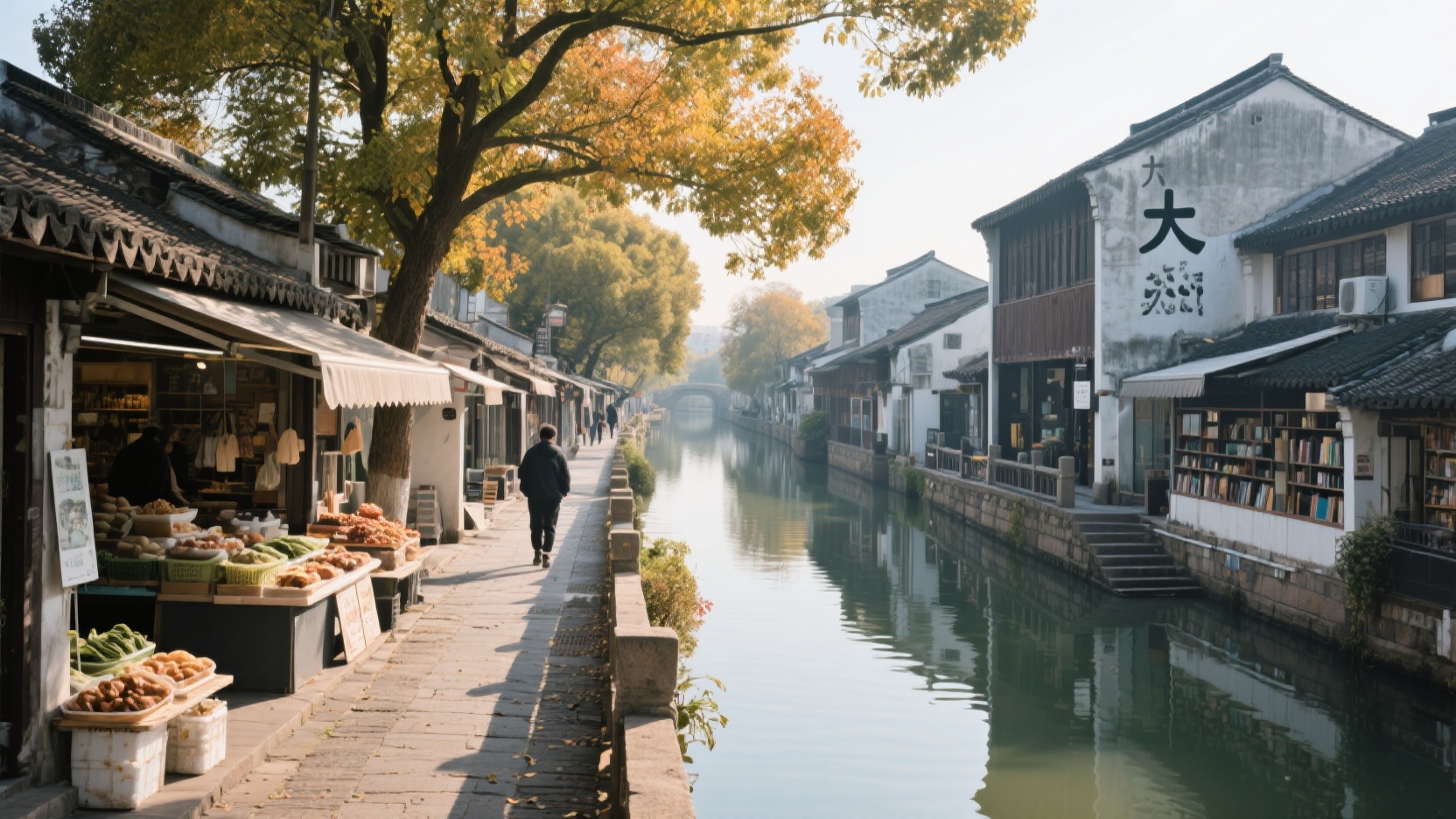
Tianmu Lane and Xiaohe Straight Street are the two biggest filters for Hangzhou's artistic and literary atmosphere.
The architecture of Tianmu Village is indeed by a famous architect, but the daily traffic mainly consists of cafes, boutiques, and exhibitions on construction sites. On weekends, the crowds are so large that you have to wait for a tricycle if you want to see the reflection in the clear water pond. Nearby residents don't consider this place a destination when passing by, and they certainly don't buy books at Tsutaya Bookstore because the selection of books is too mainstream; most people just take pictures holding up the book covers.
Xiahe Straight Street is also touted as a "mini-Wuzhen in Jiangnan," but it's still packed with people even on a weekday afternoon. The shops along the street are highly similar, selling handmade yogurt, postcards, and cotton and linen scarves—the real traces of local life are squeezed into the back alleys. Locals bringing friends from out of town only take one photo on the outer stone bridge and leave, because it looks too much like a uniform commercial street in ancient towns all over the country.
The "Little Kamakura" of Mantou Mountain is even more outrageous; residents were filmed and were too afraid to open their doors.
Social media portrayals of Mantou Mountain resemble a small seaside town in Japan, but in reality, the slopes are narrow, power lines are dense, and there are many clothes drying on the streets. The so-called "Little Kamakura" shooting locations often require standing right next to garbage collection points, with long lenses and tripods pointed directly at residents' doorsteps, creating very awkward scenes.
Many locals just stop by to buy groceries and don't see it as representative of Hangzhou's artistic and cultural scene. If you want to photograph old neighborhoods, Hangzhou offers more relaxed options, such as the route below.
The first stop on the main route: Dadou Road and Fuyicang. First, walk through a deserted old alley along the canal.
This approximately five-kilometer-long canal-themed cultural route begins at Dadou Road outside Xiangji Temple. Before 9:00 AM, the area is mostly deserted, with its bluestone slabs, old plane trees, and canal cargo ships. Take a ten-minute break to admire the reflection of the Xiangji Temple pagoda and the river surface in the morning light. The best vantage point is on the stone bridge east of Xiangji Temple Square, framing the pagoda and plane tree branches from a low angle.
On the way, grab a bite at a vegetarian restaurant on Dadou Road, or head to Xiawan Lane for some local Pian'erchuan noodles and scallion pancakes. It's only a few dozen yuan per person and cleaner than the restaurants inside the scenic area. After your meal, head north along the canal to reach the art space converted from the old Fuyicang granary. The brick archway and wooden beams are perfect for shooting empty shots; position your camera at the entrance archway facing the courtyard, where natural light falls on the ground.
Silk Road 166 and Jiangshu Railway: Old factory buildings tell the story of Hangzhou better than art museums.
Heading north from Fuyicang onto Jinhua Road, you'll find Silk Union 166, the former factory building of a silk factory. The sawtooth skylights and preserved old machinery exude a genuine industrial feel. Take a ten-minute break, stroll around the old workshop, and look at the old production schedules on the bulletin board. The machine positions are located at the corner of the red brick wall and iron staircase on the north side of the factory building; they have an even more authentic feel on a cloudy day.
The nearby Jiangshu Railway Relics Park is even less popular, featuring a section of old railway track and a black locomotive, and it's free to enter. A low-angle shot captures the extended track and the locomotive's headlights, as if time has been frozen. The Jinhua Road area nearby has many small restaurants; the street-side stir-fries and hot pots that locals frequent aren't trendy, but they're satisfying.
Qiaoxi neighborhood, Xiaofeng Bookstore, and the vegetable market—a living art museum in this area.
Continuing towards Gongchen Bridge, the historical district west of the bridge is much quieter than Xiaohezhijie Street. Don't rush to cross the bridge yet; the steps on the west side offer the best vantage point for photographing Gongchen Bridge and the cargo ships on the canal, especially in the evening when the light is optimal. Xiaofeng Bookstore is tucked away in a row of old houses, with a selection of books leaning towards local Hangzhou culture. Stopping for ten minutes to browse through its pages feels more like experiencing the local reading atmosphere than Tsutaya Bookstore.
Turning from the bookstore into the community market, the pickled vegetables, fish balls, and bamboo shoots on the stalls change seasonally. There are no elaborate sets here; the colors and smells are the most authentic local art. You can take photos of the layered colors of the vegetable stalls, but avoid shooting directly at people's faces. Buy a freshly made Ding Sheng Gao (a type of rice cake) or scallion pancake nearby and enjoy them as you walk.
The oil tanker project at Xiaohe Park was finished; the footage wasn't available until after 4 PM.
Our last stop was Xiaohe Park, a space converted from old oil tanks, featuring a steel structure and circular openings. We stopped for ten minutes, stood inside the tanks, and took photos looking up; the sky was sliced into a circle, more beautiful than most art museum installations. It's less crowded after 4 PM, and the evening blues are the best time for photos.
If you're looking for something hot nearby, head back to Hushu Road or Jinhua Road. They have casserole restaurants, noodle shops, and stir-fries, all for a few dozen yuan per person. Avoid the trendy restaurants on Xiaohezhijie Street; the taste isn't worth the wait.
In closing: Don't ask the locals if I didn't tell you.
First, avoid the seasons from mid-March to early April and the National Day holiday, as even locals take detours during those times. Late September to mid-November, and around the Lunar New Year, are the best times to travel along the canal, when there are fewer people and the light is softer.
2. It's most comfortable to stroll around alone. For families or couples who want to take photos, it's recommended to go on a weekday morning to avoid waiting for good spots. Don't wear low-cut shoes; there are gaps in the stone slabs on the west side of the bridge after taking a long walk.
Third, true locals don't consider "artsy" as their destination; the most worthwhile stops on their routes are often the wet market and old factories. If you see a shop with a queue longer than ten meters, take a step back.
4. This route is approximately five kilometers long. Do not attempt to force your way into pedestrianized areas using shared bicycles; walk slowly for about three and a half hours. There are mosquitoes along the canal in summer and autumn, so bring mosquito repellent.
5. If someone asks why you didn't go to Tianmuli when you come back, just say that you spent your time visiting the old railway tracks and the vegetable market. That's what the locals do.