
Eating in Guilin in the Right Season is True Understanding | Blogger's Seasonal Reviews: 8 Seasonal Limited Flavors You'll Have to Wait Another Year If You Miss Them (with Tips to Avoid)
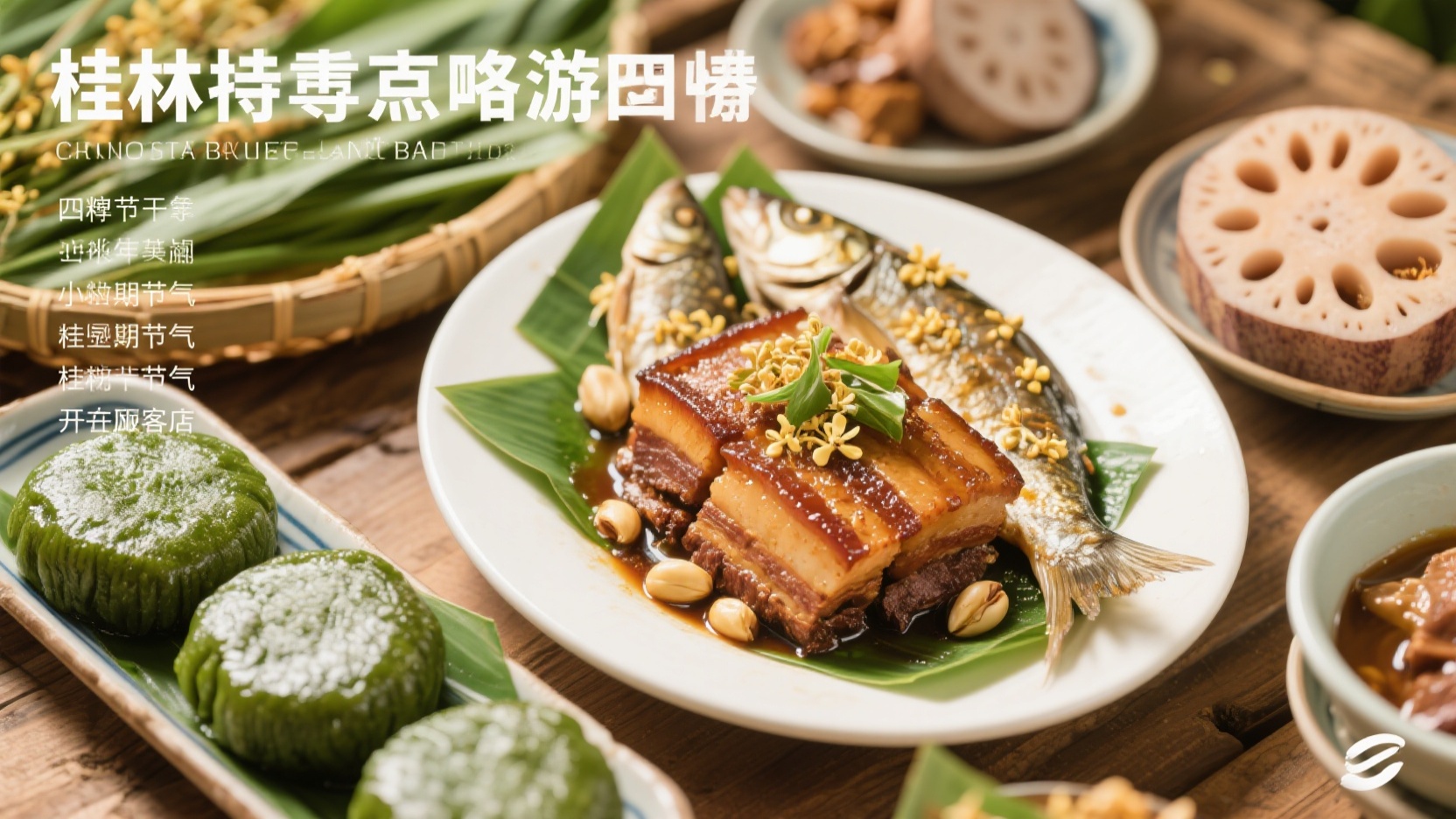
Having lived in Guilin for seven years, the biggest mistake I made wasn't queuing for the Yulong River, but eating "seasonal" dishes at the wrong time of year. In summer, I'd search for sweet lotus root with osmanthus blossoms on the streets; in winter, I'd long for fresh mugwort cakes, only to end up with frozen ones or those that tasted artificially sweetened. Later, I followed local friends and followed the seasons, finally understanding the true character of Guilin's dining scene. The following eight dishes, if eaten out of season, will lose at least 70% of their flavor.
Spring | Around Qingming Festival: Tender mugwort and sweet bamboo shoots, miss them and you'll miss out for a whole year.
Before Qingming Festival, the mugwort has just sprouted a few tender leaves and hasn't bloomed yet. Its fibers are at their finest, and its bitterness transforms into a slightly bittersweet aftertaste. People in Guilin only make mugwort cakes around this time. They blanch the tender mugwort leaves to remove the bitterness, then knead them with glutinous rice flour and regular rice flour to form a dark green dough. This dough is then filled with peanuts, sesame seeds, and white sugar, or with a savory filling of bamboo shoots and cured meat. The cakes are steamed on a pomelo leaf. When freshly steamed, the aroma of mugwort mingles with the fragrance of pomelo leaves. Locals insist on eating them while they're hot, without sugar or tea, because the skin hardens when it cools.
At the same time of year, bamboo shoots begin to sprout along the Li River and at the foot of Mao'er Mountain. Guilin's spring bamboo shoots are thick-fleshed, thin-shelled, and mildly astringent, making them perfect for stuffed bamboo shoots, a dish featured in the Ping Le Eighteen Stuffed Dishes. Fresh bamboo shoot slices are blanched, stuffed with pork and water chestnut filling, pan-fried until slightly browned, and then simmered with Shaoxing wine and light soy sauce. After Qingming Festival, the bamboo shoot sheaths begin to harden, and their crispness and tenderness noticeably diminish. Locals, seeing someone serve old stuffed bamboo shoots to guests, will jokingly say, "These bamboo shoots were dug after Qingming, weren't they?"
Summer | From Lesser Heat to Greater Heat: Lotus fragrance infused into meat, rice paddy fish eaten scales
In the sweltering summer months in the suburbs of Guilin, the lotus leaves in the ponds are large, intact, and free of insect damage, with the strongest aroma. Locals wash the fresh lotus leaves of the year, wrap free-range chickens or ribs in them, and steam or salt-bake them over high heat. The delicate fragrance and slight bitterness of the lotus leaves seep into the meat, cutting through the greasiness and giving it a refreshing "pondside breeze" flavor. In autumn, once the lotus leaves wither, the aroma dissipates, and many restaurants switch to dried lotus leaves, resulting in a completely different taste.
Around the time of Lesser Heat (Xiaoshu), the rice flowers bloom in the paddy fields. Farmers in Quanzhou and Xing'an release rice flower carp into the fields. The fish fry eat fallen petals and plankton, gradually fattening up. At this time, the scales of the rice flower carp are soft and don't need to be removed. The most authentic way to eat them is boiled in sour soup or grilled over charcoal. When served, you pick up the fish from the back with chopsticks, and the fish meat and scales go in together, offering a subtle crispness and a delicate rice flower fragrance on the tongue. After the Beginning of Autumn (Liqiu), the scales harden, and gourmets no longer order this dish.
Autumn | From White Dew to Frost's Descent: Osmanthus blossoms weigh down the branches, and ginkgo stewed with old duck is the most nourishing.
The osmanthus season in Guilin is concentrated one to two weeks before the Autumn Equinox, with the city bursting into full bloom almost overnight. Locals have a particular method for harvesting osmanthus blossoms: "pick when half-open, pickle within half a day," resulting in a golden-yellow osmanthus sauce with a delicate aroma. To make sweet osmanthus lotus root with this fresh osmanthus sauce, select seasonal, starchy lotus roots, stuff them with glutinous rice, and stew until they become stringy. Before serving, drizzle a spoonful of sauce over them—a restrained sweetness, with the lotus root remaining connected evenly. Commercially available bottled osmanthus sauce often becomes stale and dull in aroma after being stored for too long; locals cherish the sauce they make at home during those precious few days.
After the first frost, the ginkgo leaves in Lingchuan and Xing'an begin to turn yellow, and the ginkgo nuts are harvested one after another. Fresh ginkgo nuts have a sap-like outer shell; after shelling and removing the skin, the lotus root core must be removed, otherwise the taste will be too bitter. However, ginkgo nuts harvested after the first frost are high in starch and low in bitterness. When stewed with old local duck, the soup is milky white, the duck meat is tender, and the ginkgo nuts are slightly glutinous and sweet. People in Guilin believe that "eating ginkgo nuts after the first frost will prevent coughing in winter," a seasonal nourishing soup for dryness.
Winter | From Heavy Snow to Winter Solstice: Crisp and sweet winter bamboo shoots, and glutinous taro powder from Lipu are served.
In the mountainous areas of Guilin before the winter solstice, nighttime temperatures drop to single digits. With the north wind blowing, every household begins hanging up cured pork and sausages. Guilin cured meats aren't as sweet as Cantonese style, nor as numbing as Sichuan style. Many families use sugarcane residue and pomelo peel as fuel for smoking, giving the meat a fruity, woody aroma. At this time, winter bamboo shoots dug from the mud are crisp, sweet, and fiberless. Sliced and stir-fried quickly with cured pork over high heat, only a handful of green garlic sprouts are added, and finally, a sprinkle of dried chili peppers. Winter bamboo shoots become astringent after the Spring Festival, and the cured pork loses the wild flavor it gained from being dried in the autumn winds.
Another winter-limited dish is braised pork belly with taro from Lipu. After the first frost, Lipu taro reaches its peak of softness and starchiness, revealing fine patterns when cut open. Locals boil pork belly until half-cooked, coat it with soy sauce for color, slice it, and arrange it alternately with sliced taro in a bowl. They then steam it until the pork belly melts in your mouth and the taro absorbs the meat juices. This dish is a must-have at banquets from the Winter Solstice to the Spring Festival, and it becomes more fragrant as the year draws to a close, because at this time the taro becomes sandy and easily crumbles when picked up with chopsticks, perfectly capturing the rich aroma of the meat.
Blogger's Summary | Seasonal Pitfalls to Avoid
When dining in Guilin, the biggest mistake is trying to find the perfect "Instagrammable" restaurant. The truly authentic flavors are often hidden near the local market or by a traditional farmhouse stove. Following the seasons is key to avoiding disappointment. In spring, focus on mugwort cakes and stuffed bamboo shoots around Qingming Festival; in summer, order lotus leaf chicken and rice paddy fish during the Lesser Heat to Greater Heat periods; in autumn, avoid sweet soups made with osmanthus sauce, opting instead for sweet lotus root with freshly picked osmanthus flowers and braised duck with ginkgo nuts; and in winter, be sure to try frost-covered bamboo shoots and soft, powdery taro from Lipu.
Avoid shops that sell "seasonal vegetables" year-round, especially out-of-season mugwort cakes and lotus leaf chicken made with dried lotus leaves—the frozen taste is immediately obvious. Eating according to the seasons is the right way to experience a city.