
Avoid the Pearl River Night Cruise in Guangzhou | Avoid These Pitfalls: Don't Be Fooled by Travel Guides, the Real Deal is the Local Market, Universities, and Old Factories
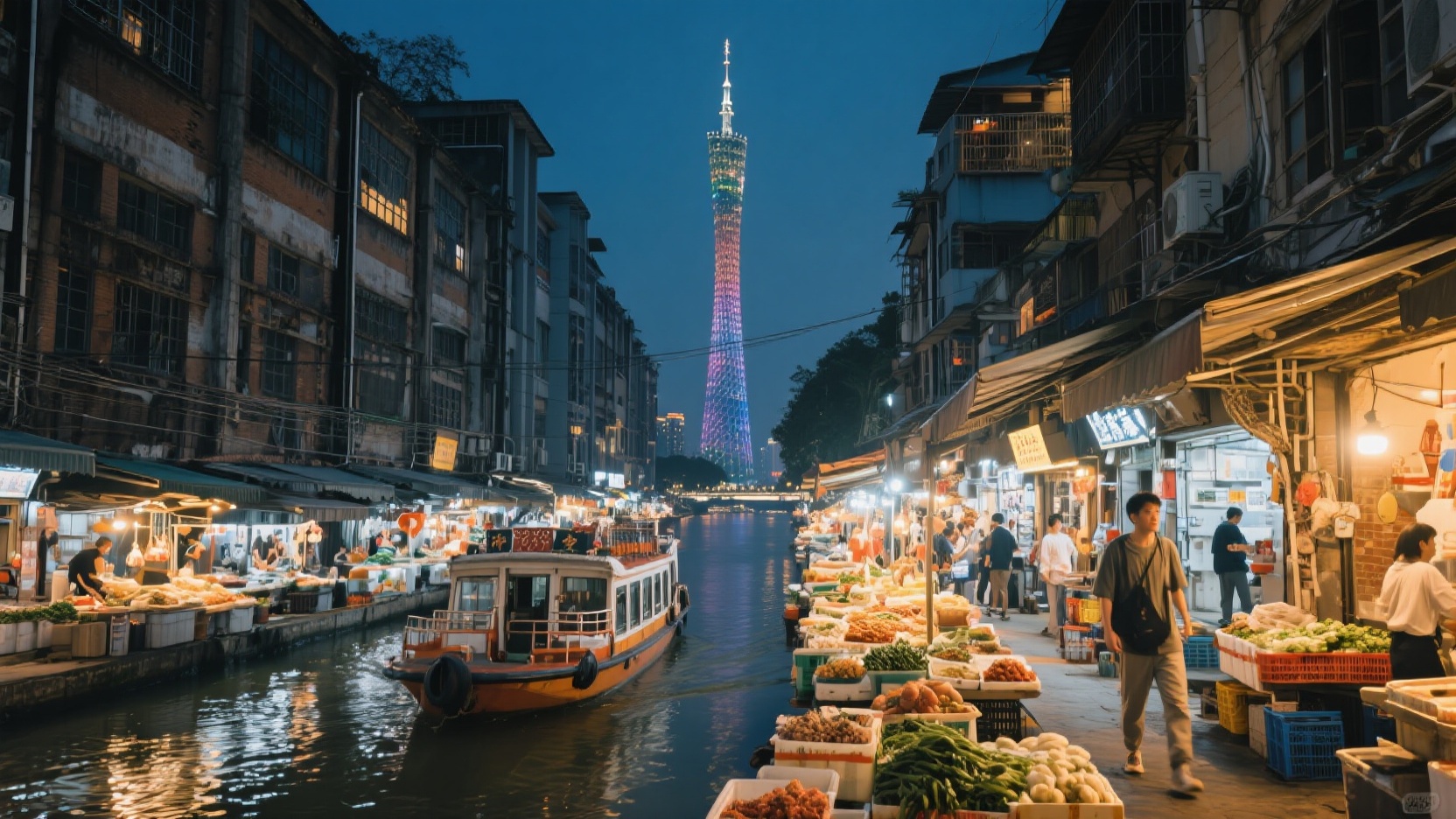
After taking a friend from out of town to see the Canton Tower, the Pearl River night cruise, and Shamian Island, he asked me by the river, "Do locals in Guangzhou have no life?" At that moment, I realized that travel guides had misled people. The city's most precious things are almost entirely not found in its major paid attractions.
So this itinerary does the opposite: four days without visiting any major paid tourist attractions, focusing instead on markets, backstreets of universities, redeveloped old factory areas, and old city alleyways, using the subway, buses, water buses, and shared bicycles as the main routes. The entire trip is free of entrance fees, yet allows you to experience the true essence of Guangzhou.
Day 1: Shayuan and Qiankou Markets; avoid queuing at popular dim sum restaurants.
Our first stop was Shayuan Market in Haizhu West, a local haven for elderly folks. Going after 9 a.m. won't be too crowded. The wet, slippery ground, the sounds of knives chopping roast meat, and plastic bags being filled with soup mix together, creating a more vibrant atmosphere than any tourist guide.
The biggest advantage of coming to the market alone is that you can try a few things. Don't rush to buy anything. Walk around the inner streets on an empty stomach, see what vegetables are on the market in season, and which stalls are crowded with locals carrying shopping baskets. The places that are really worth sitting down to eat at are often the unassuming congee and noodle shops around the market.
Don't be bound by the "must-try dim sum in Guangzhou" list. The long queues and rushed service at trendy dim sum restaurants are actually unsuitable for solo travelers. Instead, enjoy delicious rice noodle rolls, congee, and bamboo-pressed noodles at local stalls—you can eat comfortably for just a few dozen yuan per person, saving you time for the real local flavor.
Day 2: From Sun Yat-sen University to Wushan, we only walked along the back street of the campus gate, ignoring the so-called most beautiful campus photo spots.
Many people go to the south campus of Sun Yat-sen University to take pictures of the red bricks and green tiles, but what truly makes students stay are the affordable backstreets in Xingang West, Xiadu Road, and deep in the Wushan Mountains. Students are picky eaters, and shops that have been open for more than three years around the school generally have acceptable taste and prices.
After exiting the subway at Zhongda Station, don't rush towards the school gate. Head west along Xingang West Road, then turn onto Xiadu Road to find dessert shops and stew restaurants. In the afternoon, head to Wushan. The winding paths at the intersection of South China University of Technology and South China Agricultural University, with their old dormitories, convenience stores, and herbal tea stalls, create a different kind of Guangzhou.
If you happen to be there during graduation or the start of the new semester, definitely avoid the lunch break rush hour, as the traffic jams around universities can make it impossible to move. It's best to buy a cup of herbal tea and walk slowly along the perimeter of the campus to avoid queuing and causing disturbances.
Day 3: Industrial Avenue and the Pearl River Back Channel; old factory renovations – don't just visit photo spots.
Guangzhou's old industrial areas extend beyond creative parks. Along Industrial Avenue, Guangzhi Road, and the west bank of the Pearl River's back channel, lie unrenovated old factory walls, abandoned docks, and wild banyan trees. They don't offer sophisticated photo spots, but they preserve another layer of the city's character.
I recommend riding a shared bicycle from Shayuan to Guangzhi Road, then walking towards the old warehouses along the river. Along the way, you'll pass old factory walls, old chimneys, and residents' drying areas. In the afternoon, take a water bus from Haizhu to Fangcun or Huangsha to watch the boats pass by the old docks; this is closer to real life than a Pearl River night cruise.
This place isn't ideal for those aiming for great photos. Many of the seemingly industrial-style corners are unsafe, and the old factory areas may have fencing, be slippery, or temporarily closed off. Visiting on a weekday morning means less crowds and a quieter atmosphere, with the metallic sounds of the nearby shipyard also audible.
Day 4: Lung Dao Wei, Gao Di Street, and Hui Ji Xi – exploring old alleyways without shop signs.
The old city of Guangzhou is not located on the main street of Shangxiajiu, but rather in the capillaries perpendicular to the main street. Longdaowei is a semi-enclosed old community, where narrow alleys, bluestone slabs, old ancestral halls, and small barbershops are squeezed together, and you will suddenly become quiet when you walk in.
Don't just stand under the archway to take pictures on Gaodi Street; turn into the side alleys to see the courtyards behind the arcades, the terrazzo staircases, and the clotheslines. Huiji West and Huiji East are more refined, with Republican-era buildings and local shops sharing the same street, best viewed in the afternoon when the light is at an angle.
When exploring an alleyway alone, the worst thing you can do is point your camera right at a resident's doorway. Don't force your way into private homes, ancestral halls, or indoor spaces. If you see an elderly person sitting at the alleyway entrance, just nod and smile. The more aware you are of your boundaries, the more the alleyway will open up to you.
Treating transportation as a project: Water buses, public buses, and bicycles connect to create a local residents' movement route.
The other side of not buying tickets is treating public transportation as a city experience. The Guangzhou Water Bus travels along the Pearl River, from Haizhu to Liwan and Fangcun. For a very low price, you can see the old warehouses, residential buildings, and the daily lives of dockworkers on both banks, which is much more authentic than a light-up cruise ship.
For public transportation, choose the older cross-river routes; those from Xiguan to Henan and from Wushan to Yuancun are both suitable. Sitting by the window and watching the gradual change in the density of the arcade buildings offers a view that the subway can't provide. Shared bikes are suitable for micro-circulation within the old city, but avoid riding into the alleyways and pedestrian areas.
To avoid these pitfalls: Don't try to squeeze onto public buses in the Tianhe core area during weekday evening rush hour; water buses may also encounter temporary scheduling and be full. Treat it as regular transportation, not a scheduled cruise, to avoid being misled by the romanticized images in travel guides.
In closing, here are five tips that you shouldn't ask locals about.
The best season for exploring alleyways is from October to March of the following year, avoiding the humid season and typhoon season. November to January is the most comfortable, and a light jacket is enough to walk around all day.
Second, choose affordable accommodations in Haizhu West, Liwan Old Town, or along the Wushan subway line. Avoid squeezing into trendy homestays in Tianhe CBD and enjoy local life right outside your door.
Third, when dining alone, avoid large restaurants and popular chain restaurants. Instead, prioritize noodle and rice noodle stalls near markets, back streets of universities, and alleyways in the old town. You can have a complete meal for just a few dozen yuan per person.
Fourth, it's not shameful to not buy tickets for the entire trip. If you feel bored along the way, just hop on any bus or water bus, ride it to the final stop, and then turn back. You might make some unexpected discoveries.
5. Safety and boundaries are more important than the quality of the photos: Do not block the road in the market, do not shoot in front of residents' homes in alleys, and be careful of fences and the ground in old factory areas. Do not disturb other people's daily lives with your camera.