
Guangzhou Hub Accommodation Avoidance Map | Blogger's Personal Tests of 4 Major Areas: Within 2km of High-Speed Rail/Airport/Bus/Metro Transfers (Applicable to Night and Early Morning Flights)
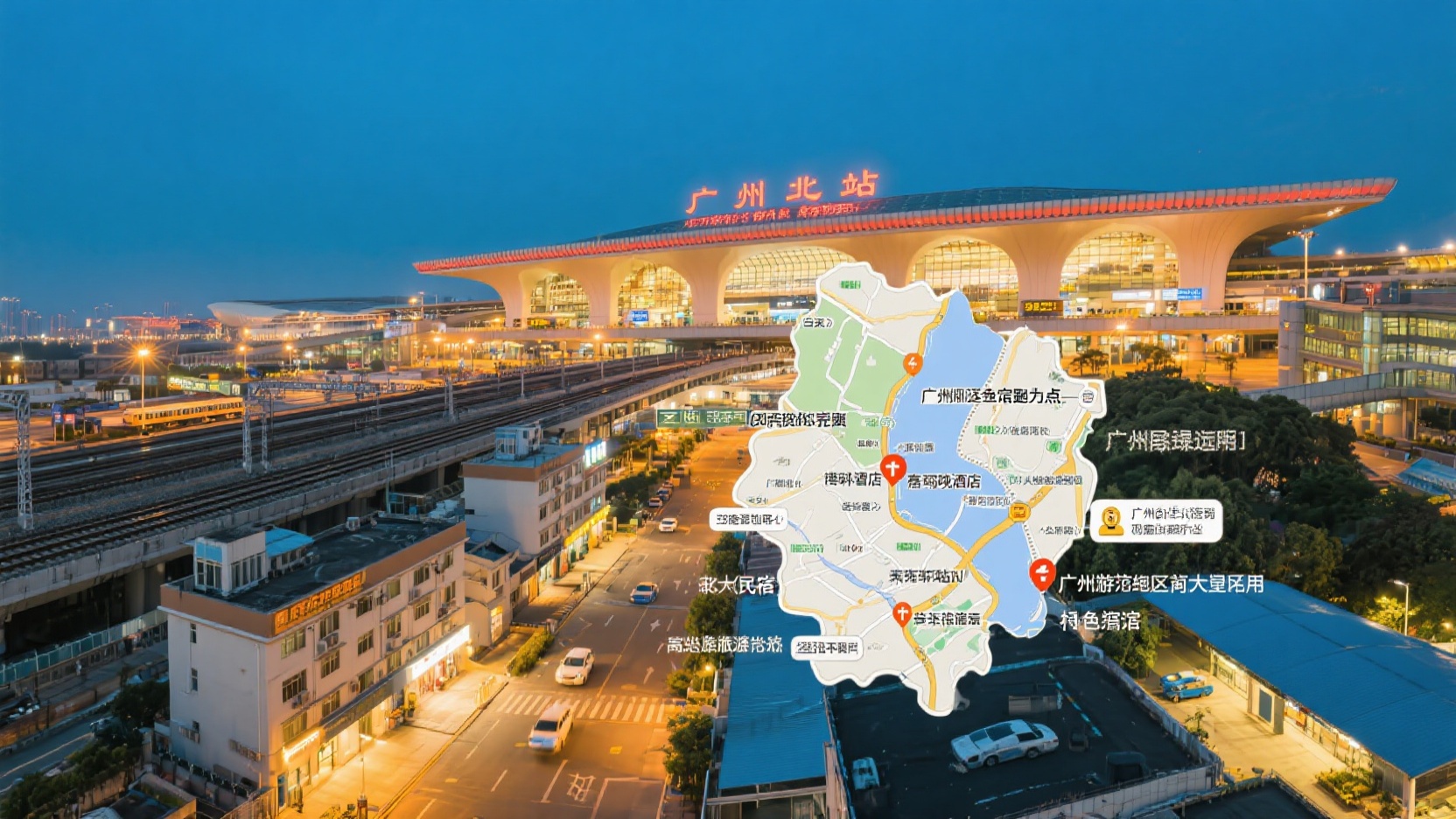
After mistakenly booking an "airport apartment" at Baiyun Airport that was only 1.8 kilometers away but required a nearly half-hour detour via elevated highway, I decided to revisit the accommodation areas within a 2-kilometer radius of Guangzhou's four major transportation hubs. This time, I won't be writing about trendy design hotels, but rather addressing a core question: when you land late at night, catch an early high-speed train, or simply spend the night in Guangzhou with a connecting train, where is the most cost-effective place to stay and how do you minimize detours?
My personal testing focused on four major transportation hubs: Guangzhou South Railway Station, Baiyun Airport, Tianhe Coach Terminal, and Jiahewanggang Metro Station. I personally tested each area by walking or taking a taxi with my luggage, and I recorded the walking/taxi time, the first and last subway trains, and easily overlooked pitfalls.
Guangzhou South Railway Station | Shibi Village and West Square Apartment Area
Within a two-kilometer radius of Guangzhou South Railway Station, the most cost-effective overnight accommodation areas are concentrated in Shibi Village outside the West Square and the apartment area along South Station South Road. Walking from the west exit of the station to Shibi Village takes about 8 to 12 minutes, though walking with luggage across the pedestrian bridge will be slightly slower; a taxi to the apartment area usually takes 5 minutes. Metro Lines 2, 7, and 22 typically have their first trains around 6:00 AM and last trains between 11:00 PM and 11:30 PM, so there's no need to worry about not having a train for an early morning high-speed train.
The target audience is clearly defined: overnight travelers arriving at the South Station late at night and taking the high-speed train to Foshan, Shenzhen, or Guangxi/Guizhou the next morning, as well as those who miss the last subway train from the city center and don't want to spend a lot of money on hotels inside the station. Accommodation here is mostly converted apartments from self-built houses by villagers, with clean single rooms available for tens to hundreds of yuan per person.
Tips to avoid pitfalls: The alleys in Shibi Village are narrow and the lighting at night is generally poor. It is easy to get your large suitcase stuck in the wheels. It is recommended to choose an apartment near the main alley or the entrance of the village. Do not choose a room that is close to the elevated road or the railway line of the South Station. The low-frequency noise from the high-speed train entering and leaving the station will be amplified at night. People who are light sleepers should bring their own earplugs.
Baiyun Airport | Aigang Village Apartment Complex, North of the Airport
There are no traditional commercial hotel clusters within 2 kilometers of Baiyun Airport. The best value accommodations are in Aigang Village, about 1.8 kilometers north of Terminal 2. Walking to the terminal is impractical; the airport's internal roads are very pedestrian-friendly. In practice, a taxi ride from Aigang Village to the Terminal 2 departure level takes about 5 to 8 minutes. The first train on Metro Line 3 from Airport North Station departs around 6:00 AM, and the last train around 11:30 PM, but those arriving in the early morning mainly rely on ride-hailing services for the last two kilometers.
Suitable for those arriving at Baiyun Airport in the early morning and transferring or taking an early flight the next morning. The apartments in Aigang Village are mostly converted from local self-built houses, and the prices are much lower than those of hotels inside the airport, ranging from tens to hundreds of yuan per person. Some even offer free airport shuttle service.
Avoid these pitfalls: Noise from airplanes taking off and landing is the biggest problem in this area, so it's recommended to request a room that doesn't face the runway; some apartments don't have elevators, so those with a lot of luggage should definitely check their floor. When leaving the airport late at night, you may encounter touts offering electric scooters; try to book through official platforms and don't follow those soliciting passengers.
Tianhe Bus Station | Overnight accommodation between Yuangang and Changban Village
Within a 2-kilometer radius of Tianhe Bus Station, Yuangang Village and Changban Village are well-known to locals but less mentioned by tourists as overnight accommodation areas. Yuangang Village is about a 5-8 minute walk from the bus station exit, accessible via a pedestrian bridge; Changban Village is a bit further, about a 10-minute walk or a 5-minute taxi ride. The first subway trains on Lines 3 and 6 depart from Tianhe Bus Station at approximately 6:10 AM, and the last train departs at approximately 11:15 PM, allowing for convenient transfers for those arriving by late-night bus.
This area is suitable for people who arrive in Guangzhou late at night by bus from eastern or northern Guangdong, or those who need to depart from Tianhe Bus Station the next morning for places like Huizhou, Heyuan, and Meizhou. Many students and working professionals rent in this area, and rice noodle roll shops and dessert stalls are still open until 11 or 12 at night, offering a hot meal for just a few dozen yuan per person before moving in.
Tips to avoid pitfalls: Yuangang Village has densely packed buildings, and low-rise apartments facing the street are easily disturbed by night market stalls and electric vehicle alarms; if you have large luggage, try to choose an apartment with an elevator at the entrance of the village, and don't go into deep alleys and climb stairs just to save money.
Jiahewanggang Transfer Station | Wanggang Village and Xinke Industrial Zone
Jiahewanggang is a three-line interchange hub for Metro Lines 2, 3, and 14, and also the most important metro node in northern Guangzhou. Within a 2-kilometer radius, Wanggang Village and the Xinke Industrial Zone form a mature, affordable accommodation area. It's about a 10-15 minute walk to the metro station, or a 5-minute taxi ride. The first train on Lines 2 and 3 departs from Jiahewanggang at approximately 6:00 AM, and the last train departs at approximately 11:30 PM. The last train on Line 14 departs slightly earlier, at approximately 10:30 PM.
This area is ideal for travelers who need to quickly switch between the airport, Guangzhou South Railway Station, and the city center. For example, you can take Line 3 from Jiahewanggang Station directly to Airport North Station in the morning, or take Line 2 all the way to Guangzhou South Railway Station, without having to choose between expensive hotels in the city center and the inconvenience of the suburbs. Accommodation is mainly apartments and lightly renovated guesthouses, where you can find a reasonably sized room for around 100 yuan per person.
Avoid these pitfalls: During the morning rush hour, subway lines at Jiahewanggang are severely restricted. Entering the station around 8 AM may involve queuing for 10 to 15 minutes. If you're catching a flight or high-speed train, be sure to allow sufficient time for entry. In the Xinke Industrial Zone, some roads have heavy truck traffic and loading/unloading noises at night; when booking a room, prioritize rooms not located near main roads.
After exploring these four transportation hub accommodation areas, my deepest impression is that Guangzhou's transportation hubs are never short of cheap places to stay; what they lack is accurate information that clearly tells you whether to walk or take a taxi, and what the first and last train/bus times are. Among the four types of hubs, high-speed rail stations and bus stations are the most pedestrian-friendly, airport areas rely most on taxis or airport drop-off services, and subway station transfer areas require the most vigilance regarding morning rush hour crowd control measures.
Useful Tips List:
Tip 1: No matter which hub area you stay in, check the "walking route" in the map app before booking. Areas with many overpasses and tunnels are not good for luggage.
Tip 2: Self-built apartments near airports and high-speed rail stations generally do not provide disposable toiletries, so it is best to bring your own travel-sized ones.
Tip 3: If you arrive at the airport or South Railway Station late at night, book a ride in advance through a reputable platform and ignore the "cheap accommodation" offers soliciting customers at the exit.
Tip 4: For people who are sensitive to noise, wearing a pair of noise-canceling earplugs is more practical than spending a lot of money to book a "quiet room".