
Six hole-in-the-wall restaurants in Changchun | Three on-site visits specifically to find the places frequented by local gourmets (avoiding trendy, internet-famous establishments)
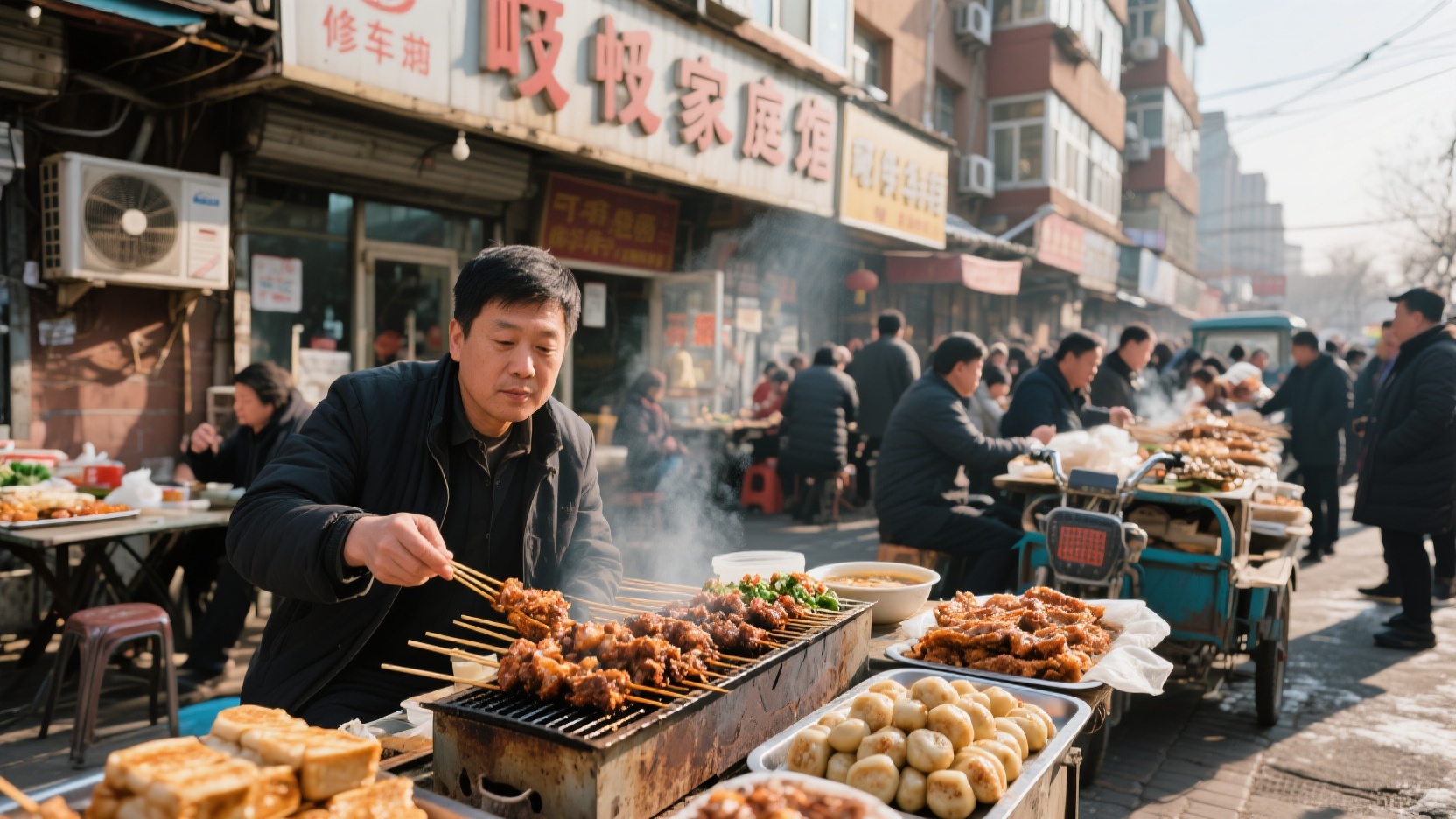
When it came to finding good food in Changchun, I made three trips before gradually figuring things out: the small restaurants that locals frequent repeatedly are often not on any lists, but rather hidden under plastic sheds before the morning market closes, in storefronts converted from the ground floor of old residential buildings, or next to tin stoves that are only put out at night. The following six shops don't actively market themselves; some don't even have signs, but their food is so delicious that you'll want to come back again and again.
Tofu skewers under plastic sheds at the Dongdaqiao morning market
At the northernmost plastic shed of the Dongdaqiao morning market, only two things are sold: chicken soup tofu skewers and cornbread. The soup is made by simmering chicken bones, dried tofu, and cornbread over low heat starting in the early morning. The tofu skewers soak up the soup but don't fall apart. Before serving, a spoonful of garlic sauce and cilantro are poured over them, followed by a drizzle of slightly burnt chili oil. This stall doesn't have a name; locals just say "the plastic shed at the north end of the morning market," and everyone knows it.
How to order: Just say, "More soup, extra garlic sauce and cilantro," and pair it with a freshly made cornbread. A convenient place to buy it is the fried dough stall at the west end of the morning market; their sugar-coated fried dough is puffed up perfectly, and you can bite into it while it's hot—crispy on the outside and fluffy on the inside. Don't go at exactly 8:00; I arrived at 7:50, and by then there was only a little soup left.
The car repair shop next to the braised pork rib shop in the old FAW residential area
The shop is located next to a car repair shop, with only a white sign outside that says "Braised Pork Ribs," making it hard to find without someone familiar with the area. They braise pork ribs and spine bones, in a traditional, savory style. The meat isn't coated in batter or drizzled with sauce; it's stewed until the meat falls off the bone, yet still retains a satisfyingly tender texture. Regular workers from the FAW factory often come here after get off work to buy a bowl to take home as a side dish.
What to order: You can combine pork bones and spine bones on one plate. Be sure to ask the owner for a dish of freshly chopped garlic sauce and a bowl of sauerkraut soup; it will immediately cut through the greasiness. Next door, on the left after exiting the complex, is a cooked food stall. Buy half a red sausage, slice it up, and take it away—perfect for a late-night snack with drinks. I strongly recommend avoiding this stall during lunchtime; from 11:30 AM to 12:30 PM, you'll have to queue not only for a seat but also for weighing the bones.
The tin-stove barbecue stall behind Guilin Road only operates in the evening.
The hustle and bustle of Guilin Road's main street has nothing to do with this shop. It's located next to an old bicycle shed, with no storefront, operating solely with a tin charcoal stove and six folding tables. The owner, affectionately known as "Tin Brother" by regulars, is actually a man of few words. The meat skewers aren't marinated in advance; they're cut and skewered fresh, and while grilling, they're simply sprinkled with salt, cumin, and chili powder, allowing the meat to char naturally over the charcoal fire for its own delicious aroma.
How to order: A few skewers each of raw beef, beef tendon, and chicken wings, plus a cup of barley tea from the thermos. Nearby: There's a roasted sweet potato stall just outside the alley; in winter, a sweet potato with a runny, yellow flesh is better than any trendy dessert. They don't sell alcohol here; locals usually bring their own thermos. It's best to arrive before 6 PM, otherwise you'll have to stand and wait for tables to be turned.
Community-style sweet and sour pork on the first floor of a residential building near Hongqi Street
This restaurant, located on the ground floor of a residential building, has a small dining area converted from the living room. It has only five tables, and during mealtimes, the aisle is packed with people. Their sweet and sour pork is made in the classic old-fashioned way: coated in potato starch and deep-fried until crispy. The sweet and sour sauce includes ginger slices, giving it a direct balance of sweet and sour, unlike the version with a reddish tinge from ketchup. The owner cooks by himself, and each serving of sweet and sour pork takes at least fifteen minutes to prepare.
What to order: The sweet and sour pork is a must-order. For two or three people, a platter of stir-fried pork slices should be enough. If you're passing by, buy some bottled soda from the convenience store diagonally across the street; the old-fashioned soda is very bubbly and goes perfectly with the freshly cooked sweet and sour pork. Don't rush if you want to eat here; urging the food is basically useless, and during peak hours, it's difficult to even squeeze through the door.
Amai Family Cuisine in Kuanchengzi Old Building
In an old residential building in Kuanchengzi, a Korean woman named Amai uses her living room as a small dining table, serving only four dishes: soybean paste soup, blood sausage, potato dumplings, and spicy braised pollack. The soybean paste soup is slowly simmered with homemade soybean paste and frozen cabbage, while the blood sausage is freshly made with blood and glutinous rice. There are no waiters; you have to call for soup and sauce yourself.
How to order: One set of "soy sauce soup with potato dumplings" plus a small portion of rice sausage is enough. The soup can be refilled for free. If you're passing by, you can buy freshly made rice cakes from the nearby Yanji supermarket; don't buy the packaged ones, the taste is much worse. This place is only open from morning to noon, and basically closes at 2 pm. They only accept cash, so many young people are disappointed when they first go there.
The sticky rice cake tricycles that only appear at the north gate of Nanhu Park in winter
Every year from November to February of the following year, a tricycle stall can be seen at the north gate of Nanhu Park, selling two things: sticky rice cakes with red bean filling wrapped in yellow rice flour and grilled cold noodles. The sticky rice cakes are made of yellow rice flour filled with red bean filling, steamed and fragrant with the aroma of dried leaves, stretchy but not sticky; the grilled cold noodles are served with a traditional sweet and sour sauce, and are generously topped with eggs and sausages.
What to order: A serving of five sticky rice buns is just the right amount to satisfy you. For the grilled cold noodles, ask for "double-sided eggs, extra onions and cilantro" for a richer sweet and sour flavor. Next door, you can buy the mini cream ice cream sold at the North Gate newsstand. In winter, a bite of sticky rice bun followed by a bite of ice cream creates a particularly satisfying contrast between hot and cold. The vendor sets up around 3 PM and pushes away when they're sold out before dark; they only accept cash.
Blogger's summary and three pitfalls to avoid
These six shops share a common characteristic: they're not refined, not standardized, and even somewhat dependent on the owner's mood. But the most authentic, down-to-earth flavor of Changchun is precisely hidden in these corners that don't actively pander to tourists. They're suitable for people who are willing to get up early, wait, and accept a less-than-ideal environment; if you're looking for a bright kitchen and QR code ordering, this might not be the place for you.
First rule to avoid pitfalls: Don't go during peak meal times. Small shops are understaffed, and mealtimes mean longer waits and more competition for seats. Second rule to avoid pitfalls: Don't just order the signature dishes. The sauerkraut soup at the braised pork rib shop, the roasted sweet potatoes near the barbecue stalls, and the bottled soda at the sweet and sour pork shop are the soul of local fare. Third rule to avoid pitfalls: Remember to bring cash. At least half of the morning market stalls, tricycles, and family-run restaurants aren't connected to the internet; you'll miss out on a lot without cash.